
About Shmuel Hurwitz
Lived 1862 – 1943 (aged 80–81). Shmuel Hurwitz was a journalist and poet.
Shmuel Hurvits (; 1862 – March 6, 1943, also spelled Samuel Hurwitz), also known by his pseudonym A. Litvin , was a Russian-Jewish journalist, activist, and editor with most of his work in Yiddish.
Biography Shmuel Hurvits was born to a poor family in 1862 in Minsk, Belarus. He studied at a Jewish primary school until he was twelve, afterwards transferring to a secular school. He trained as a teacher, but abandoned the field soon after graduating, having an ideological appreciation for manual labor. His ideological inclination led him to work as a street paver, followed by a woodcarver, typesetter, bookkeeper, and street peddler over the following decades. He began writing poems and articles in the 1890s; he was initially published in Russian for the St. Petersburg magazine Rodina, but also wrote in Hebrew. He published his first Yiddish work, an article titled "Erets-yisroel un ire heldn" ('The Land of Israel and its Heroes') in the Warsaw-based Zionist periodical Der Yud.
In 1901, Hurvits immigrated to the United States, where he began working at a shoe factory. Alongside this, he distributed newspapers, and wrote for the Forverts and other radical Yiddish papers in New York. He contributed poems and articles, generally on Jewish history. He returned to the Russian Revolution during the 1905 revolution, first moving to Warsaw before settling in Vilna. He founded a Yiddish leftist monthly periodical ('Life and Science') in Vilna, which ran from March 1909 to the end of 1912. He published pieces from various popular Yiddish authors, translations of foreign works, scientific articles (including works by L. L. Zamenhof) and pieces from younger writers just starting their careers, such as David Einhorn, Shmuel Niger, and Leib Naidus.
Hurvits was one of the founders of the Poale Zion (a Zionist Marxist movement) while in Vilna. Despite his Zionist leanings, he was on friendly terms with the General Jewish Labour Bund and various illegal Bundist groups in Russia. He returned to the United States in 1914, and became the editor of a small publishing house named ('Chapters of History'). He again wrote for the Forverts, as well as various Yiddish papers including Di Tsayt, Der Yidisher Kempfer, the Morgen Zhurnal, and Di Tsunkunft. He published a six volume anthology of his works entitled ('Jewish Souls') from 1916 to 1917. He lived in an austere manner, spending much of his time in the United States migrating between various Jewish farming communities. He helped found one named in Plainfield, New Jersey. He spent the last years of his life in poverty, living in a room in Coney Island, New York. After his death on March 6, 1943, his corpus of unpublished material was inherited by the YIVO Institute and the Jewish Theological Seminary of America.
Don’t just read it —
keep it.
Full-length biographies made to live with: read them, listen on the way to work, watch them tonight.
- E-book
- Audio
- Video
Instant download · yours to keep · every purchase keeps this site free
Important facts
People in Shmuel Hurwitz's life
Named in this biography and alive at the same time

Related people
Same field, nearest in time

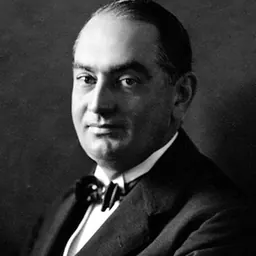

Contemporaries
People whose lives overlapped Shmuel Hurwitz's

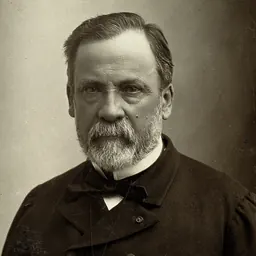



Frequently asked questions
Who was Shmuel Hurwitz?
Belarusian-Jewish Yiddish journalist active in the USA
When was Shmuel Hurwitz born?
Shmuel Hurwitz was born in 1862 in Minsk.
When did Shmuel Hurwitz die?
Shmuel Hurwitz died in 1943 in New York City, Coney Island.
What was Shmuel Hurwitz's occupation?
Shmuel Hurwitz was a journalist and poet.
Sources & further reading
Cite this page
APA: Biography.guide. (2026). Shmuel Hurwitz. https://biography.guide/shmuel-hurwitz/
MLA: "Shmuel Hurwitz." Biography.guide, https://biography.guide/shmuel-hurwitz/.
Chicago: "Shmuel Hurwitz." Biography.guide. https://biography.guide/shmuel-hurwitz/.
Data last updated: 2026-09-20 · Spot an error? Report a correction.
Page generated 2026-09-27 05:07 UTC