
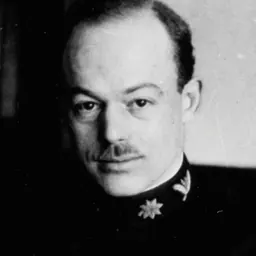
Shin Sang-ok
South Korean film producer and director
About Shin Sang-ok
Lived 1926 – 2006 (aged 79). Shin Sang-ok was a South Korean film director, film producer, screenwriter, manufacturer and director.
education = Tokyo University of the Arts occupation = years_active = 1945–2004 spouse = partner = children = 4 suggest that he was born in 1925. The Independent and The Guardian said he was born on October 11 of the following year, the Korean Movie Database claimed his birthday was September 12, 1926; whereas The Guardian said he was 79. During Shin's funeral, filmmaker Lee Jang-ho declared that he was born in 1926. – April 11, 2006), anglicized as Simon Sheen, was a South Korean filmmaker who directed 74 films in a career spanning over five decades. He is best known in South Korea for his efforts during the 1950s and 1960s, many of them collaborations with his wife Choi Eun-hee. Shin posthumously received the Gold Crown Cultural Medal, the country's top honor for an artist.
In 1978, Shin and Choi were kidnapped by order of Kim Jong Il, who wanted them to improve the North Korean film industry. The couple remained in captivity for 8 years and Shin directed seven films for Kim, including An Emissary of No Return, Runaway (both 1984), Love, Love, My Love, Salt, and Pulgasari (produced in 1985), before they escaped in 1986 and sought asylum in the United States. Shin gained American citizenship in 1989, and continued to produce films in the United States, now under his adopted name Simon S. Sheen. He and Choi eventually returned to South Korea for his final years.
Early life Sometime between 1925 and 1926, Shin was born Shin Tae-ik or Shin Tae-seo His father was a prominent doctor of Korean medicine.
Career in South Korea (1946–1978) Shin started his film career as an assistant production designer on Choi In-kyu's Viva Freedom!, the first Korean film made after the country achieved independence from Japan. During the "Golden Age" of South Korean cinema in the late 1950s and 1960s, Shin worked prolifically, often directing two or more films per year, earning the nickname the "Prince of South Korean Cinema". Shin featured the Western princess, female sex workers for American soldiers, in The Evil Night (1952) and A Flower in Hell (1958). The production company he started, Shin Films, produced around 300 films during the 1960s,
During the 1970s, Shin became less active, while South Korea's cinema industry in general suffered under strict censorship and constant government interference. Most of the films he directed during this period ended up being flops.
North Korean period (1978–1986)
In 1978, Shin's former wife, Choi Eun-hee, an actress who starred in many of his films, was kidnapped in Hong Kong and taken to North Korea. Shin himself came under suspicion of causing her disappearance and when he traveled to Hong Kong to investigate, he was kidnapped as well. The kidnappings were on orders of future leader Kim Jong Il, who wanted to establish a film industry for his country to sway international opinion regarding the views of the Workers' Party of Korea. The North Korean authorities have denied the kidnapping accusations, claiming that Shin came to the country willingly. Shin and Choi made secret audiotapes of conversations with Kim Jong Il, which supported their story.
From 1983 on, Shin directed seven films, with Kim Jong Il acting as an executive producer. The last and best-known of these films is Pulgasari, a giant-monster film similar to the Japanese Godzilla. In 1986, eight years after his kidnapping, Shin and his wife escaped while in Vienna for a film festival. According to former CIA officer Michael Lee, Choi and Shin became American citizens in 1989 (three years after their escape) and adopted the names Theresa Sheen and Simon Sheen respectively.
In 1994, he was invited to the Cannes Film Festival as a jury member. At first, Shin was reluctant to go back to South Korea, because he feared that the government's security police would not believe the kidnapping story; he eventually returned to South Korea permanently in 1999 and continued to work on new movies. His last movie as a director was a 2002 film called Kyeoul-iyagi (The Story of Winter). The film's editing was finished by Sin's son, Shin Jung-kyun and cinematographer Jo Dong-gwan, and released finally in 2023.
Shin ended his career in 2004. That year, Shin underwent a liver transplant. He died of complications caused by hepatitis two years later. At the time of his death he was planning a musical about Genghis Khan. South Korean President Roh Moo-hyun posthumously awarded Shin the Gold Crown Cultural Medal on April 12, 2006, the country's top honor for an artist.
In media
In 2015, an English language biography of his life (along with Choi Eun-hee), called A Kim Jong-Il Production: The Extraordinary True Story of a Kidnapped Filmmaker, was published by Paul Fischer.
In January 2016, at the 2016 Sundance Film Festival, in the World Cinema Documentary Competition, a documentary about the North Korean ordeal, entitled The Lovers and the Despot and directed by Robert Cannan and Ross Adam, was presented.
In 2017, BBC Radio 4 broadcast a drama Lights, Camera, Kidnap!, based on Shin's ordeal, written by Lucy Catherine, directed by Sasha Yevtushenko, and starring Paul Courtenay Hyu as Shin and Liz Sutherland as Choi.
Works Filmography Partial filmography as director:
Executive producer Galgameth (1996)
Don’t just read it —
keep it.
Full-length biographies made to live with: read them, listen on the way to work, watch them tonight.
- E-book
- Audio
- Video
Instant download · yours to keep · every purchase keeps this site free
Important facts
Family & relationships
People in Shin Sang-ok's life
Named in this biography and alive at the same time






Related people
Same field, nearest in time




Contemporaries
People whose lives overlapped Shin Sang-ok's

Frequently asked questions
Who was Shin Sang-ok?
South Korean film producer and director (1926–2006)
When was Shin Sang-ok born?
Shin Sang-ok was born on 11 October 1926 in Chongjin.
When did Shin Sang-ok die?
Shin Sang-ok died on 11 April 2006 in Seoul.
What was Shin Sang-ok's occupation?
Shin Sang-ok was a film director, film producer, screenwriter, manufacturer and director.
What nationality was Shin Sang-ok?
Shin Sang-ok was South Korean.
Sources & further reading
Cite this page
APA: Biography.guide. (2026). Shin Sang-ok. https://biography.guide/shin-sang-ok/
MLA: "Shin Sang-ok." Biography.guide, https://biography.guide/shin-sang-ok/.
Chicago: "Shin Sang-ok." Biography.guide. https://biography.guide/shin-sang-ok/.
Data last updated: 2026-09-22 · Spot an error? Report a correction.
Page generated 2026-09-27 05:28 UTC