
About Shimoda Utako
Lived 1854 – 1936 (aged 82). Shimoda Utako was a Japanese educator, women's rights activist and poet.
was a Japanese educator and poet of the Meiji and Taishō period. Born in present-day Ena, Gifu, she was the founder many educational organizations, including what is today Jissen Women's University. She had international influence, and was one of the most influential women in Asia.
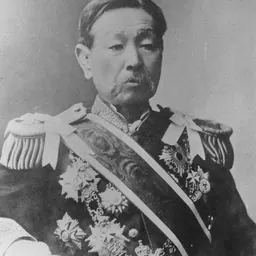
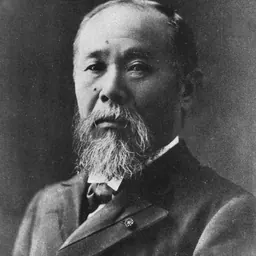
Biography Shimoda Utako in and ; she was also an advocate for dress reform. Utako Shimoda was born into a samurai family as Seki Hirao, in Iwamura, in Gifu Prefecture. For the first 6–7 years of her life she was an only child, and studied the Confucian classics; she is said to have read all the Chinese and Japanese books her parents had. Her father and grandfather were Confucian scholars. As a result, she rose through the ranks. At court, she attended lessons and lectures, including learning French. In 1875, she began working on the empress's educational works. She formed connections to political leaders including Itō Hirobumi, Yamagata Aritomo, and Inoue Kaoru. ). Utako initially did not participate on grounds of her huband's health. Takeo died in 1884 and Utako threw herself into her work as a full-time educator, becoming a teacher and assistant principal at the Girl Peers' School, where she taught ethics and home economics. She also wrote textbooks, starting with a Japanese language textbook published in 1885. of Jigoro Kano, the founder of modern Judo. She founded three women's schools and wrote over 80 books. She died from pneumonia in 1936, aged 82.
The Shimoda Utako Research Institute for Women is named after her.
Teachings and politics Politically, Shimoda Utako was royalist and nationalist; she supported an expansionist colonial foreign policy, feeling that it was Japan's divine destiny to lead East Asia to a higher level of civilization and wealth, already attained in the West. She warned about and opposed Western imperialism. While she favoured a nationalistic education that instilled patriotism, she judged that the patriotism taught in the west was excessive, and too vengeful, belligerent, and prideful. She considered Chinese and Korean women to be dōhō 同胞 (of the same womb) as Japanese women, though not of the same race, and inferior in education, opportunities, But, Utako Shimoda reckoned this to be impractical and figured pieces like the corset were harmful and restrictive. Similarly, if schools were to adopt the kimono, this would also pose too restrictive, preventing students from partaking in physical activities. Shimoda Utako had a problem to solve: female students needed a uniform that touched on Japanese traditionality, something that fed into a Japanese identity but also embodied practicality. Utako pulled from the hakama, which is traditionally worn by men, and fashioned a new version with inspiration from the uniforms of ladies-in-waiting. The wide-legged pants became a model of rational clothing for all women.
Schools and organizations Shimoda Utako was involved in leadership roles in numerous schools: Kazoku Jogakkō 華族女學校 (later part of the Gakushūin 學習院) Jissen Jogakkō 實踐女學校 (as founder) Joshi Kōgei Gakkō 女子工藝學校 (as founder) Junshin Jogakkō 順心女學校 Ōmi Joshi Jitsumu Gakkō 淡海女子實務學校 Meitoku Jogakkō 明徳女學校 Aikoku Yakan Jogakkō 愛國夜間女學校
She was also involved with civil society groups: Aikoku Fujinkai 愛國婦人會 (as founder) Zhouxin She 作新社, Shanghai, 1901 (helped found) Women's Christian Temperance Union
Selected publications (1901) (1902) (1912)
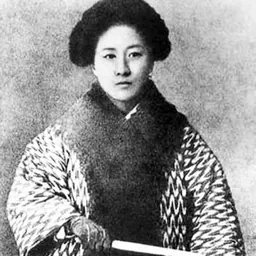
Selected students Qiu Jin , revolutionary Yànān Chén
Don’t just read it —
keep it.
Full-length biographies made to live with: read them, listen on the way to work, watch them tonight.
- E-book
- Audio
- Video
Instant download · yours to keep · every purchase keeps this site free
Important facts
People in Shimoda Utako's life
Named in this biography and alive at the same time

Related people
Same field, nearest in time





Contemporaries
People whose lives overlapped Shimoda Utako's




Frequently asked questions
Who was Shimoda Utako?
Japanese educator and poet (1854–1936)
When was Shimoda Utako born?
Shimoda Utako was born on 29 September 1854 in Iwamura Domain.
When did Shimoda Utako die?
Shimoda Utako died on 8 October 1936.
What was Shimoda Utako's occupation?
Shimoda Utako was an educator, women's rights activist and poet.
What nationality was Shimoda Utako?
Shimoda Utako was Japanese.
Sources & further reading
Cite this page
APA: Biography.guide. (2026). Shimoda Utako. https://biography.guide/shimoda-utako/
MLA: "Shimoda Utako." Biography.guide, https://biography.guide/shimoda-utako/.
Chicago: "Shimoda Utako." Biography.guide. https://biography.guide/shimoda-utako/.
Data last updated: 2026-09-20 · Spot an error? Report a correction.
Page generated 2026-09-27 05:28 UTC