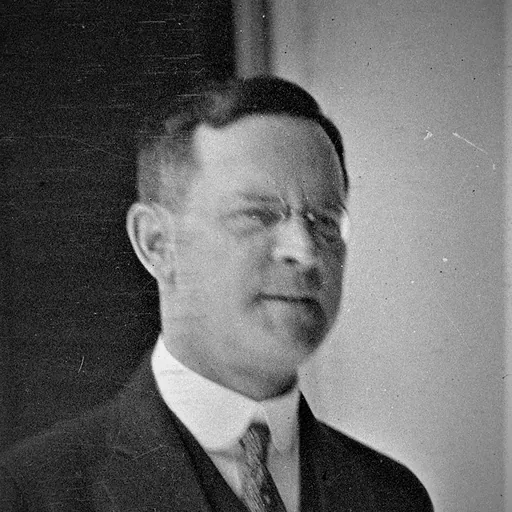
About Sherwood Eddy
Lived 1871 – 1963 (aged 92). Sherwood Eddy was an American missionary and evangelist.
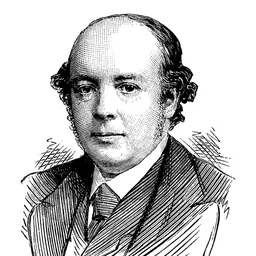
George Sherwood Eddy (1871–1963) was an American Protestant missionary, administrator and educator. He authored numerous works and traveled extensively to promote dialogue and understanding between missionaries and local communities, particularly in Asia and the Middle East. He played a role in establishing networks of Christian intellectuals across different regions. His contributions to Protestant communities in the United States and abroad have been recognized as influential. From the 1930s onwards, he became a Christian socialist.
Biography Early life and family George Sherwood Eddy was born on January 19, 1871, to George Alfred Eddy and Margaret Louise Norton at Leavenworth, Kansas. His father was a businessman and was active in civil affairs, and his family had roots in the Northeastern United States. Eddy attended Phillips Andover Academy, and graduated Yale College with a degree in engineering in 1891. Eddy married Alice Maud Harriet Arden (1873–1945) on November 10, 1898. They were the parents of two children, Margaret and Arden. After Alice's death, he married Catherine Louise Gates in 1946.
Career
Eddy had had a spiritual experience in 1889 at the Northfield conference. Whilst in India, Eddy attempted to convert Hindus to Christianity; in order not to offend the high caste Hindus, he converted to vegetarianism. He spent the next 15 years doing student evangelistic work across Asia—from China, Japan, and the Philippines, through the Near East to Turkey, Palestine, Iraq, Egypt, and then to czarist Russia—and made 15 trips to the Soviet Russia. He admired the Soviet system and refused to believe reports of famine; in 1937, he agreed that the victims of Stalin's show trials were traitors as charged. His was criticized as a "fellow traveler."
From 1915 to 1917, he was itinerant secretary of the YMCAs with the British and American armed forces in France. In 1916, he received two honorary degrees, one from Wooster College and the other from Yale University. From 1921 to 1957, he conducted training courses for religious, political and business leaders in England and America; he addressed 1,500 American leaders. He is also known for his works with the Oxford Group evangelical group, a predecessor to Alcoholics Anonymous.
After the YMCA and end of life Poster announcing a public forum to be held in Des Moines, Iowa, at which Sherwood Eddy would speak to the theme "America and the world crisis" (between 1936 and 1940). In 1931, Sherwood Eddy stopped his career with the YMCA where he had spent 35 years as a volunteer. He had become a member of the Fellowship of Socialist Christians which was organized in the early 1930s by Reinhold Niebuhr and others on the left. Later it changed its name to Frontier Fellowship and then to Christian Action. The main supporters of the Fellowship in the early days included Eddy, Eduard Heimann, Paul Tillich and Rose Terlin. In its early days the group thought capitalist individualism was incompatible with Christian ethics. Although not under Communist control, the group acknowledged Karl Marx's social philosophy.
In 1936, he founded and led with the Reverend Sam H. Franklin the Delta and Providence Cooperative Farms in Bolivar County, Mississippi, and Holmes County, Mississippi, in 1939, respectively. The farms helped southern sharecroppers out of their economic plight (caused in part by side effects of the New Deal's Agricultural Adjustment Administration). Eddy drew considerable support from his friend, the theologian Reinhold Niebuhr, who once called the farms "the most significant experiment in social Christianity now being conducted in America."
These cooperatives were organized around four principles: efficiency of production and finance through the cooperative principle, participation in the construction of an economy of socialized abundance, interracial justice and realistic religion as a social dynamic. Because of its principles of economic equality between races, the cooperative paid all its members equal pay for equal work. Activities included cotton growing, cattle breeding, a pasteurization plant and a sawmill. Co-operatives offered a range of services to their members and local communities, including a co-op store, a credit union, a medical clinic, educational programs, a library, religious services, and summer student camps. However, due to the tense political climate of the 1950s and declining cotton prices and sales volumes, the experiment concluded around 1956, and the land was sold to the cooperative's members.
In 1949, Sherwood Eddy moved to Jacksonville, Illinois, and taught at Illinois College and MacMurray College.
He died on November 4, 1963, in Jacksonville.
Influence
In 1897, Sherwood Eddy experienced a personal and spiritual crisis that profoundly changed his vision of missionary work. He understood that his argumentative, apologetic approach could not be very successful because it created a defensive attitude among his listeners. He wrote, "we were not sent to win debates but to win people.” He understood that he had to address the ordinary people and, in 1900, he took almost two years off to learn Tamil; he understood that the local people and those who had come as missionaries had to be treated on a strictly equal footing. He was among the first to understand the aspirations of colonized peoples for self-determination and the need to appoint local leaders to lead local churches. In doing so, he anticipated by nearly 50 years, and initiated, the reflection that would lead the American Presbyterian Mission to thoroughly review its concepts, mainly after 1945.
In 1903, Sherwood Eddy founded with Anglican Bishop V.S. Azariah the first purely Indian Mission Society of Tinnevelly and in 1905 the National Missionary Society of India. Sherwood Eddy was the only non-Indian present at its founding conference in Serampore. Because of his perfect command of Tamil and his deep empathy for the Indians, he was considered one of them, which he described as one of the greatest compliments he ever received. Professor Rick Nutt considers that this initiative played a role in the emergence of Indian national sentiment. The NMS was also ecumenical as it brought together members from all Protestant churches in South India. It showed the way for churches that then also sought unity. In 1908 the South India United Church regrouped the Presbyterian and Congregationalist churches of South India, but efforts to integrate the Anglican faith into the union were unsuccessful until September 1947 when the Church of South India was created, bringing together the Anglican, Methodist, Congregationalist, Presbyterian and Reformed communities. Sherwood Eddy appears there as a pioneer of ecumenism between Protestant churches; although this had been the YMCA's policy since their inception, the merger of actual churches in India was one of the first achievements of this type ever.
From 1911 onwards, Sherwood Eddy and the YMCA missionaries led an effective evangelization in China based on the convictions and methods established in India. Missionary H. G. Lockwood noted in 1949 at a meeting with Chinese Christian leaders that the majority of them had been won to Christianity by Sherwood Eddy. Like Frank Buchman, Sherwood Eddy insisted on the need for missionaries to adopt exemplary moral behaviour.
Personal life
Eddy was celibate all his life, he also eschewed all medical care and relied on his belief in the healing powers of God. Eddy stated that he had seen God working miraculously in response to prayer. For one year he did not use his glasses as he was convinced that God would correct his eyesight.
Selected bibliography
The Awakening of India (1911) The New Era in Asia (1913) The Students of Asia (1915) With Our Soldiers in France (1917) Everybody's World (1920)
What Shall I Believe in the Light of Psychology and the New Science (1926) The Challenge of Europe (1933). New York: Farrar & Rinehart A Pilgrimage of Ideas: Or, The Re-education of Sherwood Eddy (1934), Autobiography. Russia Today: What Can we Learn from It? (1934) Revolutionary Christianity (1934) Ten Suggestions for Personal work (1934)
God in History (1947) You Will Survive After Death (1950) Eighty Adventurous Years: The Autobiography of Sherwood Eddy (1955) He wrote other works which were published in England and India.
Don’t just read it —
keep it.
Full-length biographies made to live with: read them, listen on the way to work, watch them tonight.
- E-book
- Audio
- Video
Instant download · yours to keep · every purchase keeps this site free
Important facts
People in Sherwood Eddy's life
Named in this biography and alive at the same time







Related people
Same field, nearest in time


Contemporaries
People whose lives overlapped Sherwood Eddy's

Frequently asked questions
Who was Sherwood Eddy?
American missionary and writer (1871-1963)
When was Sherwood Eddy born?
Sherwood Eddy was born on 19 January 1871 in Leavenworth.
When did Sherwood Eddy die?
Sherwood Eddy died on 4 November 1963 in Jacksonville.
What was Sherwood Eddy's occupation?
Sherwood Eddy was a missionary and evangelist.
What nationality was Sherwood Eddy?
Sherwood Eddy was American.
Sources & further reading
Cite this page
APA: Biography.guide. (2026). Sherwood Eddy. https://biography.guide/sherwood-eddy/
MLA: "Sherwood Eddy." Biography.guide, https://biography.guide/sherwood-eddy/.
Chicago: "Sherwood Eddy." Biography.guide. https://biography.guide/sherwood-eddy/.
Data last updated: 2026-09-23 · Spot an error? Report a correction.
Portrait: Wikimedia Commons · author & licence
Page generated 2026-09-27 05:07 UTC