
About Shavkat Shayakhmedov
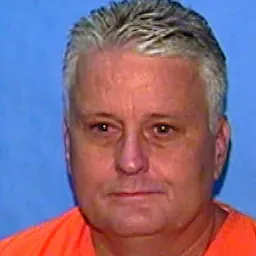
Lived 1960 – 2023 (aged 62–63). Shavkat Shayakhmedov was a Russian serial killer and locksmith.
Shavkat Galievich Shayakhmedov (; 6 May 1960 – 23 May 2023), known as the Zalegoshchensky Maniac , was an Uzbekistani-Russian serial killer and rapist who committed at least five murders in Tajikistan and Russia from 1994 to 2021, four of which were children. Convicted for his four known murders in the latter country, he was given a life term and died behind bars in 2023.
Biography Early life Little is known about Shayakhmedov's early life, aside from the fact that he was born in 1960 and hails from Uygur, a village in the Uzbek SSR's Andijan Region. He would later claim that he was sexually abused by one of his relatives, but this was never corroborated.
After graduating from a vocational school, Shayakhmedov was drafted into the Soviet Army in the early 1980s. Upon completing his service in the mid-1980s, he moved to Istiqlol in the Tajik SSR, where he soon married a local woman who would give birth to twins—a son named Roman and a daughter named Ruzilya—on 29 September 1988. Shayakhmedov would claim later on that he had to move away from his native village after ethnic Uzbeks demanded that he learn their language or be forced out.
Move to Russia In the mid-1990s, Shayakhmedov and his family left Tajikistan and headed for Russia, where he found accommodation in Kazar, Oryol Oblast. Soon afterwards, he found a job as a mechanic for local enterprises, due to which he gained a reputation as a hard worker. Since the work was difficult but well paid, Shayakhmedov eventually gathered enough money to buy his own house in the village sometime in the mid-2000s. Despite these claims, his wife claimed that Shayakhmedov had no negative influence on his children and constantly made excuses about his questionable behavior and actions. During his stay there, he also gained popularity with the students, as he often treated them to cigarettes and sweets. In the late 2010s, he was accused of sexual harassment by several female students, one of whom claimed that he had taken her behind a wooden toilet on the school grounds and started touching her intimate parts, but she managed to break free and inform her classmates and acquaintances. Despite the gravity of the accusations, the students' claims were largely ignored. After killing him, he dumped the boy's body in a nearby ravine. A few days later, his bike was found by a local resident named Anatoly Abashin, who for some time was considered the prime suspect in the boy's disappearance, but no charges were ever brought against him. Aside from Abashin, several other suspects were considered, including some workers from the Rostov Oblast who were working on a road surface in the area. Local police theorized that Bolotov was killed by accident and then the workers rolled his corpse in asphalt, but no evidence corroborated this theory.
On 18 June 2021, Shayakhmedov committed his last murder, with the victim being another neighbour, 9-year-old Viktoria Gnedova. On the day of the murder, she went to his basement and demanded that Shayakhmedov buy a motorcycle that he had promised to give her, but he refused; instead, he grabbed a nearby hammer and hit her several times on the head, killing her. Thousands of concerned citizens from Kursk, Tambov, Belgorod, Bryansk, Voronezh, Tula, and Moscow Oblasts volunteered for the campaign, in addition to local and regional security personnel. According to Armen Yeghiazaryan, the Deputy Head of the Ministry of Internal Affairs, law enforcement worked tirelessly to pursue any and all leads, especially those concerning former convicts who had committed sexual offences. A few days later, unable to withstand pressure from the investigators, he confessed to the murder of Gnedova and offered to show law enforcement where he buried the body. On 15 September, her remains were exhumed in the place indicated by Shayakhmedov, with DNA tests conclusively proving that the remains belonged to Gnedova.
Olga Martynova, Gnedova's mother, would later reveal that she and her husband were the initial prime suspects in the disappearance, alleging that investigators had attempted to bribe her into confessing just to see what her reaction would be. After Shayakhmedov's arrest, she described his demeanour as completely calm, appearing to be unfazed by the fact that he had violated and murdered a little girl.
In order to get rid of the body, he buried the young girl's body in a corner of the cellar underneath her parents' apartment. To do so, he dug a tunnel under the foundation of the load-bearing wall of the structure, in which he placed the corpse, almost completely obscuring it from view aside from her feet, which were hidden by laying ceramic tiles. After this, Shayakhmedov filled the remaining holes with construction material and various garbage to cover them up. While a search operation was conducted by police officers, including in the basement, the probe was unable to detect traces of the body due to the ceramic tiles, from which the search initially had no results. In it, Shayakhmedov's lawyer, Yulia Olenicheva, insisted on his innocence, claiming that her client had been beaten up by investigators and pressured into confessing. To back up her claims, she presented photographs and medical reports, which showed that Shayakhmedov suffered numerous bruises and hematomas inflicted by blunt objects during his stay in the detention centre. No explanation was given about the origin of the bruises.
Despite this, on 22 December, Shayakhmedov was convicted on the four murder and rape charges, fully admitting his guilt in spite of his lawyer's protests. As he suffered a stroke during the investigation and was partially paralyzed, he appeared at court hearings in a wheelchair. A week after his conviction, Shayakhmedov was sentenced to life imprisonment.
Following the conclusion of the trial, the victims' relatives attempted to have Shayakhmedov's wife prosecuted as well, as they believed that she was aware of her husband's crimes and never reported him to the police. Martynova claimed that sometime after her daughter went missing, she overheard an argument between the Shayakhmedovs in which the wife supposedly said that she had helped him avoid arrest even before they moved to Russia, implying that he had committed other crimes.
New confessions and death In early 2023, Shayakhmedov was transported to the Mordovian Zone to serve out his sentence, but shortly after his arrival, he unexpectedly confessed to a fifth murder, which he claimed took place in Tajikistan in 1994. According to him, on 21 May 1994, he killed 8-year-old Katya Dmitrieva in Istiqlol, where he lived with his family at the time. The girl was last seen alive in the afternoon in her family's yard on Stroiteley Street, and upon realizing she was gone, her parents organized a large-scale search with the help of volunteers but were unable to find the girl.
On 23 May 2023, Shayakhmedov died from health complications brought on by his stroke. His family and relatives refused to claim his body, and he was thus buried in a grave next to the Mordovian Zone.
Search and potential further victims Following Shayakhmedov's death, representatives of Russia's Ministry of Internal Affairs and the General Prosecutor's Office in Tajikistan travelled to Istiqlol in the summer of 2023, where they unearthed skeletal remains at the indicated place. With his guilt conclusively proven in this crime, rumours began to spread that Shayakhmedov possibly might have killed other victims during the Soviet years, while he lived in Uzbekistan and Tajikistan. It was also speculated that he frequently moved to avoid arrest if crimes were linked back to him.
Aside from this, Shayakhmedov confessed to a fifth murder that took place in Russia shortly before his death, with the victim being a child who was killed somewhere within the city of Oryol. As of October 2023, the investigation into this supposed victim is still ongoing.
In media and culture In May 2023, the Russia-24 channel aired a programme titled "On the Trail of the Beast" (Russian: По следу зверя), which covered the Shayakhmedov case and even featured an interview he gave to reporters detailing his life and the circumstances of his crimes. At the end of the interview, Shayakhmedov stated that what he had done was unforgivable and that he fully agreed with the sentence handed down to him.
Don’t just read it —
keep it.
Full-length biographies made to live with: read them, listen on the way to work, watch them tonight.
- E-book
- Audio
- Video
Instant download · yours to keep · every purchase keeps this site free
Important facts
People in Shavkat Shayakhmedov's life
Named in this biography and alive at the same time

Related people
Same field, nearest in time


Contemporaries
People whose lives overlapped Shavkat Shayakhmedov's



Frequently asked questions
Who was Shavkat Shayakhmedov?
uzbekstani-Russian serial killer and rapist
When was Shavkat Shayakhmedov born?
Shavkat Shayakhmedov was born in 1960 in Pakhtaabad District.
When did Shavkat Shayakhmedov die?
Shavkat Shayakhmedov died in 2023 in Mordovian Zone, Zubovo-Polyansky District.
What was Shavkat Shayakhmedov's occupation?
Shavkat Shayakhmedov was a serial killer and locksmith.
What nationality was Shavkat Shayakhmedov?
Shavkat Shayakhmedov was Russian.
Sources & further reading
· Wikipedia: Shavkat Shayakhmedov
· DBpedia: Shavkat Shayakhmedov
Cite this page
APA: Biography.guide. (2026). Shavkat Shayakhmedov. https://biography.guide/shavkat-shayakhmedov/
MLA: "Shavkat Shayakhmedov." Biography.guide, https://biography.guide/shavkat-shayakhmedov/.
Chicago: "Shavkat Shayakhmedov." Biography.guide. https://biography.guide/shavkat-shayakhmedov/.
Data last updated: 2026-09-20 · Spot an error? Report a correction.
Page generated 2026-09-27 05:12 UTC