
Shareefa Hamid Ali
Indian feminist
About Shareefa Hamid Ali
Lived 1883 – 1971 (aged 87–88). Shareefa Hamid Ali was an Indian.
Shareefa Hamid Ali ( – 1971), also known as Begum Hamid Ali, was an Indian feminist, nationalist, advocate, and political figure. She was the President of the All India Women's Conference and debated a gender inclusive language in the Universal Declaration of Human Rights.
Personal life
Begum Shareefa Hamid Ali was born on 12 December 1883, to a progressive Muslim family in Baroda (now known as Vadodara), Gujarat, the administrative center of colonial British India. She was the daughter of Ameena Tyabji and Abbas J. Tyabji, the nephew of the Indian activist and politician Badruddin Tyabji. Her father, Abbas J. Tyabji, was the Chief Justice of Baroda State and a follower of Mahatma Gandhi. In fact, her parents had supported her and her sisters’ education by sending them to school despite purdah restrictions. Begum Hamid Ali learned to speak six languages, Urdu, Gujarati, Persian, Marathi, English and French. She also devoted her time to painting, drawing and music. At the age of twenty-five she married Hamid Ali, her cousin and an Indian Civil Service Officer. After their marriage, they moved to the province of the Bombay Presidency in India. She remained involved in social work and continued to cultivate her interests. She addressed Muslim women in Sindh and used the example of her own experience to gain their support. As the mother of seven daughters, Ali claimed that two of them had been ‘’victim to this custom.’’
Ali was appointed to a women's sub-committee of the National Planning Committee in 1939.
The Indian Government appointed her as the Indian representative to the United Nations Commission on the Status of Women. She also became a member of the National Planning Commission of the Indian National Congress and the Hindustan Textbook Committee. arguing that Muslim women would not agree with Ali's proposal if Muslim men did not accept her electoral proposal.
The AIWC advocated for a common civil code that was consistent with the organization's commitments and that also took both non-communal and communal approaches. Ali and other Muslim women within the AIWC feared domination by Hindus, but there were diverging opinions even among the Muslim women. Ali, as a Congress Muslim, justified her position by alluding to the Iraqi and Turkish secular models, as well as the Indian penal code. Her position was challenged by Begum Sultan Mir Amiruddin, who claimed that:
In the end, the AIWC hoped for a secular civil code and did not explicitly call for a common civil code. The marriage and inheritance rights proposal of the AIWC did pertain more to Hindu concerns than those of Muslim women.
UN Commission on the Status of Women
In February 1947, Ali represented India as one of 15 women to attend the first United Nations Commission on the Status of Women. She worked alongside delegates from Australia, the USSR, the People's Republic of China, Costa Rica, Denmark, France, Guatemala, Mexico, Syria, Turkey, the United Kingdom, the United States of America, and Venezuela. At the commission, Ali and the other delegates established the guiding principles of the commission:
Today, the commission is still guided by these principles, and has influenced the drafting of resolutions related to Ali's work in India in the 1950s and 1960s. This includes the United Nations Universal Declaration of Human Rights and the Convention on Consent to Marriage, Minimum Age for Marriage and Registration of Marriages.
Don’t just read it —
keep it.
Full-length biographies made to live with: read them, listen on the way to work, watch them tonight.
- E-book
- Audio
- Video
Instant download · yours to keep · every purchase keeps this site free
Important facts
People in Shareefa Hamid Ali's life
Named in this biography and alive at the same time


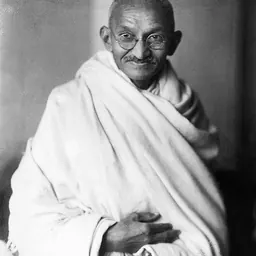
Contemporaries
People whose lives overlapped Shareefa Hamid Ali's


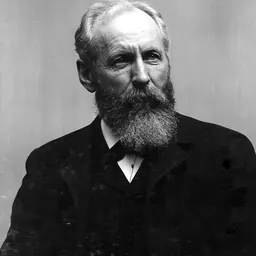

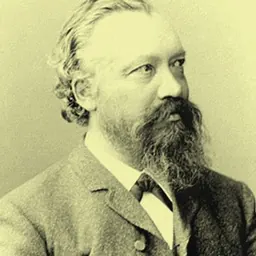
Frequently asked questions
Who was Shareefa Hamid Ali?
Indian feminist
When was Shareefa Hamid Ali born?
Shareefa Hamid Ali was born in 1883 in Gujarat.
When did Shareefa Hamid Ali die?
Shareefa Hamid Ali died in 1971.
What nationality was Shareefa Hamid Ali?
Shareefa Hamid Ali was Indian.
Sources & further reading
· Wikipedia: Shareefa Hamid Ali
Cite this page
APA: Biography.guide. (2026). Shareefa Hamid Ali. https://biography.guide/shareefa-hamid-ali/
MLA: "Shareefa Hamid Ali." Biography.guide, https://biography.guide/shareefa-hamid-ali/.
Chicago: "Shareefa Hamid Ali." Biography.guide. https://biography.guide/shareefa-hamid-ali/.
Data last updated: 2026-09-22 · Spot an error? Report a correction.
Page generated 2026-09-27 05:18 UTC