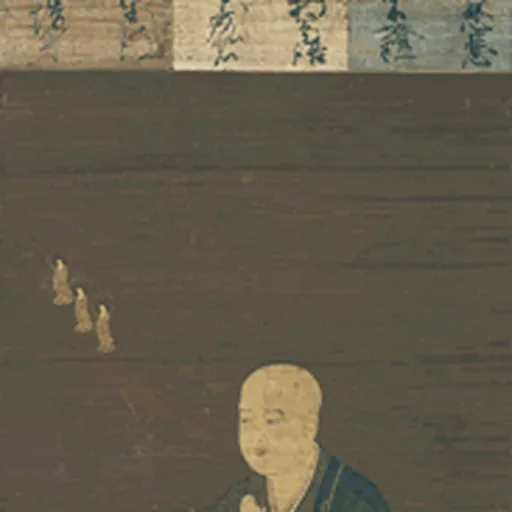
About Shandao
Lived 613 – 681 (aged 67–68). Shandao was a Chinese buddhist monk, poet and monk.
Shandao (; ; 613–681) was a Chinese Buddhist scholar-monk who is considered a great sage and patriarch in East Asian Pure Land Buddhism. Several modern scholars consider Shandao to be the central figure of the Chinese Pure Land tradition. According to Alfred Bloom, Shandao "systematized Pure Land thought and brought it to its highest peak of development in China."
Shandao's writings had a strong influence on later Pure Land masters, especially his teachings on recitation of the Buddha's name and his explanations of the nature of faith (xìnxīn). His close students include other important Pure Land figures of the time, like the Pure Land patriarch Huaigan (懷感) as well as Huaiyun (懷惲, 640-701). Shandao is also very important for Japanese pure land founders Hōnen and Shinran. In Jōdo Shinshū, he is considered the Fifth Patriarch, while in Chinese Pure Land Buddhism, he is considered the second patriarch after Lushan Huiyuan. Shandao was so influential to the Pure Land tradition that he eventually came to be seen as a manifestation of the Buddha himself (a nirmāṇakāya).
Biography There are various sources for Shandao's biography, the earliest and most reliable is Further Biographies of Eminent Monks (T 2060) by Daoxuan (596–667), a contemporary of Shandao who also resided with him at Mount Zhongnan.
Shandao (lay name: Chu) was most likely born in 613, in what is now the Linzi county of China's Shandong Province.
According to some sources, he once saw a picture of the pure land and this inspired him to attain birth in the pure land for the first time. After receiving the full monastic precepts, Shandao (now twenty years old) read the Contemplation Sutra together with his Vinaya Master Miaokai and concluded that Buddhist practices other than the pure land method were too uncertain and difficult. He then spent some time traveling, visiting temples and teachers. He is said to have visited Mount Lu during this period.
In around 633, Shandao also studied at Wu chen Monastery on Mount Zhongnan near the capital of Chang'an (modern Xi'an), a center of pure land meditation practice. This monastery had been built by the followers of Ching yeh (564 616), a direct disciple of Jingying Huiyuan (c. 523–592). Jingying Huiyuan was a great scholar-monk who had written commentaries on the Amitayus Sutra and the Contemplation Sutra. According to Tanaka, Shandao's training at this monastery gave him the opportunity to the study the works of this scholar and Shandao's works do show the influence of Huiyuan.
At some point between 633 and 645 (the sources disagree on the dating), Shandao visited the famous Xuanzhong Temple, a major temple of the Pure Land Buddhist masters Tanluan and Daochuo (562–645). Shandao met Daochuo, and was inspired to become Daochuo's disciple. For 30 years, Shandao preached Pure Land teachings to the lay population of the city, teaching them to chant the nianfo (the name of Amitabha), copying the Pure Land sutras numerous times, distributing copies of the Amitabha sutra, making many paintings of the pure land, restoring monasteries and writings books. He stressed that reciting the Buddha's name was the easiest practice for attaining birth in the pure land. Shandao taught men and women of all classes equally, and even butchers and wine sellers are said to have followed his teachings.
Shandao lived in Chang'an for more than 30 years propagating the Pure Land teachings. He also strictly observed the Buddhist ethical precepts. Nevertheless he became famous as the "Master of Radiant Light" (Guangming Heshang) due to the belief that people had seen rays of light streaming from his mouth when he recited the Buddha's name. Using the wealth donated by his patrons, Shandao undertook the repair of dilapidated temples and stupas. He also worked to create copies of over 100,000 volumes of the Amitabha Sutra. One of these copies was discovered by Tachibana Zuicho in 1909, alongside other fragments of Shandao's works. The Chronicle of Buddha and Patriarchs (Fozu Tongji) states that: "He maintained the precepts flawlessly, without the slightest violation; he offered fine food to the public while living on sparse fare himself." The primary practice is oral recitation of the Buddha's name (chiming nianfo). According to Shandao, the ten nianfos cited in both the Infinite Life Sūtra and the Contemplation Sutra (as the bare necessity for attaining rebirth in the pure land) are oral recitations (, also called the “ten sounds”, ). Previous interpretations were more ambiguous in interpreting the meaning of the term . Shandao was the first to define these as . Shandao even applies this interpretation in cases where a text does not clearly state that nian refers to oral repetition. Rebirth in the Pure Land comes primarily through Amitabha Buddha's vow rather than one's own efforts. Shandao writes that the vows are of rebirth in the Pure Land. Most previous authors (except Tanluan) had held that Amitabha merely creates the Pure Land, but that it is our own deeds and merit that takes us there.
The causes of birth in the Pure Land According to Shandao, birth in the Pure Land arises from an external condition and from internal conditions. The external condition is the other-power of Amitabha Buddha and the internal conditions are the triple mind of faith (三心) and the right Pure Land practices which include nianfo recitation and Buddha contemplation. This position different from that of previous masters like Jizang and Jingying Huiyuan. For Shandao, all the lotus grades of rebirth in the Contemplation Sutra refer to various grades of ordinary beings (pṛthagjana). The true mind and its three aspects A key element of Shandao's Pure Land teaching is his emphasis on faith or trust, which he saw as being necessary for gaining birth in the Pure Land. Faith is explained by Shandao through the schema of the triple mind , which indicate the faithful mental attitude (the "true mind") that is needed to attain rebirth in the Pure land. This is derived from a passage in the Sutra on the Visualization of Amitayus which states that beings who are born in the highest grade are "sentient beings who resolve to be born in that land, awaken the threefold mind and so are born there." The sutra goes on to explain that the three are: "first, a sincere mind; second, a deep mind; and third, a mind that seeks birth there by transferring one's merit. Those who have these three kinds of mind will certainly be born there."
In , Shandao explains the triple mind which are required to attain birth in the Pure Land as follows:First, sincere mind; worshiping that Buddha as the bodily act, praising and glorifying him as the verbal act, and concentrating on and contemplating him as the mental act - in performing those three kinds of acts, you are required to be sincere. Hence, this is called 'sincere mind.' Second, deep mind; this is the true faith which accepts that you are an ordinary person full of evil passions, possessed of few roots of good, subject to transmigration in the three worlds, and unable to escape from the 'burning house'; nevertheless, now you recognize the fact that Amitabha's Universal Primal Vow definitely ensures birth in the Pure Land of those who recite the Name even ten times or down to once. Since you do not entertain even a single thought of doubt, such a state of mind is called 'deep mind.' Third, making aspiration for birth through merit-transference; you aspire for birth through transferring all the roots of good towards it; hence, such a state of mind is called 'making an aspiration for birth through merit-transference.'Those who possess all the three minds unfailingly attain birth. If one of them is lacking, birth cannot be attained.
Furthermore, in his commentary to the Contemplation Sutra, he indicates that the true mind of faith includes an ethical commitment to avoid evil and do good:There are two types of truly benefiting oneself: First, within the true mind one should prevent and discard all of the various evils of self and other, defiled lands, etc., and think 'Just as all the bodhisattvas prevent and discard all the various evils, so too will I'....One should necessarily discard non-good in the three types of action within the mind of truth. Also when one does good, one should necessarily do it within the mind of truth. However, Shandao is also clear that ethical action, no matter how good, will not lead to birth in the Pure land. Thus he warns against merely doing good outwardly, against pretentiously and "strenuously" working to do good. He calls this self-centered action, "good tainted with poison". As such, we must not have any faith on our good actions or other individual qualities, but on Amitabha's vow-power. For Shandao, anyone seeking Buddhahood must recognize that "one is an evil, ordinary being", and then when "one without doubt or hesitation gives oneself over to the power of the vows" one will definitely attain birth in the pure land.
Main practices Shandao discusses Pure Land practice in various ways. His most general schema is one which divides practices into primary practices (zhengxing) and miscellaneous practices (zaxing).
Single-minded recitation of the Pure Land sutras Single-minded meditation and visualization of Amitabha and the Pure Land Worshiping and bowing to Amitabha exclusively Exclusively recite Amitabha's name Singing praises and making offerings to Amitabha Shandao further highlights the importance of nianfo, the oral recitation of Buddha's name , by classifying it as the "primary deed" (zhengye), while calling the other four practices "auxiliary" (zhuye). This indicates that for him, oral recitation of Amitabha's name is the most important practice out of the five.
Miscellaneous practices on the other hand include all other practices, including keeping Buddhist precepts, doing meritorious acts, other forms of Buddhist meditation and so forth.
Meditation and recitation In Shandao's Commentary to the Contemplation Sutra , he writes that the essential intent of the sutra is both the meditative contemplation of the Buddha (guanfo) and the recollection of the Buddha (nianfo). He divides the sutra's main teaching section into two parts: the meditative and the non-meditative teachings, terms which he borrows from Jingying Huiyuan. However, unlike Huiyuan (who argued the meditative teachings included all sixteen contemplations taught in the sutra), Shandao argues that only the first thirteen contemplations are part of the meditative teaching, while the other three (focusing on the nine grades of rebirth in the pure land) are non-meditative and based on nianfo.
While Shandao's teaching focuses on the vocal nianfo (reciting the Namo Amitabha Buddha), he also practiced and taught meditative nianfo in his writings, as did previous Pure Land figures like Tanluan and Daochuo. This was a practice generally done in a retreat setting lasting for several days in which one practiced recitation and meditation on Amitabha's bodily form intensively to achieve a state of samadhi. It was based on sutras like the Pratyutpannasamādhi, and the Guānfó sānmèi hăi jīng (Sūtra on the Ocean Samādhi of Buddha contemplation). Two inscriptions from shortly after Shandao's death indicate that he was known for his meditative prowess, since they call him "Meditation (Chan) master Shandao" and "Great Precept Master Shandao who has realized samadhi".
However, Shandao clearly sees the vocal nianfo as the best practice since it is accessible to all, as he writes in his Verses in Praise for Rebirth in the Pure Land:Because sentient beings are burdened with weighty obstacles: their conscious worlds are limited; their minds are coarse; their senses are disturbed and their spirits are frivolous. Thus, meditation is difficult to observe. Therefore, the Great Sage compassionately urged them to chant the name exclusively. Precisely because chanting the name is easy, they can do so continuously and attain birth in the Pure Land. In commenting on the Contemplation Sutra, after admitting that the sutra teaches both meditation and recitation, Shandao writes: "if we see from the standpoint of the intention of the essential vow of Buddha Amitabha, we realize that the purpose of the text is to make all sentient beings single-heartedly and exclusively chant the name of Buddha Amitabha." Furthermore, in commenting on the last lines of the sutra, in which Shakyamuni says to Ananda "You must uphold these words. To uphold them is to uphold the name of Amida Buddha," Shandao writes:Although this sutra has carefully expounded the thirteen visualizations of the Pure Land and the nine levels of practice proper for the nine levels of beings, its most important explanation is reserved for the last lines of this sutra. It concerns the very heart of Amida Buddha's vow; that one must recite the name, the nianfo. (T. 365, 12:346b) Thus, Shandao clearly elevates the vocal nianfo as the supreme practice over all others.
Other practices
In Hymns in Praise of Birth, Shandao also taught the "Five Mindful Practices" and "Four Modes of Practice" . The Five Mindful Practices, which Shandao quotes directly from Vasubandhu's are: (1) worship Amitabha reverentially with a concentrated mind and make offerings; (2) praise the glory of Amitabha and his Pure Land; (3) concentrate, contemplate and think of Amitabha and the noble beings of the Pure Land; (4) aspire to be born in the Pure Land with a sincere heart; and (5) concentrate on and rejoice in your good deeds and the good deeds done by all beings and dedicate the merit of all good deeds towards birth in the Pure Land. Similarly, Shandao's focuses on the ritual recitation of the in front of an altar with a statue of the Buddha. Shandao also practiced copying the Pure Land sutras. The contains a biography of Shandao which states that "after he entered the capital, he preached his teaching extensively. He transcribed the many tens of thousands of times."
In numerous passages, Shandao also emphasizes the practice of repentance as an important practice which can be joined with the recitation of nianfo and can remove all our evil karma. In addition, Shandao's expositions on the Pure Land are also rooted in classic Madhyamika and Yogacara principles, indicating his deep study of the Buddhist philosophical tradition.
The Pure Land
Shandao also defended the view that Amitabha was perceived as a reward-body Buddha (samboghakaya) and that Sukhavati was seen as a reward-land by beings who were reborn there. He thus went against a common idea in China at the time which saw Amitabha and his Pure Land as a transformation body (nirmanakaya) with limited lifespan.
Shandao was also adamant that even though this Pure Land was a glorious reward land, it was not only accessible to Buddhas and bodhisattvas (a common feature of samboghakaya buddhafields in some Mahayana sources), but was actually accessible to all beings.
The nine grades of rebirth
Shandao also provides an innovative interpretation of the nine grades of rebirth into the Pure Land found in the Contemplation Sutra. Shandao even argues that even those who have committed the "five grave deeds" (which includes killing one's parents, injuring a Buddha, etc) can attain the Pure Land through the Buddha's power.
The highest of the high grades: This is attained by those who have the triple mind of faith, avoid killing, recite the Mahayana vaipulya sutras, practice six kinds of mindfulness and transfer their merit to others. The middle high grade: This is attained by those understand the meaning of the Mahayana vaipulya sutras and avoid slandering the Mahayana. The lowest high grade: This is attained by those who understand the principle of dependent arising and avoid slandering the Mahayana. The highest middle grade: This is attained by those who keep the five precepts and eight precepts and do not commit the five great evils: killing one's father or mother (1, 2), killing an arhat or a Buddha (3, 4) or causing a schism in the sangha (5). The middle of the middle grades: This is attained by those who observe the eight precepts, or the monastic precepts. The lowest middle grade: This is attained by those who are good to their parents and observe moral principles and who at the time of death, meet a virtuous teacher who teaches them about the pure land. The highest lower grade: This is attained by those who have committed evil acts but do not slander the Mahayana and at the time of death say the name of Buddha Amitabha. The middle low grade: This is attained by those who meet a virtuous teacher who teaches them about the pure land at the end of their lives, even though they have violated the five precepts and stolen from the sangha. The lowest of the low grades: This is attained by those who committed the five great evils along with other bad acts but meet a good teacher who teaches them about the pure land and then they say the nianfo.
Parable of the White Path
In his Commentary on the Amitāyurdhyāna Sūtra, Shandao described the human condition and the Pure Land path using a now famous parable known as the "Parable of the Two Rivers and White Path" . Shandao describes a man harried by bandits and wild beasts (symbolizing the five aggregates and the eighteen dhatus) who comes to a river bank. Spanning a river is a narrow, white path, while on one side the river is made of churning water (symbolizing desire and greed), and the other fire (aversion, hatred). Then, the man hears a voice calling from the other side of the river, assuring him that if he crosses the path, he will be safe. The voice says: "With singleness of mind and right attention go forward at once; I will protect you!" The voice on the other side of the river is said to be Amitabha Buddha, guiding them across the narrow white path (symbolyzing the pure faithful aspiration to be reborn in the pure land), from samsara to the Pure Land (the other shore).
Difficulty of attaining rebirth According to Charles Jones, Shandao conceived of it to be possible for one to fail to be born "at the final moment ... if impure persons defiled the ritual space and allowed demonic beings to invade." Some sources may indicate this possibility. In one text, , Shandao describes a specific set of ritual protocols and practices for helping dying Buddhist devotees achieve successful deliverance from “evil destinies” and procure successful rebirth in the Pure Land.
There are also various hagiographical records concerning Shandao which reflect concerns regarding more complicated requirements for rebirth in the Pure Land, including but not limited to recitation of Amitābha's name on one's deathbed specifically.
Works Shandao wrote several texts, including Mahayana commentaries.
Main works Shandao's main extant works are called the "five works in nine fascicles", which are:
The Commentary on the Contemplation Sūtra . Taishō no. 1753, in four fascicles. This is his magnum opus, which contains Shandao's main Pure Land worldview. Verses in Praise for Rebirth in the Pure Land (, Taishō no. 1980, in one fascicle). An English translation by Hisao Inagaki (2002) is titled Liturgy for Birth . This text discusses Pure Land practice more generally, as well as liturgical practice. It includes six hymns of praise for chanting at six periods of a day-night cycle. Dharma Gate of Contemplative Recollection (, Taishō no. 1959, in one fascicle); Full title: The Dharma Gate of the Merits of the Ocean-like Samādhi of the Contemplation of the Marks of Amitābha Buddha . This text explains how to meditate on the various Buddha contemplations (guanfo samadhi) found in the Contemplation Sutra and in the Pratyutpannasamadhi sutra, as well as ritual preparations which are performed before meditation. There is an English translation by Inagaki titled The Method of Contemplation of Amida. Praise of Dharma Services ; Full title: Liturgy for the Rite of Desiring Birth in the Pure Land Through Chanting Sutras and Circumambulation. Taishō no. 1979, in two fascicles. This explains the performance of a ritual for reciting the Amitabha sutra (along with confession, recitation of hymns and the name of the Buddha). The ritual emphasizes confession of past bad deeds. Praise of Pratyutpanna (, Taishō no. 1981, in one fascicle); Full title: Hymns Praising Birth in the Pure Land Through the Practice of Pratyupanna-Samadhi on the Basis of the Meditation Sutra and other Sutras. This is another ritual manual which relies on the Pratyutpanna Samādhi Sūtra.
Other possible texts There are other works attributed to Shandao. Scholars are somewhat divided on these works or the works may be lost / fragmentary. These other possible works of Shandao include: One example of this Japanese Pure Land influenced interpretation can be found in Ryōsetsu Fujiwara's The Way to Nirvana: The Concept of the Nembutsu in Shan-tao's Pure Land Buddhism. According to Fujiwara, Shandao's most mature work is his commentary to the Contemplation sutra (not all scholars agree on this). Fujiwara argues that by Shandao's mature phase, he only advocated vocal recitation of the nianfo (jp. nembutsu). Other practices taught in other works (the Buddha contemplation or visualization meditations) are labeled as “primitive nembutsu" by Fujiwara, who argues that they were only practiced by Shandao as an expression of gratitude to the Buddha (which is a specifically Jōdo Shinshū idea).
However, not all scholars agree with the view that Shandao held vocal recitation as superior to all other forms of buddha recollection. Julian Pas’ Visions of Sukāhavatī argues for the opposite thesis, that Shandao's main method of practice was the contemplative visualizations of the Contemplation Sutra and that vocal recitation was a minor element of his teaching used as a skillful means for certain laypeople. Pas argues that Shandao wrote extensively on samādhi practices such as visualization and meditation indicating that these practices were central to his teaching.
Other modern scholars present a more balanced view which see Shandao as teaching the importance of both vocal recitation and meditative visualization. For example, Kenneth Tanaka writes that for Shandao, the main intent of the Contemplation sutra is both meditative guanfo and nianfo. According to Tanaka, "nianfo" for Shandao also "included a wide range of practices such as "recollection" (i), "listening" (wen), and "oral recitation eng)." This is as opposed to earlier figures like Jingying Huiyuan who wrote that the main intent of the Contemplation Sutra was just meditative visualization (guan). Thus according to Atone, Shandao presented both methods with impartiality in his commentary, while also holding that recitation of the name was the primary and most important practice overall.
Likewise, Jérôme Ducor writes that while Shandao affirmed the visualizations of the Contemplation Sutra as skillful means taught on Vaidehi's request, he saw vocal nianfo as easier and more accessible to all and as more important since it was taught without prompting.
The Song era Vinaya school author Zhanran Yuanzhao (1048-1116) was also influenced by Shandao's commentary on the Contemplation sutra and draws on it in his own commentary on this sutra. Another Song dynasty figure who draws on Shandao is Jiedu, who defends Shandao in his Refutation of New Criticisms (Fu Xin Lun). Yinguang praised Shandao as an "emanation of Amitabha Buddha" in his writings, seeing the path taught by Shandao as the fundamental lineage of the Pure Land school.
Role in Japanese Traditions
In Japanese Pure Land traditions, such as Jōdo-shū and Jōdo Shinshū, Shandao is traditionally seen as the most important Chinese Pure Land commentator and patriarch. He is also considered an emanation of Amitabha Buddha himself. Shandao is seen in these traditions as having advocated for the exclusivity of the nianfo/nembutsu as a practice in order to seek salvation through Amitābha, meaning that reciting the name of Amitābha Buddha was all that was needed.
Don’t just read it —
keep it.
Full-length biographies made to live with: read them, listen on the way to work, watch them tonight.
- E-book
- Audio
- Video
Instant download · yours to keep · every purchase keeps this site free
Important facts
Related people
Same field, nearest in time



Contemporaries
People whose lives overlapped Shandao's




Frequently asked questions
Who was Shandao?
Chinese Buddhist monk
When was Shandao born?
Shandao was born in 613 in Shandong.
When did Shandao die?
Shandao died in 681 in Chang'an.
What was Shandao's occupation?
Shandao was a buddhist monk, poet and monk.
What nationality was Shandao?
Shandao was Chinese.
Sources & further reading
Cite this page
APA: Biography.guide. (2026). Shandao. https://biography.guide/shandao/
MLA: "Shandao." Biography.guide, https://biography.guide/shandao/.
Chicago: "Shandao." Biography.guide. https://biography.guide/shandao/.
Data last updated: 2026-09-22 · Spot an error? Report a correction.
Portrait: Wikimedia Commons · author & licence
Page generated 2026-09-27 05:04 UTC