
About Shahidul Alam
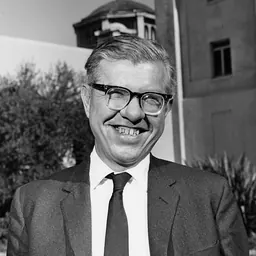
Born 1955. Shahidul Alam is a Bangladeshi and Pakistani photographer, teacher, blogger, unit still photographer and activist, known for Chobi Mela International Photography Festival, Drik Picture Library and Pathshala.
Shahidul Alam (born 1955) is a Bangladeshi media institution builder, photojournalist, public speaker, storyteller, writer, blogger, curator, and educationist.
Alam founded Drik Picture Library in 1989, Pathshala South Asian Media Institute in 1998, the Chobi Mela International Photography Festival in 1999, and Majority World in 2004. In the early 1990s, Drik's work as an internet provider introduced email to Bangladesh. It also developed the country's first Bangla font for the internet, its first webzine, and its first web portal.
Alam's books include Nature's Fury (2007) and My Journey as a Witness (2011). A photographer for over forty years, his work has been featured in publications worldwide and exhibited at the Museum of Modern Art (MOMA), Centre Pompidou, Tate Modern, Tehran Museum of Contemporary Art, the Royal Albert Hall, and the Kuala Lumpur National Art Gallery. He was also the first Asian to chair World Press Photo's International Jury.
Alam has spoken at Oxford, Cambridge, Harvard, and Stanford universities. In 2001, he was awarded an Honorary Fellowship of the Royal Photographic Society. He received the Shilpakala Padak from the president of Bangladesh in 2014, the Humanitarian Award from the Lucie Awards in 2018, and was named one ofTime magazine's Persons of the Year that same year. In 2021, he was the recognised as the CASE Humanitarian of the Year. He was awarded the Ekushey Padak (culture and education) in 2025.
Alam serves as an advisory board member of the National Geographic Society and is a National Geographic Explorer at Large.
Early life and education Shahidul Alam was born in Dacca, East Pakistan (modern-day Dhaka, Bangladesh), in 1955, and grew up in Dhanmondi. He is one of three children of physician Kazi Abul Monsur and child psychologist Quazi Anwara Monsur, and belongs to the Kazi family of Rajapur in Faridpur District.
As a child, Alam was known for navigating Dhaka's congested streets on his small fold-up bicycle. He attended Jhenaidah Cadet College, a military boarding school in western Bangladesh.
Alam pursued his undergraduate studies at the University of Liverpool, where he earned a BSc in biochemistry and genetics in 1976. During his time in Liverpool, he often wore a lungi—a traditional South Asian garment—while walking through the streets. His political awareness deepened during this period through his involvement with the Socialist Workers Party. In 1983, he won the Harvey Harris Trophy from the London Arts Council for one of his photographs—a recognition that boosted his confidence in pursuing a career in photography.
Career
In 1989, he set up Drik Picture Library, and in 1998, Pathshala South Asian Institute of Photography (later Pathshala South Asian Media Institute) in Dhaka. Pathshala "has trained hundreds of photographers". Alam set up the South Asian Media Academy.
Repression Awami League government
Crossfire Exhibition (2010) Crossfire is a series of photographs taken by Shahidul Alam. The exhibition was curated by Jorge Villacorta, a Peruvian art critic, curator, and Alam's colleague. Completed in 2010, it was displayed at Drik Gallery in Dhaka. The photographs are scenographies of extrajudicial killings, widely attributed to Bangladesh's Rapid Action Battalion (RAB). Established in 2004 as a paramilitary force to combat gangsters and street violence, by late 2007, RAB had already been accused of over 350 extrajudicial killings and the torture of hundreds more.
Citing concerns that the exhibition's focus on extrajudicial killings would "create anarchy," RAB, along with local police, forcibly shut down Drik Gallery before the opening and barricaded the venue, sparking nationwide protests.
After Drik's lawyers served legal notice on the government, the police barricade was removed. The court's response and subsequent events allowed Drik to open the exhibition for public viewing on 31 March.
Bangladesh Road-Safety Protests (2018)
On 5 August 2018, journalist David Bergman tweeted that Shahidul Alam had been taken from his home in Dhanmondi by 30 to 35 plainclothes police officers. This occurred shortly after Alam gave a live interview with Al Jazeera, where he criticized the government's violent response to the 2018 Bangladesh road-safety protests, which he had also been documenting through live videos on Facebook.
Alam was believed to have been arrested for saying that the protests "stemmed from anger about widespread government corruption, and not just the bus accident that initially sparked them."
The following morning, Alam was shown arrested by the Dhaka Metropolitan Police.
After 107 days of imprisonment, Alam was granted bail by the Bangladesh High Court and released on 20 November 2018.
Since then, he has challenged the legality of Section 57 of the ICT Act with the Bangladesh Supreme Court after his challenge was rejected by the Bangladesh High Court.
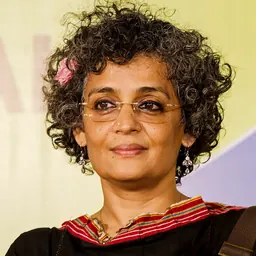
Shahidul Alam has recounted some of his experiences of imprisonment in a response to Arundhati Roy's open letter to him while he was in jail.
The push for Alam's release was global. Amnesty International and the Committee to Protect Journalists urged the Bangladeshi government to immediately release Alam without filing charges, as did the Mumbai Press Club, Bombay News Photographer Association, Reporters Without Borders, Pulitzer Center on Crisis Reporting, Prince Claus Fund and its network partners, Free Press Unlimited, World Press Photo Foundation, United Nations human rights experts, and the European Parliament.
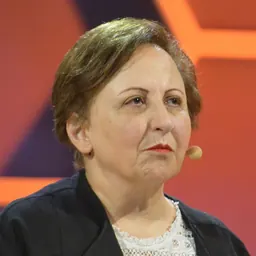
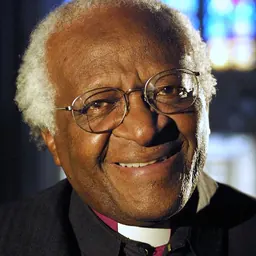
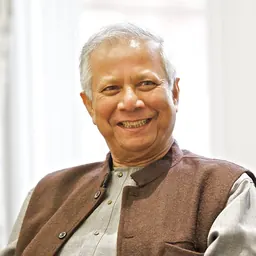
Hollywood star Sharon Stone posted a letter on Twitter demanding his unconditional release, with signatories including Jimmy Wales. Many of those who signed her letter also endorsed a revised statement issued the following day by the Robert F. Kennedy Human Rights organisation. Signatories to that statement included Archbishop Desmond Tutu, Shirin Ebadi, Tawakkol Karman, Richard Branson, Richard Curtis, Professor Muhammad Yunus, Óscar Arias Sánchez, José Manuel Ramos-Horta, and Gro Harlem Brundtland, amongst others.
A joint statement from leading British artists and curators included signatories such as Anish Kapoor, Akram Khan, and Steve McQueen. A statement released by World Press Photo 100 days into Alam's detention was signed by Romila Thapar and Salima Hashmi. Separate statements of support came from Urvashi Butalia, Faisal Edhi (son of Abdul Sattar Edhi), Angela Y. Davis, Vijay Prashad, Arundhati Roy, and Noam Chomsky. Additionally, 426 academics from various universities in Australia called on the government of Bangladesh to release him immediately.
In Dhaka, on 16 October, around 100 photographers formed a human chain at the base of Raju Memorial Sculpture under the banner of "Shahidul Alam Er Muktir Dabitey Alokchitribrindo".
On the other hand, Sajeeb Wazed, the son of Bangladeshi former Prime Minister Sheikh Hasina, questioned those defending and demanding freedom for Alam in a controversial Facebook post.
Arundhati Roy at Chobi Mela X (2019) On 4 March 2019, the Dhaka Metropolitan Police revoked an invitation for Arundhati Roy's talk with Shahidul Alam, programmed during the 10th edition of Chobi Mela International Photography Festival. After 24 hours of uncertainty, the organizers of Chobi Mela finally held her talk at an alternative venue.
Free Palestine Movement
Biennale für aktuelle Fotografie (2024) On 21 November 2023, authorities from the German cities of Mannheim, Ludwigshafen, and Heidelberg canceled the 10th edition of the Biennale für aktuelle Fotografie, scheduled for March 2024. The decision followed criticism by Shahidul Alam via his social media platforms of Israeli attacks on Palestinians in Gaza following 7 October 2023. The Biennale's board and cultural affairs departments of the three cities labeled his posts as "antisemitic". In agreement with its longstanding sponsor BASF, the Biennale was officially canceled, citing Alam's online activity.
In response, Alam stated that the Biennale had "incorrectly equated" criticism of the project of Israel with antisemitism: "We feel that the failure to draw a distinction between criticism of a government and of a people is irresponsible and damaging to the honesty of public discourse."
In an interview with Al Jazeera, he added, "I am an anti-Zionist, which means I am against colonialism, settler colonialism, racism, apartheid, and genocide. I am not an anti-Semite, and it's most unfortunate that Germany chooses to conflate the two, [as this] serves and furthers the white supremacist agenda."
Return honorary doctorate UAL (2024) In 2024, Alam returned an honorary doctorate that had been awarded to him by the University of the Arts London in 2022. The reason for his decision is the university's ongoing complicity in Israel's occupation of Palestine.
Freedom Flotilla Coalition (2025) On 27 September 2025, Shahidul Alam became the first Bangladeshi to join the Freedom Flotilla Coalition, an international civil society initiative aimed at challenging the Gaza blockade and expressing solidarity with the Palestinian people. The "Media Flotilla"s vessel, Conscience, departed from Italy on 30 September 2025. During the voyage, Alam released video messages reaffirming his commitment to reach Gaza despite potential risks. On 8 October 2025, he was detained by Israeli forces in international waters. He was released two days later, on 10 October, and subsequently traveled to Turkey. Shahidul Alam returned to Bangladesh on 11 October 2025.
Publications
Author Shahidul Alam: Singed but not burned. Edited by Ina Puri. Kolkota: Emami Art, 2023. The Tide Will Turn. Göttingen, Germany: Steidl, 2019. . My Journey as a Witness. Skira, 2011. Edited by Rosa Maria Falvo. . 2012, Kochi-Muziris Biennale, Kerala, India.
Curator 2010, Where Three Dreams Cross at Whitechapel Gallery, London.
Awards 2014: Shilpakala Padak, Shilpakala Academy, Dhaka, Bangladesh 2018: Humanitarian Award, Lucie Awards 2018: Tribute Award, Frontline Club, UK for his contribution to journalism 2019: Special Presentation Award 2019, International Center of Photography (ICP) 2020: CPJ International Press Freedom Awards 2020 2025: Ekushey Padak
Don’t just read it —
keep it.
Full-length biographies made to live with: read them, listen on the way to work, watch them tonight.
- E-book
- Audio
- Video
Instant download · yours to keep · every purchase keeps this site free
Important facts
People in Shahidul Alam's life
Named in this biography and alive at the same time


Related people
Same field, nearest in time

Contemporaries
People whose lives overlapped Shahidul Alam's

Frequently asked questions
Who is Shahidul Alam?
Bangladeshi photographer (born 1955)
When was Shahidul Alam born?
Shahidul Alam was born in 1955 in Dhaka.
What is Shahidul Alam's occupation?
Shahidul Alam is a photographer, teacher, blogger, unit still photographer and activist.
What is Shahidul Alam known for?
Shahidul Alam is known for Chobi Mela International Photography Festival, Drik Picture Library and Pathshala.
What nationality is Shahidul Alam?
Shahidul Alam is Bangladeshi and Pakistani.
Sources & further reading
Cite this page
APA: Biography.guide. (2026). Shahidul Alam. https://biography.guide/shahidul-alam-photographer/
MLA: "Shahidul Alam." Biography.guide, https://biography.guide/shahidul-alam-photographer/.
Chicago: "Shahidul Alam." Biography.guide. https://biography.guide/shahidul-alam-photographer/.
Data last updated: 2026-09-22 · Spot an error? Report a correction.
Page generated 2026-09-27 05:22 UTC