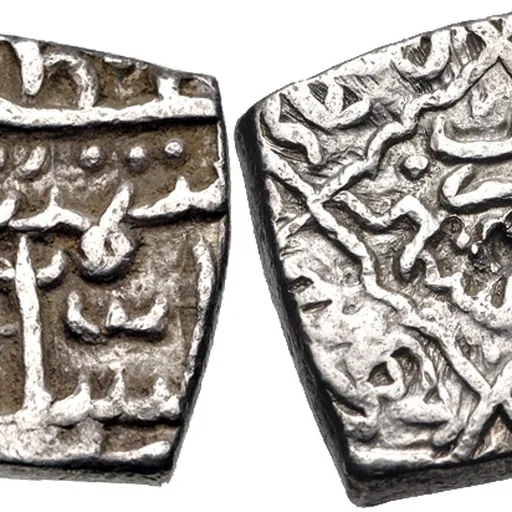
About Shah Mir
Shah Mir was a ruler.
Shamsu'd-Din Shah Mir (; – 6 July 1342), also known simply as Shah Mir or Shah Mirza, was the second Sultan of Kashmir and founder of the Shah Mir dynasty. Shah Mir is believed to have come to Kashmir during the rule of Suhadeva, where he rose to prominence. After the death of Suhadeva and his brother, Udayanadeva, Shah Mir proposed marriage to the reigning queen, Kota Rani. She refused and continued her rule for five months till 1339, appointing Bhutta Bhikshana as prime minister. After the death of Kota Rani, Shah Mir established his own kingship, founding the Shah Mir dynasty in 1339, which lasted till 1561.
Origin Modern scholarship differ on the origins of Shah Mir. However, modern historians generally accept that Shah Mir was from Swāt in Dardistan. Some accounts trace his descent from the rulers of Swāt.
Some scholars state that Shah Mir arrived from the Panjgabbar Valley (Panchagahvara), which was populated by Khasa people, and so ascribe a Khasa ethnicity to Shah Mir.
Encyclopaedia of Islam (second edition) suggests a possible Turkish origins. Andre Wink puts forward the opinion that Shah Mir was possibly of Afghan, Qarauna Turk, or even Tibetan origin, while A.Q. Rafiqi believes that Shah Mir was a descendant of Turkish or Persian immigrants to Swat.
Early career Early Service A. Q. Rafiqi states:
Annemarie Schimmel suggests that Shah Mir belonged to a family from Swat which accompanied the sage Mir Sayyid Ali Hamadani, and were associated with the Kubrawiya, a Sufi group active in Kashmir. During the reign of Suhadeva, a Tatar chief by the name of Zulju invaded Kashmir and ravaged it. Suhadeva fled the country and his general Ramachandra occupied the throne. In the confusion, an exiled Ladakhi prince in Kashmir, Rinchan , sought the aid of various generals, including Shah Mir, and led an internal uprising, seizing the throne. Rinchan embraced Islam at the hands of the ascetic, Bulbul Shah, and took the Muslim name of Sultan Sadruddin. He was later attacked by rebels and was badly wounded, dying in 1323.
Just before his death Sultan Sadruddin summoned his trusted minister, Shah Mir, who had since then risen to some prominence, and put his son, Haider, and wife, Kota Rani, in his care. After the death of Sadruddin, Kota Rani married Udayanadeva, the brother of Suhadeva. However he was a weak ruler, so nearly all duties associated with governance fell on Kota Rani.
During and After the Later Turco-Mongol Invasion During the reign of Udayanadeva, the Kashmir Valley was again invaded by Mongol-Turk forces, and Udayanadeva fled to Ladakh. Kota Rani, along with Shah Mir, called upon the many disorganized Damara (warlords of Kashmir), rallying them together. This now unified resistance defeated the invading armies, prompting their retreat from the valley.
Shah Mir set out with his army from Srinagar towards Andarkot. Kota Rani sent out a force to check his advance, but it was promptly defeated. The fort at Andarkot was then laid siege to. While this was going on, many of Kota Rani's troops, seeing the futility of the situation, deserted and joined Shah Mir, to whom most important chiefs in the kingdom had already pledged allegiance.
Reign With Kota Rani defeated and having already secured the allegiance of the powerful damara warlords, Shah Mir declared himself the ruler of Kashmir, taking on the title of Sultan Shams-ud-Din.
Shams-ud-Din worked to firmly establish Islam in Kashmir and was aided by his descendants. In an effort to keep the local feudal chiefs in check, he raised to power two indigenous families, the Magres and the Chaks. He also introduced a new era to the people of Kashmir, called the Kashmiri Era. This replaced the Laukika Era that had existed prior to this. The Kashmiri Era began with Rinchan's accession and conversion to Islam in 1320 CE (720 AH). This era remained in use until the Mughal conquest of Kashmir in 1586. Shams-ud-Din had two sons, Jamshed and Ali Sher.
He reigned for three years and five months from 1339–42. He is currently buried in Andarkot, near Sumbal.
Succession Sultan Shah Mir died in 1342. He was succeeded by Sultan Jamshid Shah Miri as the second sultan of Shah Mir Dynasty.
Don’t just read it —
keep it.
Full-length biographies made to live with: read them, listen on the way to work, watch them tonight.
- E-book
- Audio
- Video
Instant download · yours to keep · every purchase keeps this site free
Important facts
Related people
Same field, nearest in time


Frequently asked questions
Who was Shah Mir?
sultan of Kashmir (d. 1342)
When was Shah Mir born?
Shah Mir was born in Swat District.
When did Shah Mir die?
Shah Mir died in 1342 in Kashmir.
What was Shah Mir's occupation?
Shah Mir was a ruler.
Sources & further reading
Cite this page
APA: Biography.guide. (2026). Shah Mir. https://biography.guide/shah-mir/
MLA: "Shah Mir." Biography.guide, https://biography.guide/shah-mir/.
Chicago: "Shah Mir." Biography.guide. https://biography.guide/shah-mir/.
Data last updated: 2026-09-21 · Spot an error? Report a correction.
Portrait: Wikimedia Commons · author & licence
Page generated 2026-09-27 04:58 UTC