
About Seymour Jonathan Singer
Lived 1924 – 2017 (aged 92). Seymour Jonathan Singer was an American biologist, known for Membrane proteins and Sickle cells.
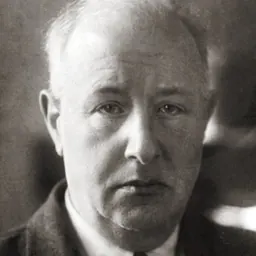
Seymour Jonathan Singer (May 23, 1924 – February 2, 2017), more commonly known as Jonathan or “Jon” Singer, was an American cell biologist and professor of biology at the University of California, San Diego.
Early life and Career Singer was born in New York City and attended Columbia University, where he earned his B.A. in 1943. He received his doctorate from the Polytechnic Institute of Brooklyn in 1947. He worked as a postdoctoral fellow with Linus Pauling at Caltech during 1947–1948, where he participated in studies demonstrating that hemoglobin in sickle-cell anemia differs from normal hemoglobin, reported in the paper "Sickle Cell Anemia, a Molecular Disease". He worked for the U.S. Public Health Service between 1948 and 1950. He joined the Chemistry Department at Yale University as an assistant professor in 1951 and was promoted to associate professor in 1957 and to professor in 1960. There he developed the ferritin-antibody, which was the first electron-dense reagent used for cell staining in electron microscopy imaging. He was awarded a Guggenheim Fellowship for Molecular & Cellular Biology in 1959.
In 1961 he joined the faculty at University of California, San Diego as a professor in the Department of Biology (now the Division of Biological Sciences).
Research At UCSD, Singer's lab conducted studies on the conformation and organization of membrane proteins in the mid-1960s, using techniques such as optical rotatory dispersion and circular dichroism. These studies contributed to the development of the Fluid Mosaic Model of the cell membrane. He later studied interactions between the cytoskeleton and the cell membrane, including work on proteins such as vinculin and talin that are involved in linking the cytoskeleton to membranes.
In 2003, he published the book The Splendid Feast of Reason, which discusses rationalism and the philosophy of science.
Honors and awards Singer was elected to the National Academy of Sciences in 1969 and to the American Academy of Arts and Sciences in 1971. He held an American Cancer Society Research Professorship from 1976 to 1991. He received the E.B. Wilson Medal from the American Society for Cell Biology and was appointed a University Professor of the University of California, a systemwide distinction, from 1988 until his retirement in 1995.
Later life and death Singer died in La Jolla on February 2, 2017.
Don’t just read it —
keep it.
Full-length biographies made to live with: read them, listen on the way to work, watch them tonight.
- E-book
- Audio
- Video
Instant download · yours to keep · every purchase keeps this site free
Important facts
People in Seymour Jonathan Singer's life
Named in this biography and alive at the same time


Related people
Same field, nearest in time
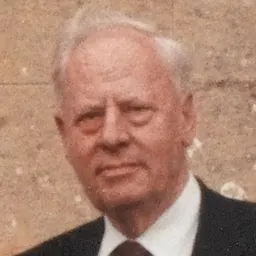
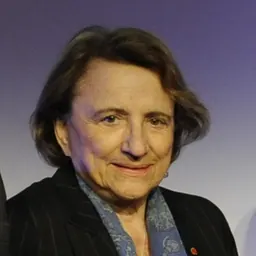

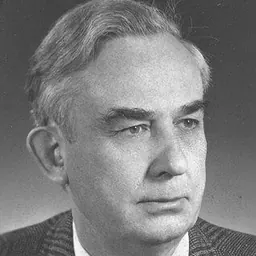


Contemporaries
People whose lives overlapped Seymour Jonathan Singer's

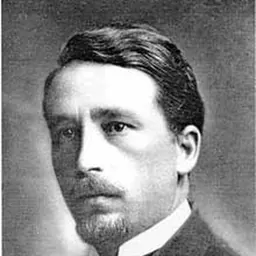

Frequently asked questions
Who was Seymour Jonathan Singer?
American biologist
When was Seymour Jonathan Singer born?
Seymour Jonathan Singer was born on 23 May 1924 in New York City.
When did Seymour Jonathan Singer die?
Seymour Jonathan Singer died on 2 February 2017 in La Jolla, California.
What was Seymour Jonathan Singer's occupation?
Seymour Jonathan Singer was a biologist.
What was Seymour Jonathan Singer known for?
Seymour Jonathan Singer was known for Membrane proteins and Sickle cells.
What nationality was Seymour Jonathan Singer?
Seymour Jonathan Singer was American.
Sources & further reading
· Wikipedia: Seymour Jonathan Singer
· DBpedia: Seymour Jonathan Singer
Cite this page
APA: Biography.guide. (2026). Seymour Jonathan Singer. https://biography.guide/seymour-jonathan-singer/
MLA: "Seymour Jonathan Singer." Biography.guide, https://biography.guide/seymour-jonathan-singer/.
Chicago: "Seymour Jonathan Singer." Biography.guide. https://biography.guide/seymour-jonathan-singer/.
Data last updated: 2026-09-20 · Spot an error? Report a correction.
Page generated 2026-09-27 05:28 UTC