
Seth Ward
Bishop of Salisbury, mathematician and astronomer
About Seth Ward
Lived 1617 – 1689 (aged 71–72). Seth Ward was an English mathematician, astronomer, university teacher, anglican priest, theologian and bishop.
Seth Ward (1617 – 6 January 1689) was an English mathematician, astronomer, and bishop.
Early life
He was born in Hertfordshire, and educated at Sidney Sussex College, Cambridge, where he graduated B.A. in 1636 and M.A. in 1640, becoming a Fellow in that year. In 1643 he was chosen university mathematical lecturer, but he was deprived of his fellowship next year for opposing the Solemn League and Covenant (with Isaac Barrow, John Barwick and Peter Gunning).
In 1649, he became Savilian professor of astronomy at Oxford University, and gained a high reputation by his theory of planetary motion, propounded in the works entitled In Ismaelis Bullialdi astronomiae philolaicae fundamenta inquisitio brevis (Oxford, 1653), against the cosmology of Ismael Boulliau, and Astronomia geometrica (London, 1656) on the system of Kepler. About this time he was engaged in a decades-long philosophical controversy with Thomas Hobbes: Seth Ward and John Wallis, both Savilian professors and members of the Anglican clergy, felt offended by the works of Hobbes, particularly after Leviathan was released.
In 1659, Ward was appointed President of Trinity College, Oxford, but not having the statutory qualifications he resigned in 1660. Also in 1660, Ward became one of the founding fellows of the Royal Society of London. After Isaac Newton demonstrated his reflecting telescope before the Society, Ward nominated Newton as a new fellow, a position to which Newton was duly elected in 1672.
Churchman King Charles II appointed him to the livings of St Lawrence Jewry in London, and Uplowman in Devonshire, in 1661. He also became dean of Exeter Cathedral (1661) and rector of St Breock, Cornwall in 1662. In the latter year he was consecrated Bishop of Exeter, and in 1667 he was translated to the see of Salisbury. The office of Chancellor of the Order of the Garter was conferred on him in 1671.
In his diocese he showed great severity to nonconformists, and rigidly enforced the act prohibiting conventicles (unofficial religious meetings). He spent a great deal of money on the restoration of the cathedrals of Worcester and Salisbury. He died at Knightsbridge on 6 January 1689.
In 2017 Bishop Wordsworth's Grammar School named its new, fifth house (Ward House) after Bishop Ward.
Don’t just read it —
keep it.
Full-length biographies made to live with: read them, listen on the way to work, watch them tonight.
- E-book
- Audio
- Video
Instant download · yours to keep · every purchase keeps this site free
Important facts
People in Seth Ward's life
Named in this biography and alive at the same time

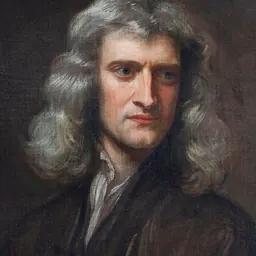
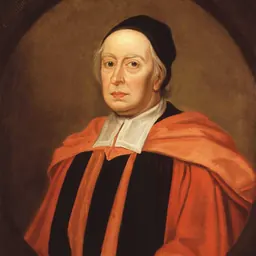
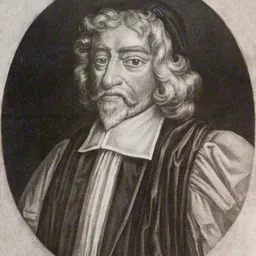


Related people
Same field, nearest in time
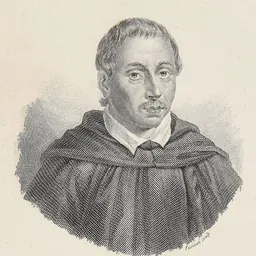
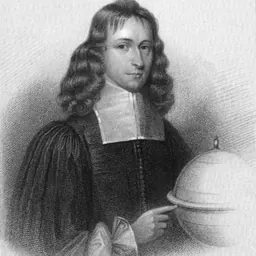
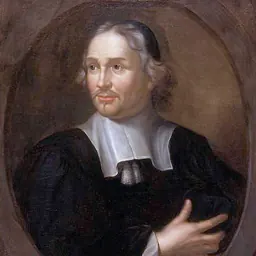
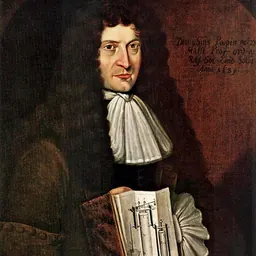
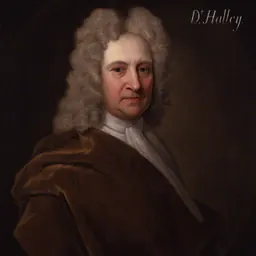
Contemporaries
People whose lives overlapped Seth Ward's




Frequently asked questions
Who was Seth Ward?
Bishop of Salisbury, mathematician and astronomer
When was Seth Ward born?
Seth Ward was born in 1617 in Aspenden.
When did Seth Ward die?
Seth Ward died on 6 January 1689 in London.
What was Seth Ward's occupation?
Seth Ward was a mathematician, astronomer, university teacher, anglican priest, theologian and bishop.
What nationality was Seth Ward?
Seth Ward was English.
Sources & further reading
· DBpedia: Seth Ward (bishop of Salisbury)
Cite this page
APA: Biography.guide. (2026). Seth Ward. https://biography.guide/seth-ward/
MLA: "Seth Ward." Biography.guide, https://biography.guide/seth-ward/.
Chicago: "Seth Ward." Biography.guide. https://biography.guide/seth-ward/.
Data last updated: 2026-09-20 · Spot an error? Report a correction.
Page generated 2026-09-27 05:31 UTC