
About Sergio Barroso
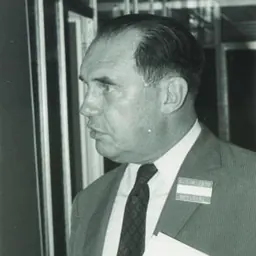
Born 1946. Sergio Barroso is a Cuban composer and university teacher.
Sergio Fernández Barroso (also known as Sergio Barroso) (b. Havana, Cuba, 1946) is a Cuban composer, performer and professor.
Academic Background
Sergio Barroso studied piano, theory and organ with Alfredo Levi, César Pérez Sentenat, Edgardo Martín, and Alfredo Diez Nieto at the Havana National “Amadeo Roldán” Conservatory, where he received an Honours Diploma in 1966.
At a later time he did post-graduate studies in composition and theory with Václav Dobiáš and Karel Jánacek at the Superior Academy of Music (AMJ) in Prague, and obtained a Post-Graduate Certificate at this institution in 1968. He took private classes with Alois Hába in the same city. Barroso also studied Orchestral Conducting with Manuel Duchesne Cuzán and Gonzalo Romeu at the Superior Institute of Arts (ISA), in Havana and computer music with John Chowning and Jean-Claude Risset at CCRMA, Stanford University (USA).
Performer
As a keyboardist, Barroso has mainly performed his own music and has also specialized in baroque music. He has performed at the National Arts Centre (Ottawa), IRCAM and UNESCO (Paris), South Bank Centre (London, UK), Pollack Hall, Chapelle historique du Bon-Pasteur (Montréal) and Glenn Gould Studio (Toronto); as well as in Cuba, Banff, Bourges, Brussels, Calgary, Kingston, Madrid, Mexico City, Miami, Oslo, Prague, Seattle, and Vancouver. Barroso has commissioned and premiered numerous works for keyboard controlled synthesizers by Canadian composers.
Professor
Sergio Barroso served as professor at the National Conservatory in Havana, Cuba from 1968 to 1973 and from 1978 to 1980. He taught at the National School of Music in Havana from 1968 to 1976, and at the University of Havana from 1976 to 1980. He was also appointed as Head of the music departments at the National Library of Havana and the Havana University; as Head of contemporary music for the Cuban Broadcasting Institute, from 1975 to 1977; and as head of music for the Ministry of Culture, Cuba from 1977 to 1980.
In 1980, Barroso established his permanent residence in Canada, and after a brief period teaching at Trent University, he moved to the West Coast to teach at the University of Victoria from 1981 to 1984, and at the Simon Fraser University in 1986. He has also taught electronic music and FM synthesis at the Mexico City National “Carlos Chávez” Conservatory.
Awards and recognitions
Sergio Barroso has received numerous recognitions in Cuba, Canada, Europe, Latin America, and the USA, including awards in the Concours International de Musique Électroacoustique de Bourges (1980); the Cintas/Arts International (New York City, 1999); the International Music Council (IMC) Rostrums of Composers (Paris, 1994, 1980); the IMC Rostrums of Electroacoustic Music (TIME) (Helsinki, 1994), (Oslo, 1990); IMC Rostrum of Latin American Music (TRIMALCA, Santafé de Bogotá, 1979); the Lynch-Staunton Award (2000), and several national awards in Cuba (chamber music 1973, 74; symphonic music, 1974; choral music, 1974; electronic music, 1979).
Other professional activities
Barroso has been appointed as Director of the Music departments at the Havana National “José Martí” Library (1970–72), the University of Havana (1972–76), and the Cuban Ministry of Culture (1976–80); as music writer for the Havana daily paper Juventud Rebelde (1975–80), and as broadcaster for the Cuban National Radio and Television Network (ICRT) (1969–80), and the Vancouver Cooperative Radio (1985–90). He also served as secretary-general of the Cuban section of the International Music Council (IMC) (1976–80); as an associate of the Canadian Music Centre, as a member of the Canadian League of Composers and of SOCAN, and as a founding member of the Canadian Electroacoustic Community.
Works
Sergio Barroso's ample catalog include music for ballet (La Casa de Bernarda Alba, Plasmasis); for acoustic instruments or ensembles with tape or live electronics (including six works in his Yantra series, 1973–82); and purely electronic works.
Orchestra:
Concierto, oboe, orchestra, 1967–68 Oda al soldado muerto, large orchestra, 1968 Concerto for String(s) and Four Sound Sources, 1972 Yantra VII, large orchestra, 1977 Tropical Sweet, string orchestra, 1986 La Fiesta grande, synthesizers (1 player), orchestra, 1990 Jitanjáfora, violin, orchestra, 1993 Concerto, viola, orchestra, 1995–96 (also version as Viola Desnuda, viola)
Chamber:
Cuarteto de cuerdas, string quartet, 1967 Concierto, piano, percussion, audience, fixed media, 1968 Yantra I, guitar, fixed media, 1972 Yantra III, guitar, fixed media, 1972 (also version for 2 guitars, 1973) Yantra II, 14 winds, 1973–74 Yantra IV, flute (+ piccolo, alto flute), fixed media, 1975 Yantra V, guitar, 1975 Yantra IX, soprano saxophone (+ alto saxophone), fixed media, 1979 Yantra X, bassoon, fixed media, 1981–82 Quince Miradas a Don Quijote, 2 guitars, 1984 Danzas coloniales Cubanas, French horn, 2 trumpets, trombone, tuba, 1984 En febrero mueren las flores, violin, fixed media, 1987 Canzona, synthesizers (1 player), fixed media, 1988 La Fiesta, synthesizers (1 player), fixed media, 1989 Crónicas de ultrasueño, oboe/clarinet/trumpet, synthesizers (1 player)/fixed media, 1992 Sonatada, synthesizers (1 player), 1992 Charangas delirantes, synthesizers (3 players), 1993 (also version for synthesizers [1 player], fixed media, 1993) Viejas voces, viola, fixed media, 1993–94 Crónicas II, viola, synthesizers (1 player)/fixed media, 1995 Viola Desnuda, viola, 1995–97 (version of Concerto) La Noche, bass clarinet, viola, fixed media, 1997 (also versions for bass oboe, bass clarinet, fixed media, 1997; 2 bass clarinets, fixed media, 1997; fixed media) Sandunga, viola, fixed media, 1997 (also version for clarinet, fixed media, 1997) Cuartetas, bass clarinet, viola, piano, synthesizers (1 player)/fixed media, 1999 Callejos, bass clarinet, fixed media, 1999 Pregones, cello, fixed media, 2000 Rocambole, violin/viola, cello, fixed media, 2001 Hélice, soprano saxophone, fixed media, 2003–05
Vocal:
El Ángel desengañado (text by Rafael Alberti), alto, piano, 1963 Tres Canciones azules (text by Rafael Alberti), soprano, piano, 1963 Tres Canciones grises (text by Federico García Lorca), alto, piano, 1963 Grietas (text by Xiomara Funes), soprano, piano, 1965 Noema II, voice, guitar, violin, double bass, piano, fixed media, 1972 Ireme, mezzo-soprano, percussion, fixed media, 1975 (concert version of ballet) Verdehalago (text by Mariano Brull), high soprano, alto flute (+ piccolo), violin, double bass, percussion, live electronics, 2004–06
Piano:
Microsuite, 1965 Variaciones del Motoriongo, 1966 Música para pequeños oídos, 1966 Yantra VIII, 1978 Yantra VI, piano, fixed media, 1976–79 Liborio, piano, fixed media, 2008
Electroacoustic:
Las Barricadas misteriosas, fixed media, 1982 Soledad, fixed media, 1987 Tablao, guitar ad libitum, fixed media, 1991 La Noche, fixed media, 1997 (version of chamber work)
Stage:
Plásmasis (ballet, choreography by Alicia Alonso), orchestra, fixed media, 1970 Dinamia (ballet), fixed media, 1972 La Casa de Bernarda Alba (ballet, choreography by Alicia Alonso, after Federico García Lorca), small orchestra (14 winds, 8 brass), fixed media, 1971–75 Ireme (ballet, texts from Abakuá folklore from Cuba), mezzo-soprano, percussion, fixed media, 1975 (may be performed as a concert work) Neverland (dance music), fixed media, 1976 The Tempest (incidental music, play by William Shakespeare), fixed media, 1984
Multimedia:
Rumbos, fixed media, slide projections (by Sandú Darié), 1975
Discography
Variaciones del Motoriongo. Nancy Casanovas, piano (Areíto: LDA-3589) (LP) Concierto (piano, percussion, audience, fixed media); Yantra I; Yantra IV. Luis Bayard, flute, piccolo, alto flute; Flores Chaviano, guitar; Sergio Barroso/percussion of the Orquesta Sinfónica de La Habana (Areíto: LDA-3631) (LP) Yantra III (original version). Flores Chaviano, guitar (Areíto: LDA-3721) (LP) Yantra VIII. Ileana Peña, piano (Areíto: LDA-3800) (LP) Oda al soldado muerto. Enrique González Mántici/Orquesta Sinfónica de La Habana (Areíto: LDA-7000) (LP) Crónicas de ultrasueño (version with oboe). Lawrence Cherney, oboe; Sergio Barroso, synthesizers (Centrediscs: CMCCD 4793) La Fiesta; Crónicas de ultrasueño (version with oboe); En febrero mueren las flores; Charangas delirantes; Sonatada; Viejas voces; Tablao (version for fixed media); Yantra X; Canzona. León Biriotti, oboe; Jesse Read, bassoon; Adele Armin, violin; Laura Wilcox, viola; Sergio Barroso, synthesizers (empreintes DIGITALes: IMED 9628/29) Yantra I; Yantra III (original version); Yantra IV; Yantra VI; Yantra IX. Luis Bayard, flute, piccolo, alto flute; Miguel Villafruela, soprano saxophone, alto saxophone; Flores Chaviano, guitar; Jorge Gomez Labraña, piano (IREME: 19732001) La Noche (version for fixed media); En febrero mueren las flores; Sandunga (original version); Las Barricadas misteriosas. Adele Armin, violin; Laura Wilcox, viola (IREME: 19822002) Concerto (viola); Jitanjáfora; La Casa de Bernarda Alba (excerpts). Adele Armin, violin; Laura Wilcox, viola; Alex Pauk/Esprit Orchestra; Sergio Barroso/Orquesta Sinfónica de la Ópera Cubana (IREME: 19962001) La Fiesta. Sergio Barroso, synthesizers (Radio Canada International: ACM-37) Soledad; Canzona. Sergio Barroso, synthesizers (Société nouvelle d’enregistrement: SNE 556) Viola Desnuda. Laura Wilcox, viola (Société nouvelle d’enregistrement: SNE 654)
Don’t just read it —
keep it.
Full-length biographies made to live with: read them, listen on the way to work, watch them tonight.
- E-book
- Audio
- Video
Instant download · yours to keep · every purchase keeps this site free
Important facts
People in Sergio Barroso's life
Named in this biography and alive at the same time




Related people
Same field, nearest in time

Contemporaries
People whose lives overlapped Sergio Barroso's




Frequently asked questions
Who is Sergio Barroso?
Cuban composer
When was Sergio Barroso born?
Sergio Barroso was born on 4 March 1946 in Havana.
What is Sergio Barroso's occupation?
Sergio Barroso is a composer and university teacher.
What nationality is Sergio Barroso?
Sergio Barroso is Cuban.
Sources & further reading
Cite this page
APA: Biography.guide. (2026). Sergio Barroso. https://biography.guide/sergio-barroso/
MLA: "Sergio Barroso." Biography.guide, https://biography.guide/sergio-barroso/.
Chicago: "Sergio Barroso." Biography.guide. https://biography.guide/sergio-barroso/.
Data last updated: 2026-09-20 · Spot an error? Report a correction.
Page generated 2026-09-27 05:00 UTC