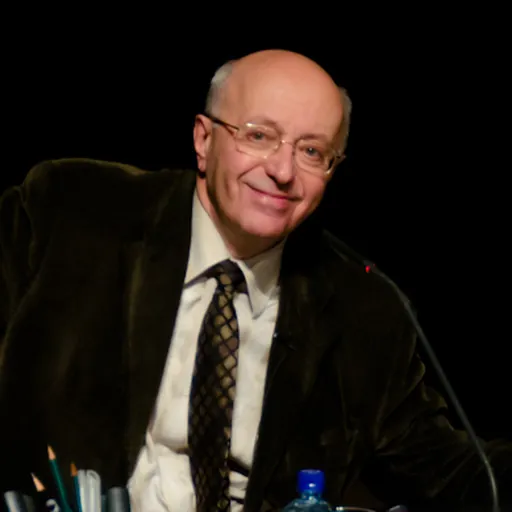
About Sergey Kurginyan
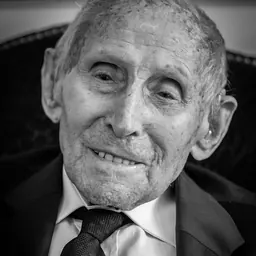
Born 1949. Sergey Kurginyan is a Russian political scientist, television presenter and geophysicist, known for Essence of Time (movement).
Sergey Yervandovich Kurginyan (; born 14 November 1949) is a Russian politician, scientist, and theatre producer. He is the founder and leader of the Russian neo-Soviet movement Essence of Time. Biography He was born in Moscow; his father, Yervand Amayakovich Kurginyan (1914–1996), of Armenian origin, was a professor of modern history and a specialist on the Middle East. His mother, Mariya Sergeyevna Kurginyan (Bekman) (1922–1989), was a senior research fellow at the Gorky Institute of World Literature, an expert on Thomas Mann and the author of several monographs. His maternal grandfather was a White officer who went over to the Red side in the Civil War; he was executed on 2 November 1938.
Kurginyan graduated from the Moscow Institute of Geological Exploration with the specialty of geophysics (1972). He finished at Shchukin's Theatre School (1983), specializing in "directing the drama." He gained his Ph.D. in Mathematical Sciences, Fellow Institute of Oceanology, USSR Academy of Sciences (1974–1980). Up to 1986, he was a senior research fellow at the Laboratory of Applied Cybernetics, Moscow Institute of Geological Exploration.
Soviet period Kurginyan was a member of the commission on new theatrical forms of the Theatre Union of the RSFSR and the initiator of the socio-economic experiment "Studio Theatre at the collective work contract." In 1967, while a student, Kurginyan created his own Theatre Studio which in 1986, together with the studios of M. Rozovsky, "the South-West", "Man" and others took part in the experiment "Theatre in the collective work contract." According to the results of the experiment Kurginyan's theatre "On the boards" got the status of a state theatre. The theatre of Sergey Kurginyan confesses Philosophy and metaphysical approach to the phenomena of our time.
From the 1980s, Kurginyan in parallel to his theatre activities was engaged in the analysis of the political process. In early 1987, he founded a theater club On the Boards (Na doskakh) which was sponsored by the Moscow City Council and was under the personal patronage of Yurii Prokof'ev, the Moscow gorkom first secretary; this allowed Kurginyan contact with powerful commmunist party members and state leaders. In November 1987, the executive committee of the Moscow City Council by the decision N 2622 created the "Experimental Creative Center" which was based on the theatre-studio "On the boards" and gave him the set of premises on the Vspolny Lane in Moscow. In 1988, Kurginyan became an official member of the communist party,
The Moscow-based Experimental Creative Center came to employ several thousand specialists, and became a state-sponsored think tank tasked with coming up with a plan to restore order in the Soviet economy and society.
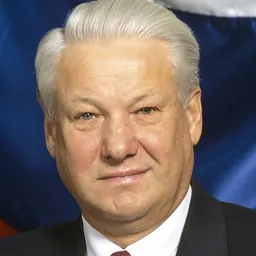
In February 1991, the new Soviet prime minister Valentiv Pavlov ordered the Ministry of Defense, Ministry of Internal Affairs, and KGB to assign Kurginyan and his center elite officers. Kurginyan's views influenced Vladimir Kryuchkov, who, under Kurginyan's urging, frequently accused Western capital of carrying out an operation of "economic sabotage" against the USSR. Prime Minister Pavlov was also inspired by Kurginyan to accuse private banks of Canada, Austria, and Switzerland of running a grand scheme of undermining the economic independence of the USSR. which led to the creation of the so-called Semibankirschina — a closed group of oligarchs who owned over 50% of all Russian resources, the majority of Russian mass media, and who promoted Boris Yeltsin during the presidential election of 1996. Between 1996 and 2000 they turned into the main power behind Russian politics and economy, unofficially manipulating Yeltsin and his decisions.
In his own words, he participated in the removal of Gen. Alexander Lebed from the post of Secretary Russian Security Council.
In 2007, before the presidential election in Russia he said that "the principle of presidential power in Russia is a more fundamental constitutional than the principle, which refers to the two-term presidency," and expressed concern that "if Putin tries to move from the presidency at a millimeter, it will collapse the system."
From July to December 2010 he was a co-host of TV program "The court of time."
In 2011, after the United Russia Party Congress, in comments on the nomination of Putin as a candidate for President of Russia, Kurginyan said that "a process that they would like to turn towards a return to radical liberalism, in this side it did not turn". He added that "the de-Stalinization of radical liberalism, the return to the dead mythology and types of social and cultural life, - this all is over in the near future." Addressing his supporters, Kurginyan also stressed that this did not happen due to "between others thanks to our modest efforts."
He is the author and the host of the "anti show" program "The essence of time", published since February 2, 2011 on the video-hosting service Vimeo, the site of the Experimental Creative Center and the site of the virtual club "The essence of time". The program, among other things, says the idea of the messianic role of Russia in the modern world.
Since August 2011 he is co-host (along with Nicholas Svanidze) of the project "The historical process" on TV "Russia."
Kurginyan wrote many political books such as "Field of the response action", "Russian question", "Post-restructuring", "Seventh Scenario","Weakness of power", "Swing", "Esau and Jacob", "Theory and practice of political games", "Radical Islam", "Political Tsunami".
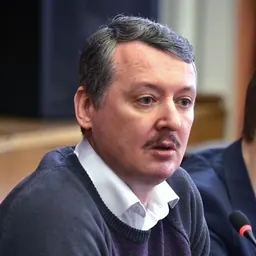
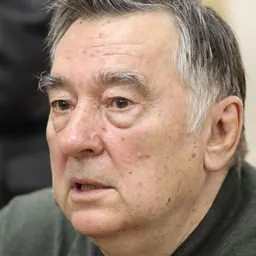
In July 2014, during the War in Donbas, Kurginyan accused Igor Girkin (Strelkov) of surrendering Sloviansk and not keeping his oath to die in Sloviansk. Kurginyan believed that surrendering Sloviansk was a war crime, and Strelkov should be responsible for that. According to Aleksandr Dugin, Kurginyan is a traitor and is working for oligarchs, Yukos and Israel.
In the words of journalist Alexander Nevzorov, if we had had Kurginyan and Dugin instead of Putin, "there would have been hell for all of us to pay, they would have unleashed a European and World War without a shadow of a doubt, without considering consequences at all". But "Dugin and Kurginyan do not have the slightest impact on what is going on in the Kremlin and do not even get coaching there". neo-Stalinist, and a Soviet nostalgic. In 1990 and 1991, Kurginyan's views played an influential role as a theoretical basis for the conservative members of the Communist Party of the Soviet Union and Soviet nationalists who sought to preserve the Soviet political system and the economy; he postulated an economic reform based on concentrating resources within a small sector of party-controlled, privileged, empowered firms. This was to enable the USSR to achieve technological progress while maintaining a command economy. Kurginyan blamed the Western security services for the Soviet financial problems, and criticized Russian democrats for believing that the West would save the Russian economy. which combined "extreme nationalism and communist revivalism" and synthesized communism with Eurasian collectivism; it represented both nationalist and neo-communist opposition to Gorbachev and Yeltsin.
Kurginyan envisioned a Soviet Union as a politically authoritarian, economically modern and culturally traditionalist state which an economy composed of state-controlled large industrial and agrarian corporations. He argued that the USSR could not follow the Western path of development as it represented a unique historico-cultural civilization, stating that the Russian "Orthodox–Muslim, Eastern communitarian tradition" was at odds with Western individualism, and that liberal capitalism was bound to fail in Russia. According to Kurginyan, the USSR could have saved itself by committing all amenable political forces around the "salvation of the country and the State", which he described as committing the USSR to development based on geopolitical realities, "cultural-historical uniqueness", and traditions and resources. He contended that through retaining command economy and empowering security forces, USSR would have developed rapidly as a leading economic power and a new type of civilisation.
Kurginyan postulated a program called "post-perestroika", which was to renew and preserve the USSR following Gorbachev's destabilizing reforms. It was considered "a fusion of communism, nationalism and Orthodox Christianity"; imbuing communism with Christianity, he stressed the need to revert liberal reforms and transform Soviet ministries into state corporations. Soviet managers would become "knights and priests of the red faith" to safeguard the preservation of the Soviet command economy and loyalty to the communist cause. Kurginyan saw it as necessary to demonstrate that communism in Russia was not accidental but instead had "deep metaphysical roots" in Russian tradition. According to Kurginyan, the modernization of the USSR could only succeed if carried out without dependence on foreign credits, and required both preserving the Soviet total dominance of state in the economy and transforming the communist doctrine into one capable of imposing greater discipline. Walter Laquer characterized Kurginyan's renewed communist doctrine as "a monasticascetic metareligion combining spiritual communism with Christianity (both fundamentalist and Teilhardian), Russian patriotism, anti-Westemism, [and] Third Worldism". Laquer added that Kurginyan proposes a "form of national or state socialism".
His views were described as close to that of 1920s National Bolsheviks and he was considered a representative of a hardline CPSU tendency that sought to develop a form of nationalist socialism. Kurginyan attached the survival of the USSR to an embrace of a collectivist, Slavophile nationalism. Rejecting capitalism as a product of individualist societies alien to the collectivist "Eastern type of civilisation", Kurginyan saw Soviet socialism as something based on the Russian tradition and cultural nature; to him, Russia was destined to have a "command economy, political centralisation, and authoritarianism". On communism, he stated: "Communism is not just an invention, but the historical destiny of the peoples inhabiting our country and as long as our State lives, it will not change this path." He has declared that the purpose of his life is to bring back the USSR. Kurginyan calls for the unification of Russia and Belarus "at all costs"; Kurginyan advocates "Soviet Union 2.0"; his movement, the Essence of Time, has the establishment of "Soviet Union 2.0" as its objective, seeing the dissolution of the USSR as a great tragedy. The Soviet Union 2.0 is to be a nationalist and conservative country, promoting "extremely conservative values in the cultural sphere" and the patriarchal model of the family. The Essence of Time regularly sent supplies to pro-Russian rebels in Donetsk and Luhansk, and apart from seeking to re-establish the USSR, it also pledges "bringing to account" those responsible for its fall.
Kurginyan saw the October Revolution as fully justified, arguing that the Bolsheviks acted in the name of the Russian civilization as they "prevented the collapse into chaos of the Russian State". He strongly supported the 1991 August coup, and claimed that he was the coup's ideologue; Irish historian Judith Devlin stated that while Kurginyan's influence on the August coup is hard to measure, "he certainly prepared the ground for it ideologically". Kurginyan rejected the proposals of a unity between the communists and neo-fascists, and condemned Russian political movements that celebrated Mussolini or national socialism. He had also strongly rejected Eurasianism. Nevertheless, his ideas were appropriated by the Izborsky Club of Dugin and Alexander Prokhanov, which postulated a "red-white-brown" coalition between communists (red), Tsarist nostalgics (white), and fascists (brown).
Don’t just read it —
keep it.
Full-length biographies made to live with: read them, listen on the way to work, watch them tonight.
- E-book
- Audio
- Video
Instant download · yours to keep · every purchase keeps this site free
Important facts
People in Sergey Kurginyan's life
Named in this biography and alive at the same time

Related people
Same field, nearest in time


Contemporaries
People whose lives overlapped Sergey Kurginyan's


Frequently asked questions
Who is Sergey Kurginyan?
Russian scientist
When was Sergey Kurginyan born?
Sergey Kurginyan was born on 14 November 1949 in Moscow.
What is Sergey Kurginyan's occupation?
Sergey Kurginyan is a political scientist, television presenter and geophysicist.
What is Sergey Kurginyan known for?
Sergey Kurginyan is known for Essence of Time (movement).
What nationality is Sergey Kurginyan?
Sergey Kurginyan is Russian.
Sources & further reading
Cite this page
APA: Biography.guide. (2026). Sergey Kurginyan. https://biography.guide/sergey-kurginyan/
MLA: "Sergey Kurginyan." Biography.guide, https://biography.guide/sergey-kurginyan/.
Chicago: "Sergey Kurginyan." Biography.guide. https://biography.guide/sergey-kurginyan/.
Data last updated: 2026-09-22 · Spot an error? Report a correction.
Portrait: Wikimedia Commons · author & licence
Page generated 2026-09-27 05:03 UTC