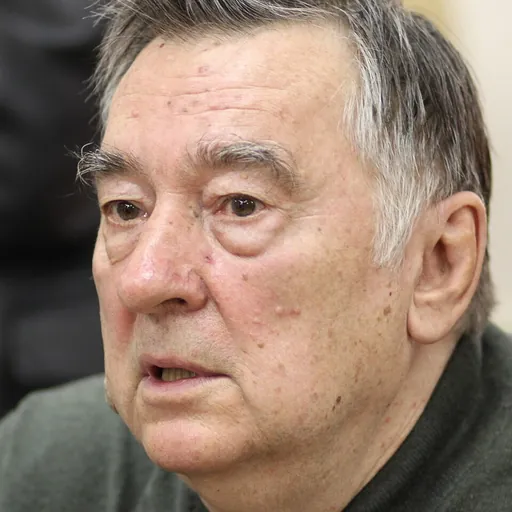
Alexander Prokhanov
Soviet and Russian writer and political activist
About Alexander Prokhanov
Born 1938. Alexander Prokhanov is a Russian journalist, writer, editing staff, public figure, screenwriter and opinion journalist.
Alexander Andreyevich Prokhanov (; born 26 February 1938) is a Russian writer, a member of the secretariat of the Writers Union of the Russian Federation, and the author of more than 30 novels and short story collections. He is the editor-in-chief of Russia's extreme-right (or radical-reactionary) newspaper Zavtra (Завтра, Tomorrow), that combines ultranationalist and anti-capitalist views.
Early life Alexander Prokhanov was born in Tbilisi, Soviet Georgia, to which his ancestors, members of the Russian Christian "Molokan" sect, had been deported by Catherine the Great. His grand-uncle Ivan Prokhanov was a leader of the All-Russian Union of Evangelical Christians (1908–1928) and the one-time vice-President of the Baptist World Alliance who left the USSR in 1928 and died as an emigré.
In 1955, Prokhanov enrolled into the Moscow Aviation Institute where for the first time he started to write poetry and prose. After the graduation he worked as an engineer at a Ministry of Defense factory, then, in 1962–1964, as a forester in Karelia and the Moscow Oblast.
Career Prokhanov's short story "The Wedding" (1967) garnered some critical praise and is considered his breakthrough. As a foreign correspondent, Prokhanov visited Afghanistan, Nicaragua, Cambodia, Angola, and Ethiopia, these assignments providing him with material for future literary work. Prokhanov was the first to report on the March 1969 events on Damansky Island during the Sino-Soviet border conflict.
It was Prokhanov who, in July 1991, wrote the text of "A Word to the People", a political open letter subsequently signed by Gennady Zyuganov, Vasily Starodubtsev, Igor Shafarevich, Valentin Rasputin, Valentin Varennikov, and Eduard Volodin among others. The document calling for the formation of a united "patriotic front" was seen, in retrospect, as an ideological platform for the failed August coup d'etat attempt. The publication of the manifest brought about the rift between Prokhanov and General Alexander Rutskoy (whom he once helped to be rescued from captivity in Afghanistan and later backed his election campaign). The latter, speaking on Russian TV, promised his former friend "ten years in jail." This situation changed in the early 2000s when Prokhanov found himself among the Russian literary elite, even if his prose was getting increasingly morbid, surreal and apocalyptic. As the 1999 terrorist attacks upon residential houses shocked Russia, Prokhanov accused the state secret services in plotting these attacks and based his next novel upon these suspicions. In 2002, Mr. Hexogen (2001) brought him the National Bestseller Award.
In the mid-2000s, writing several books a year (including numerous re-makes of his best-known 20th-century work), Prokhanov became an omnipresent character of the Russian media, frequenting TV talk shows and disputes as a token "opposition's spiritual leader". Since 2003, he has been a regular guest of Vladimir Solovyov's prime time political shows On the Stand and Duel. From 2007–2014, Prokhanov had a one-hour weekly slot at the pro-liberal Echo of Moscow radio station. Another station he has contributing to since 2009 is the Russian News Service where he has two one-hour programs a week.
Works Prokhanov on 14 June 2007, presenting the book Beyond the Rublyovka Fences. Prokhanov debuted with a short story collection I Am Going My Way (1971), starting out as a proponent of the Village Prose movement, portraying the life of the ordinary Soviet villagers obsessed with keeping the old traditions and customs going. "The theme of Russia and Russian people for Prokhanov is not a vogue, but part of his very soul; this young author's prose is incredibly sincere," Yury Trifonov commented in a foreword. It was followed by The Unburnt Blossom (1972), the collection of sketches from the Soviet country life, and The Grass Gets Yellow (1974), a collection of stories and novellas much in the same vein.
Prokhanov's first novel The Nomadic Rose (1975) dealt with the Soviet life in Siberia and Russian Far East which he had travelled over extensively by this time. The Time is Noon (1977), The Locale (1979) and The Eternal City (1981) continued exploring the technological progress versus nature theme. a surreal portrayal of the nightmarish events of 3–4 October 1993, has been defined by Prokhanov himself as "the Catechism of resistance." "Filling those pages I felt like I was painting frescos, with soldiers as angels and saints, BTRs and tanks for horses and halos," Prokhanov said in an interview. It was followed by Those Marching Through the Night (2001), the novel on the second Chechen campaign, highlighting the author's belief that Russians and Chechens were two brother nations destined to live in peace and love but torn apart by enemies from abroad.
His 2005 novel Political Scientist featured a character named Dyshlov, a thinly veiled caricature of Zyuganov whom Prokhanov has been completely disillusioned with recently and holds responsible for the inefficiency of the Russian left. "There will be a place for everyone in it: the left and the right, Orthodox Christians and Muslim fundamentalists, synagogues and big business... like the Bolsheviks used the potential of the Romanov Empire, the Fifth Empire is to be composed of all kinds of disparate elements," he commented.
Literary awards The Konstantin Fedin Award (1980) The USSR Ministry of Defense Literary Prize (1988) The International Mikhail Sholokhov Prize (1998) National Bestseller Prize (2002) The Bunin Prize (2009) The All-Russian Nikolai Leskov Prize (2012) The Golden Delvig (Literaturnaya Gazeta Prize, 2013)
Political activism
Prokhanov with Aleksey Mozgovoy, the Lugansk militia leader. 7 August 2014 A controversial figure, Prokhanov is seen in Russia by some as an original author sporting "a rare combination of postmodernist ethics and imperialist agenda," and by others as a purveyor of extremist nationalistic views which formed the ideological platform of Zavtra, the ultra-conservative newspaper he's been the leader of since 1993. Another Russian ultra-nationalist, Aleksandr Dugin, credited Prokhanov with being "the godfather of the New Russia opposition movement" even if deploring his refusal to take a more active part in it and choosing instead to back up political figures Dugin referred to as "the Staraya Square monsters".
On 4 October 1993, the Ministry of Justice of Russia ordered a stop to the editorial and publishing activity of the newspaper Day; its office was raided by OMON, archive files and property was confiscated, staff members were physically assaulted.
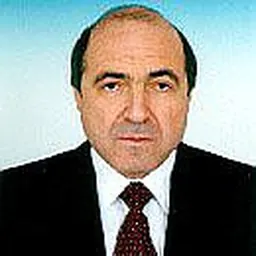
In 2003, Prokhanov, Boris Berezovsky, and Viktor Alksnis issued a joint statement concerning the Nord Ost terrorist attack, blaming the Russian authorities for the heavy loss of life and accusing Vladimir Putin of inefficiency. Also in 2003, Berezovsky and Prokhanov issued another joint memorandum, this time blaming the authorities for the murder of Sergei Yushenkov, and warning the people against the "great dangers coming from the Kremlin." Commenting on the Russian war with Georgia, Prokhanov said that Russia "has not been defeated by the West in the Cold War, because the Cold War continues. We lost gigantic territories, but we held Moscow. From here we launched our counterattack."
Prokhanov founded Izborsky Club, a Eurasian think tank, in 2012.
During the war in Donbas, Prokhanov praised the Prime Minister of the self-proclaimed pro-Russian Donetsk People's Republic Alexander Borodai as a "true White Russian nationalist".
In November 2014, a Russian court ordered Prokhanov to pay 500 thousand rubles to Andrey Makarevich whom he falsely accused (in the Izvestia-published article) of entertaining paratroopers in Sloviansk ("where he was heard by people in basements with broken hands and put out eyes") while the singer in fact performed in Sviatohirsk, singing for refugees.
Select bibliography
I Am Going My Way (Иду в путь мой, 1971) Letters About the Country (Письма о деревне, 1971) The Unburnt Blossom (Неопалимый цвет, 1972) The Grass Gets Yellow (Желтеет трава, 1974) In Your Name (Во имя твое, 1975) Glimpses of Mangazea (Отблески Мангазеи, 1975) Nomadic Rose (Кочующая роза, 1976) The Time is Noon (Время полдень, 1977) The Locale (Место действия, 1980) The Eternal City (Вечный город, 1981) The Tree in the Center of Kabul (Дерево в центре Кабула, 1982) The Isle Hunter (В островах охотник, 1984) Burning Gardens (Горящие сады, 1984) The Nuclear Shield (Ядерный щит, 1984) And Now Comes the Wind (И вот приходит ветер, 1985) Lighter Than Asure (Светлей лазури, 1985) There in Afghanistan (Там, в Афганистане, 1988) A Batalist's Pictures (Рисунки баталиста, 1989) Inscriptions Upon Armor (Записки на броне, 1989) 600 Years After the Battle (600 лет после битвы, 1989) The Empire's Last Soldier (Последний солдат империи, 1993) The Angel Passed By (Ангел пролетел, 1994)
The Palace (Дворец, 1995) The Chechen Blues (Чеченский блюз, 1998) Brown Red (Красно-коричневый, 1999) Those Marching Through the Night (Идущие в ночи, 2001) Mr Hexogen (Господин Гексоген, 2002) The Cruiser Sonata (Крейсерова соната, 2004) The Inscription (Надпись, 2005) Political Scientist (Политолог, 2005) Grey-Haired Soldier (Седой солдат, 2006) The Fifth Empire's Symphony (2006) Beyond the Fences of Rublyovka (За оградой Рублёвки, 2007) The Fifth Empire (Пятая империя, 2007) Friend-Foe (Свой-чужой, 2007) The Mould (Холм, 2008) The Virtuoso (Виртуоз, 2009) The Eye (Око, 2010) The Works by Alexander Prokhanov in 15 Volumes (2010) The Aluminium Face (Алюминиевое лицо, 2011) The Rock-Inscribed Book (Наскальная книга, 2011) The Russian (Русский, 2012) The Tread of Russian Triumph (Поступь русской победы', 2012) The Golden Times (Время золотое, 2013)
Don’t just read it —
keep it.
Full-length biographies made to live with: read them, listen on the way to work, watch them tonight.
- E-book
- Audio
- Video
Instant download · yours to keep · every purchase keeps this site free
Important facts
People in Alexander Prokhanov's life
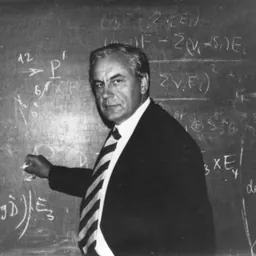
Named in this biography and alive at the same time



Related people
Same field, nearest in time

Contemporaries
People whose lives overlapped Alexander Prokhanov's



Frequently asked questions
Who is Alexander Prokhanov?
Soviet and Russian writer and political activist
When was Alexander Prokhanov born?
Alexander Prokhanov was born on 26 February 1938 in Tbilisi.
What is Alexander Prokhanov's occupation?
Alexander Prokhanov is a journalist, writer, editing staff, public figure, screenwriter and opinion journalist.
What nationality is Alexander Prokhanov?
Alexander Prokhanov is Russian.
Sources & further reading
· Wikipedia: Alexander Prokhanov
· DBpedia: Alexander Prokhanov
Cite this page
APA: Biography.guide. (2026). Alexander Prokhanov. https://biography.guide/alexander-prokhanov/
MLA: "Alexander Prokhanov." Biography.guide, https://biography.guide/alexander-prokhanov/.
Chicago: "Alexander Prokhanov." Biography.guide. https://biography.guide/alexander-prokhanov/.
Data last updated: 2026-09-20 · Spot an error? Report a correction.
Page generated 2026-09-27 05:09 UTC