
About Serge Nigg
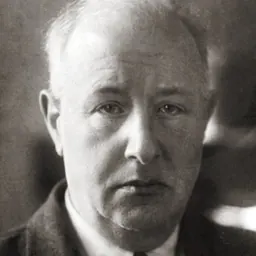
Lived 1924 – 2008 (aged 84). Serge Nigg was a French composer and university teacher.
Serge Nigg (6 June 1924 – 12 November 2008) was a French composer, born in Paris.
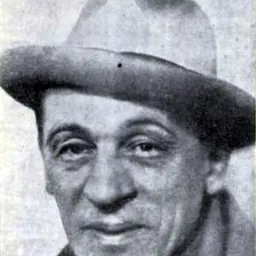
Biography After initial studies with Ginette Martenot, Nigg entered the Paris Conservatory in 1941 and studied harmony with Olivier Messiaen and counterpoint with Simone Plé-Caussade. In 1945, he met René Leibowitz, who introduced him to the twelve-tone technique of composition. Together with other Leibowitz pupils, Antoine Duhamel, André Casanova and Jean Prodromidès, he gave the first performance of Leibowitz's Explications des Metaphors, Op. 15, in Paris in 1948. After completing a Concerto for Piano and Wind Instruments and a Concerto for Piano and String Orchestra (both 1943), and the symphonic poem Timour (1944), he became the first French composer to write a dodecaphonic work when his Variations for Piano and 10 Instruments appeared in 1946. This piece was premiered at the International Festival of Dodecaphonic Music, organized by Leibowitz in 1947.
In 1956, Nigg was appointed a member of the Music Committee for French state broadcasting. From 1967 to 1982, he was a member of the music management for the French Ministry of Culture, after which he taught classes in instrumentation and orchestration at the Paris Conservatory, and became President of the Société Nationale de Musique. He was elected to the Académie des Beaux-Arts in 1989 and served as its president in 1995.
Nigg died November 12, 2008, aged 84.
Works Concerto for Piano and Wind Instruments, 1943 Concerto for Piano and String Orchestra, 1943 Piano Sonata No. 1, 1943 Timour, symphonic poem, 1944 Variations for Piano and 10 Instruments, 1946 Four Mélodies on poems by Paul Éluard, 1950 Billiard, ballet, 1950 Pour un poète captif, symphonic poem, 1951 Concerto for Piano and Orchestra No. 1, 1954 Concerto for Violin and Orchestra, 1960 Concerto for Flute and String Orchestra, 1960 Jérôme Bosch, symphony, 1960 Histoire d'œuf, conte musical based on Blaise Cendrars, 1961 Pour un Tombeau d'Anatole, 1961 Visages d'Axël, 1965–67 Fulgur, 1970 Concerto No. 2 for Piano and Orchestra, 1971 Fastes de l'imaginaire, 1974 Mirrors for William Blake, 1979 Million d'oiseaux d'or, 1981 String Quartet Du clair au sombre, song cycle for soprano and chamber orchestra, based on poems by Paul Éluard Arioso for Cello und Piano, 1987 Concerto No. 1 for Viola and Orchestra, 1987–1988 Poème for orchestra, 1990 Sonata for Piano and Violin, 1996 Tumultes for piano, 1998 Deux images de nuits for piano, 1999 Concerto No. 2 for Viola and Orchestra, 2000
Don’t just read it —
keep it.
Full-length biographies made to live with: read them, listen on the way to work, watch them tonight.
- E-book
- Audio
- Video
Instant download · yours to keep · every purchase keeps this site free
Important facts
People in Serge Nigg's life
Named in this biography and alive at the same time






Related people
Same field, nearest in time


Contemporaries
People whose lives overlapped Serge Nigg's

Frequently asked questions
Who was Serge Nigg?
French composer (1924–2008)
When was Serge Nigg born?
Serge Nigg was born on 6 June 1924 in 15th arrondissement of Paris, Paris.
When did Serge Nigg die?
Serge Nigg died on 12 November 2008 in 15th arrondissement of Paris, Paris.
What was Serge Nigg's occupation?
Serge Nigg was a composer and university teacher.
What nationality was Serge Nigg?
Serge Nigg was French.
Sources & further reading
Cite this page
APA: Biography.guide. (2026). Serge Nigg. https://biography.guide/serge-nigg/
MLA: "Serge Nigg." Biography.guide, https://biography.guide/serge-nigg/.
Chicago: "Serge Nigg." Biography.guide. https://biography.guide/serge-nigg/.
Data last updated: 2026-09-20 · Spot an error? Report a correction.
Page generated 2026-09-27 05:17 UTC