
About André Casanova
Lived 1919 – 2009 (aged 89). André Casanova was a French composer.
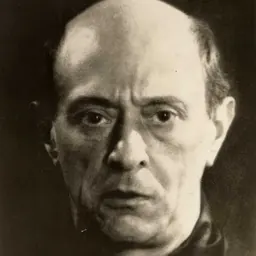
André Marcel Charles Casanova (12 October 1919 – 7 March 2009) was a French composer. He was an early disciple of René Leibowitz, a teacher and composer who maintained a strict adherence to the dodecaphonic musical theories of Arnold Schoenberg. Casanova later abandoned most of them in favour of a more classical style of composition. His published works, composed between 1944 and 1993, include orchestral, chamber and choral music, operas and songs.
Life and career Casanova was born in Paris, and studied law there, while at the same time studying music with Georges Dandelot at the École Normale de Musique de Paris. with whom he studied theory and composition.
Thereafter, according to the Grove Dictionary of Music and Musicians, Casanova's concern was "to ally a romantic spirit with modernity of style".
In the late 1940s, there had been some hostility between adherents of Leibowitz and those of the teacher and composer Olivier Messiaen, but so far as Casanova was concerned, any breach had healed sufficiently during the 1950s for Messiaen's partner Yvonne Loriod to play the solo part at the premiere of Casanova's piano concertino in 1959. He developed an interest in German Romantic literature and with Nietzsche's philosophy, which is reflected in his work.
In his later years, Casanova lived at Louveciennes on the fringe of Paris, where he died on 7 March 2009, at the age of 89.
Works Orchestral works
Symphony No 1, 1949 Symphony No 2, Op. 7, 1952 rev 1959 Concertino for piano and chamber orchestra, Op. 8, 1952 rev 1958 and 1962 Ballade for clarinet and chamber orchestra, Op. 9, 1955 Notturno for orchestra, Op. 13 ("In memoriam Richard Strauss"), 1959 Capriccio for oboe and strings, Op. 16, 1960 Anamorphoses for orchestra, Op. 17 (dedicated to the memory of Max Reger), 1962 Impromptus for orchestra, 1963 Suite for strings, 1964 Symphony No 3 Dithyrambes, with tenor solo, 1964 Concerto for violin and orchestra, 1963 (Dedicated to Gerd Albrecht) Suite for string orchestra, 1965 Concerto for trumpet and string orchestra, 1966 Strophes for orchestra Op 33, 1968 Prelude, Op. 34 for string orchestra, 1968 Fantaisie for French horn, string orchestra and marimbaphone, 1968
Concerto for oboe harp brass and percussion, 1968 Musique concertante for cor anglais and orchestra, 1969 Alternances, Op. 41, 1971 Concerto for organ and orchestra, 1972 Recitatifs for orchestra Op 48, 1973 Guitar Concerto, 1973 Épisodes pour cordes avec violon principal, Op. 47, 1974 Partita pour ensemble orchestral, Op. 65, 1979 Piano Concerto, 1981 Violin Concerto, 1982 Métaphonie, 1982 Ein Musikalisches Opfer, Op. 70 ("À la mémoire d'Ottorino Respighi"), 1971 Ephemeris. op. 81 ("À la mémoire d'Alexander Glazunov"), 1989 Symphony No 4, 1992 Symphony No 5, 1993
Chamber
3 pieces for piano, 1944 Trio for flute, viola and horn/bass clarinet, 1946 Duo for clarinet and bassoon, 1950 4 Bagatelles for wind quintet, 1955 Elégie for piano trio, 1956 Humoresque for flute and clarinet, 1957 Trio for strings, 1966 Serenata for flute and ensemble, Op. 26, 1966 String Quartet No 1, Op. 27, 1967 4 Intermezzi for piano, Op. 28, 1967 3 momenti for brass quintet, Op. 37, 1968 Quintet for piano and winds, Op. 39, 1970 Trio for piano-violin-cello, Op.43, 1972
5 Little Pieces for cello, Op.45, 1972 Due canzoni for alto saxophone, clarinet, trumpet, percussion, organ and bass guitar, Op. 49, 1973 Sextet for clarinet, string quartet and double bass, Op. 63, 1983 Septet for clarinet, bassoon, horn, violin, viola, cello and double bass, Op. 72, 1985 String Quartet No 2, 1985 String Quartet No 3, Op. 73, 1985 Piccolo studio for bassoon and piano, 1986 Six évocations for flute, clarinet, violin, cello and piano, Op. 76, 1987 Quintet for strings, 1988 Sonata for violin and piano, 1988 String Quartet No 4, 1990 String Quartet No 5, 1991 String Quartet No 6, 1992
Choral and song
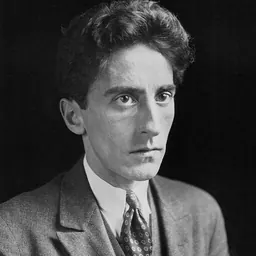
3 mélodies, for soprano and piano, 1945 Divertimento, Op 10, 1953 Cavalier seul for baritone and string quartet, 1959 (arr for baritone and string orchestra, 1964) Redoutes for baritone and orchestra, 1962 Le livre de la foi jurée, after La chanson de Roland, for speaker, soprano, bariton and orchestra, 1964 Le chant d'Aude for soprano and string orchestra, 1965 Règnes, for soprano and orchestra, Op. 29, "In memoriam Jean Cocteau", 1967 3 poèmes de Rilke for chorus, 1968
5 mélodies for tenor and chamber orchestra, 1968 3 sonnets de Louise Labé, for soprano and piano, 1972 Rituels, Op.46, for baritone and ensemble, 1972 Deux fragments d'Algabal de Stefan George for mezzo-soprano, clarinet, bassoon, vibraphone and cello, Op. 52, 1973 Sur les chemins d'acanthes noires, cantata for reciter, baritone, male choir, and orchestraon solo choeur d'hommes et orchestre, Op. 55, 1974 Quatre dizains de la Délie de Scève, Op. 61, 1978 Esquisses pour une tragédie, Op. 64, 1979 Deutsche Gesänge, 1980
Stage works La clé d'argent, conte lyrique, in one act. Text by Jean Moal after Villiers de l'Isle-Adam, 1965 Le livre de la foi juree, geste lyrique, 1965 Le bonheur dans le crime, opera in a prologue and three acts. Text by Bernard George after the novel by Jules Barbey d'Aurevilly, 1969 La coupe d'or, opera in one act. Text by Jean Moal after Ludwig Tieck, 1970 Notturno, ballet, 1972
Notes and sources
Don’t just read it —
keep it.
Full-length biographies made to live with: read them, listen on the way to work, watch them tonight.
- E-book
- Audio
- Video
Instant download · yours to keep · every purchase keeps this site free
Important facts
People in André Casanova's life
Named in this biography and alive at the same time





Related people
Same field, nearest in time


Contemporaries
People whose lives overlapped André Casanova's


Frequently asked questions
Who was André Casanova?
French composer (1919–2009)
When was André Casanova born?
André Casanova was born on 12 October 1919 in 13th arrondissement of Paris, 14th arrondissement of Paris.
When did André Casanova die?
André Casanova died on 7 March 2009 in Louveciennes.
What was André Casanova's occupation?
André Casanova was a composer.
What nationality was André Casanova?
André Casanova was French.
Sources & further reading
Cite this page
APA: Biography.guide. (2026). André Casanova. https://biography.guide/andre-casanova/
MLA: "André Casanova." Biography.guide, https://biography.guide/andre-casanova/.
Chicago: "André Casanova." Biography.guide. https://biography.guide/andre-casanova/.
Data last updated: 2026-09-20 · Spot an error? Report a correction.
Page generated 2026-09-27 05:23 UTC