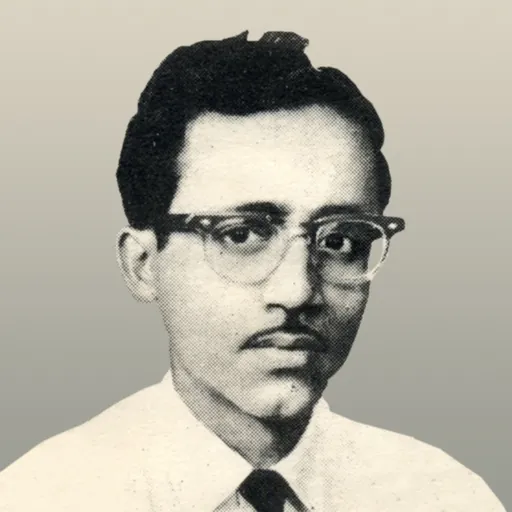
About Serajuddin Hossain
Lived 1929 – 1971 (aged 42). Serajuddin Hossain was an Indian journalist and writer.
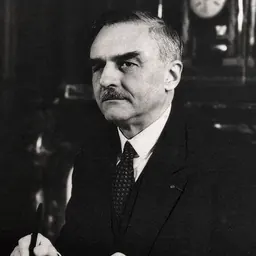
Serajuddin Hossain (1 March 1929 – 10 December 1971) was a prominent Bangladeshi journalist. He was the news and executive editor of The Daily Ittefaq.
Marriage and family In 1949, Hossain married Nurjahan Begum, In 1954, during a provincial election, Serajuddin Hossain supported the Jukto Front (United Front). As editor of the Daily Azad, Moulana Akram Khan, asked him to publish a report which would disclose that the bond between the leaders and parties of the Jukto Front had broken. A press release from Jukto Front said that the Jukto Front still existed. As an honest journalist, Serajuddin Hossain published a report which was based on Jukto Front's press release. The very next day Moulana Akraham Khan sacked him.
After that time, he worked as a junior editor of Franklin Publications. On 14 December 1954, he was hired as a news editor of the Daily Ittefaq. Serajuddin Hossain was a political journalist, but his work also spread over a number of other subjects. One of the subjects was investigative journalism. His brave work helped to save many kidnapped children, giving him worldwide recognition. During the 1960s, several children were being kidnapped. Serajuddin Hossain wanted to establish the fact that it was an organised crime, a single group of many criminals. Through his efforts, 72 children were saved. For that achievement he was nominated as the Best Journalist of International Press Institute.
Hossain was a trade unionist as well, and was elected as the president of the East Pakistan Journalism Union for two terms.
Hossain agreed with Huseyn Shaheed Suhrawardy and Sheikh Mujibur Rahman's political point of view. He was a theoretician of the Bengali Nationalist Movement.
In 1966, Ittefaq was banned by president Ayub Khan. Hossain then joined the news organisation, P.P.I, as the bureau chief. When Ittefaq was restarted in 1969, he returned to his old post as Ittefaqs news editor. From 1969 to 1971, he wrote political propaganda against Ayub Khan, thereby playing an important role in the 1969 uprising in East Pakistan through his newspaper. In 1970, he was appointed as the executive editor of the Daily Ittefaq.
The Daily Ittefaq supported Sheikh Mujibur Rahman and his Awami League party. Awami League won the 1970 general election of Pakistan with an overwhelming victory. The West Pakistani rulers did not want to give its power to Awami League. On the night 25 March 1971, the Pakistani army destroyed the Ittefaq office with a bomb because of its support of the Awami League. After two or three months, the newspaper started publication again because of the government's order. During this time, Serajuddin Hossain started published strong articles against the Pakistani government as he had joined with the freedom fighters and the East Pakistan government, then in exile.
Death In early December 1971, the Indian army joined with the Bangladesh freedom fighters in their battle against Pakistan. Knowing that their defeat was certain, the Pakistani rulers then decided to kill all of the Bangladeshi intellectuals. Between 10 and 14 December, the Pakistan army captured and killed the intellectuals. Serajuddin Hossain was the first victim of this killing. On the night of 10 December, a number of Pakistani soldiers, along with members of Al-Badr and Razakar, captured him at his residence in Chamelibag, Shantinagar. He never returned nor was his body ever found.
On 3 November 2013, the International Crimes Tribunal – a special Bangladeshi court set up by the government – sentenced Chowdhury Mueen-Uddin and Ashrafuz Zaman Khan to death after the tribunal found him guilty in absentia of torture and murder of 18 intellectuals including Serajuddin Hossain during 1971 Liberation War of Bangladesh.
Legacy During his tenure at The Daily Ittefaq, Hossain was responsible for news selection and the composition of headlines. His editorial approach has been described by colleagues and media historians as prioritizing journalistic integrity.
The Shaheed Sirajuddin Hossain College in Khajura, Jessore, is named for him. There is also a public library named for him in Aarpara, Magura.
Honours Ekushey Padak for journalism (1977) Manik Mia Gold Medal (2010)
Publications Days Decisive Itihash Kotha Kow Mahioshi Nari Bir o Birangona Choto theke boro
Don’t just read it —
keep it.
Full-length biographies made to live with: read them, listen on the way to work, watch them tonight.
- E-book
- Audio
- Video
Instant download · yours to keep · every purchase keeps this site free
Important facts
People in Serajuddin Hossain's life
Named in this biography and alive at the same time






Related people
Same field, nearest in time



Contemporaries
People whose lives overlapped Serajuddin Hossain's
Frequently asked questions
Who was Serajuddin Hossain?
Bangladeshi journalist
When was Serajuddin Hossain born?
Serajuddin Hossain was born on 1 March 1929 in British Raj, East Bengal, Magura District.
When did Serajuddin Hossain die?
Serajuddin Hossain died on 10 December 1971 in Dhaka.
What was Serajuddin Hossain's occupation?
Serajuddin Hossain was a journalist and writer.
What nationality was Serajuddin Hossain?
Serajuddin Hossain was Indian.
Sources & further reading
· Wikipedia: Serajuddin Hossain
Cite this page
APA: Biography.guide. (2026). Serajuddin Hossain. https://biography.guide/serajuddin-hossain/
MLA: "Serajuddin Hossain." Biography.guide, https://biography.guide/serajuddin-hossain/.
Chicago: "Serajuddin Hossain." Biography.guide. https://biography.guide/serajuddin-hossain/.
Data last updated: 2026-09-22 · Spot an error? Report a correction.
Portrait: Wikimedia Commons · author & licence
Page generated 2026-09-27 05:00 UTC