
About Sena Jurinac
Lived 1921 – 2011 (aged 90). Sena Jurinac was a German and Austrian opera singer and actor.
Srebrenka "Sena" Jurinac (24 October 1921 – 22 November 2011) was a Bosnian-born Austrian operatic soprano.
Biography Sena Jurinac was born on 24 October 1921 in Travnik, Bosnia-Herzegovina (then part of the Kingdom of Yugoslavia), the daughter of a Croatian father (a doctor) and a Viennese mother.
She studied at the Zagreb Academy of Music, and with Milka Kostrenčić. Her voice was pitched exactly between soprano and mezzo. Her repertoire included Poppea, Elisabetta (Don Carlos), Desdemona (Otello), Elisabeth (Tannhäuser), Ilia, Iphigenia, Jenůfa, Leonora (La forza del destino), the Composer (Ariadne auf Naxos), Marie (Wozzeck), Pamina (The Magic Flute), Mimi, Butterfly and Tosca. In many operas, her repertoire included more than one major role: Cherubino and Countess Almaviva, Donna Anna and Donna Elvira, Fiordiligi and Dorabella, Amor and Eurydice, Leonore and Marzelline (Fidelio), Marina and Fyodor (Boris Godunov); Octavian and the Marschallin. She also played supporting roles in The Ring of the Nibelung: Woglinde, Gutrune and several of the Norns.
She débuted as Mimi at Zagreb in 1942. In the following two years she sang the Countess, Freia, and Isabella in the première of Werner Egk's Columbus. In 1943, she was summer student of Anna von Mildenburg at the Salzburg Mozarteum. She appeared in the first Croatian sound movie, Lisinski (1944). In 1944, the Vienna State Opera engaged her, where she was first nicknamed "Sena". Conductor Karl Böhm's secretary suggested it because she feared the pronunciation of "Srebrenka" would cause difficulties for many Austrians. Because of the war, and the consequential closing of the opera three days after her arrival, she was unable to sing at the Vienna State Opera until 1946, when her first role was Cherubino. In the first year at the Staatsoper, she sang more than 150 performances. She remained associated with the company for almost four decades, receiving an honorary membership of the company with the title of Kammersängerin.
In the autumn of 1947, she appeared at Covent Garden with others of the Vienna company, singing Dorabella. Her Salzburg Festival début was in 1947. She appeared at La Scala as Cherubino, and became established as one of the Wiener Ensemble (together with Irmgard Seefried, Elisabeth Schwarzkopf, Christa Ludwig, Lisa della Casa, Anton Dermota and others). In 1951, she recorded Richard Strauss's Four Last Songs, shortly after Kirsten Flagstad had sung the world premiere in London.
Decorations and awards 1961: Austrian Cross of Honour for Science and Art, 1st class 1967: Grand Decoration of Honour for Services to the Republic of Austria 1968: Honorary Ring of the Vienna State Opera 1971: Honorary Member of the Vienna State Opera
Don’t just read it —
keep it.
Full-length biographies made to live with: read them, listen on the way to work, watch them tonight.
- E-book
- Audio
- Video
Instant download · yours to keep · every purchase keeps this site free
Important facts
People in Sena Jurinac's life
Named in this biography and alive at the same time

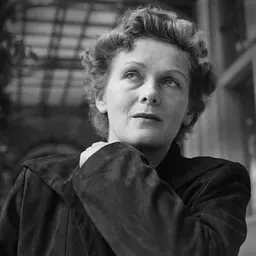



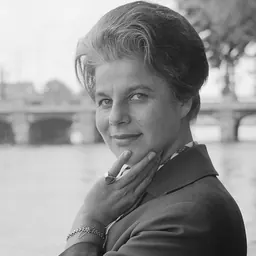
Related people
Same field, nearest in time


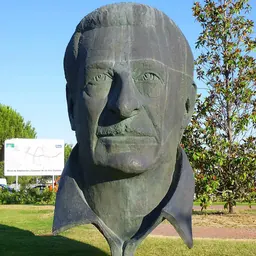



Contemporaries
People whose lives overlapped Sena Jurinac's




Frequently asked questions
Who was Sena Jurinac?
Female opera singer (1921–2011)
When was Sena Jurinac born?
Sena Jurinac was born on 24 October 1921 in Travnik.
When did Sena Jurinac die?
Sena Jurinac died on 22 November 2011 in Hainhofen.
What was Sena Jurinac's occupation?
Sena Jurinac was an opera singer and actor.
What nationality was Sena Jurinac?
Sena Jurinac was German and Austrian.
Sources & further reading
Cite this page
APA: Biography.guide. (2026). Sena Jurinac. https://biography.guide/sena-jurinac/
MLA: "Sena Jurinac." Biography.guide, https://biography.guide/sena-jurinac/.
Chicago: "Sena Jurinac." Biography.guide. https://biography.guide/sena-jurinac/.
Data last updated: 2026-09-25 · Spot an error? Report a correction.
Page generated 2026-09-27 05:08 UTC