
About Selma Burke
Lived 1900 – 1995 (aged 94). Selma Burke was an American sculptor, visual artist and artist.
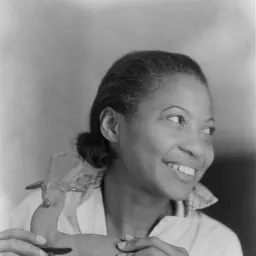
Selma Hortense Burke (December 31, 1900 – August 29, 1995) was an American sculptor and a member of the Harlem Renaissance movement. Burke is best known for a bas relief portrait of President Franklin D. Roosevelt which may have been the model for his image on the obverse of the dime. In 1979, she was awarded the Women's Caucus for Art Lifetime Achievement Award. She summed up her life as an artist, "I really live and move in the atmosphere in which I am creating".
Biography
Selma Burke was born on December 31, 1900, in Mooresville, North Carolina, the seventh of 10 children of Reverend Neil and Mary Elizabeth Colfield Burke. Her father was an AME Church Minister who worked on the railroads for additional income. Her father died when she was twelve and in 1970 her mother was 101 years old. She would later describe the feeling of squeezing the clay through her fingers as a first encounter with sculpture, saying "It was there in 1907 that I discovered me." Burke's interest in sculpture was encouraged by her maternal grandmother, a painter, although her mother thought she should pursue a more financially stable career. "You can't make a living at that," Burke recalls her mother saying about her desire to study art. She married a childhood friend, Durant Woodward, in 1928, although the marriage ended with his death less than a year later. She later moved to Harlem to work as a private nurse. She was employed as a private nurse to a wealthy heiress. This heiress later became a patron of Burke and helped her become financially stable during the great depression.
Harlem Renaissance and education
After moving to New York City in 1935, Burke began art classes at Sarah Lawrence College. She also worked as a model in art classes to pay for that schooling. In 1935, during this time, she also became involved with the Harlem Renaissance cultural movement through her marriage with the writer Claude McKay, with whom she shared an apartment in the Hell's Kitchen neighborhood of Manhattan. Burke began teaching for the Harlem Community Arts Center under the leadership of sculptor Augusta Savage, and would go on to work for the Works Progress Administration on the New Deal Federal Art Project.
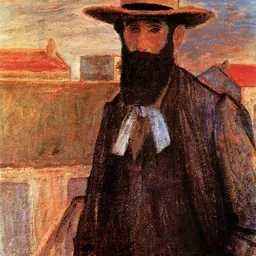
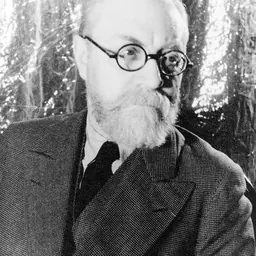
Burke traveled to Europe twice in the 1930s, first on a Rosenwald fellowship to study sculpture in Vienna in 1933-34. She returned in 1936 to study in Paris with Aristide Maillol. While in Paris she met Henri Matisse, who praised her work.
After returning to the United States, Burke won a graduate school scholarship to Columbia University, where she would receive a Master of Fine Arts degree in 1941.
Teaching and later life
In 1940 Burke founded the Selma Burke School of Sculpture in New York City. Open from 1968 to 1981, the center "was an original art center that played an integral role in the Pittsburgh art community," offering courses ranging from studio workshops to puppetry classes.
Burke's public sculpture pieces include a bust of Duke Ellington at the Performing Arts Center in Milwaukee, as well as works on display at the Hill House Center in Pittsburgh, the Schomburg Center for Research in Black Culture in New York City, Atlanta University, Spelman College, and the Smithsonian Museum of American Art. Her last monumental work, created in 1980 when she was 80 years old, is a bronze statue of Martin Luther King, Jr. in Charlotte, N.C. She had solo exhibitions at Princeton University and the Carnegie Museum, among other venues. Her work is held in the collections of the Metropolitan Museum of Art, the Whitney Museum of American Art, the Philadelphia Museum of Art, Burke herself "wrote to Roosevelt to request a live sitting, to which the president generously agreed, scheduling the first of two sittings on February 22, 1944." The 3.5-by-2.5-foot plaque was completed in 1944 and unveiled by President Harry S. Truman in September 1945 at the Recorder of Deeds Building in Washington, D.C., where it still hangs today.
A number of sources contend that John R. Sinnock's obverse design on the Roosevelt dime was adapted from Burke's plaque even though Sinnock denied that Burke's portrait was an influence, pointing to his earlier work that predated Burke's. Sinnock's 1933 presidential medal for Roosevelt bears a striking resemblance to the 1946 dime, with Roosevelt facing the opposite direction. Roosevelt's 1941 inaugural medal, which Sinnock was involved in designing, also resembles the 1946 dime. Both the 1933 and 1941 medals predate Burke's bas relief.
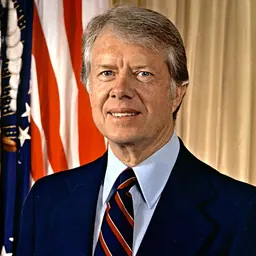
Honors Burke is an honorary member of Delta Sigma Theta sorority. She received several honorary doctorate degrees during her lifetime, including one awarded by Livingston College in 1970 and one from Spelman College in 1988. Milton Shapp, then-governor of Pennsylvania, declared July 29, 1975, Selma Burke Day in recognition of the artist's contributions to art and education. Her papers and archive are in the collection of Spelman College. She received the award from President Jimmy Carter in a private ceremony in the Oval Office. She received a Candace Award from the National Coalition of 100 Black Women in 1983, the Pearl S. Buck Foundation Women's Award in 1988, and the Essence Magazine Award in 1989.
Death Selma Burke died at the age of 94 on August 29, 1995, in New Hope, Pennsylvania, where she had lived since the 1950s.
Don’t just read it —
keep it.
Full-length biographies made to live with: read them, listen on the way to work, watch them tonight.
- E-book
- Audio
- Video
Instant download · yours to keep · every purchase keeps this site free
Important facts
People in Selma Burke's life
Named in this biography and alive at the same time




Related people
Same field, nearest in time



Contemporaries
People whose lives overlapped Selma Burke's



Frequently asked questions
Who was Selma Burke?
American sculptor (1900-1995)
When was Selma Burke born?
Selma Burke was born on 31 December 1900 in Mooresville.
When did Selma Burke die?
Selma Burke died on 29 August 1995 in Pennsylvania, New Hope.
What was Selma Burke's occupation?
Selma Burke was a sculptor, visual artist and artist.
What nationality was Selma Burke?
Selma Burke was American.
Sources & further reading
Cite this page
APA: Biography.guide. (2026). Selma Burke. https://biography.guide/selma-burke/
MLA: "Selma Burke." Biography.guide, https://biography.guide/selma-burke/.
Chicago: "Selma Burke." Biography.guide. https://biography.guide/selma-burke/.
Data last updated: 2026-09-20 · Spot an error? Report a correction.
Page generated 2026-09-27 05:22 UTC