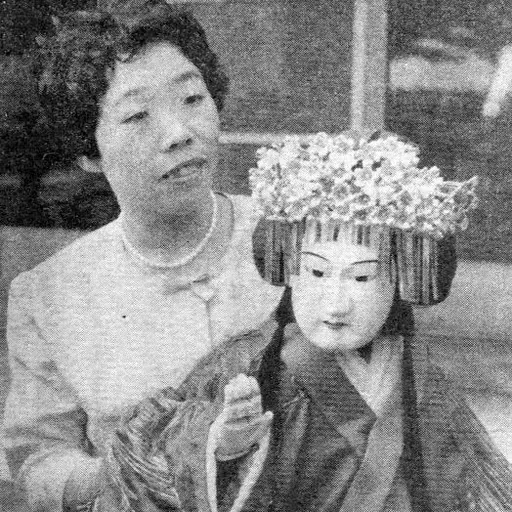
About Seiko Tanabe
Lived 1928 – 2019 (aged 91). Seiko Tanabe was a Japanese novelist, writer, translator and prose writer.
was a Japanese author. She graduated from the Department of Japanese Literature of Shōin Joshi Senmon Gakkō (now Osaka Shoin Women's University). Author of numerous novels, she won the Akutagawa Prize, Yomiuri Prize, and Asahi Prize, and received the Order of Culture for her contributions to literature. She was nicknamed the "L. M. Montgomery of Japan” after her death in 2019.
Biography Tanabe was born on 27 March 1928. Her father was a photographer and owned a photography studio. She was familiar with Japanese classic literature since her young days. The culture and traditions of her birthplace, Osaka, largely affected her life and writings.
After World War II, she engaged in literary activities while working for a company. Her novel Hanagari , written during this period, was shortlisted for a literary competition and made into a radio drama. In 1956, she won the Osaka Citizen Award for literature for her story Niji . After that she became a professional writer.
In 1964, she won the 50th Akutagawa Prize for her novel Sentimental Journey (, Kanshō Ryokō). In the following years, she wrote and published a wide range of literary works, such as romantic novels, biographies, essays on various themes, including Japanese classic literature, translations and adaptations of the classic works of Japan, such as the Tale of Genji and Makura no Sōshi.
She married Sumio Kawano , who had been the husband of her literary friend Shōko Kawano (川野彰子). After the death of Shōko, Tanabe married Kawano in 1966, and lived with him until his death in 2002, for 36 years. They lived first in Osaka, but in 1976, they moved to Itami, in Hyōgo Prefecture.
Tanabe received various literary awards. In 2000, she became a Person of Cultural Merit and then, she received the Order of Culture for her literary contributions to Japanese culture in 2008. Her literary works had unique characteristics which reflected the culture of Osaka and its dialect. She created successful love romances using the Osaka dialect, which is one of the Kansai dialects.
Tanabe died of ascending cholangitis on 6 June 2019 at a hospital in Kōbe, Hyōgo.
Prizes 1956 Osaka Citizen Award, for Niji ( 虹 ) 1964 50th Akutagawa Prize for Kanshō ryokō ( 感傷旅行 ) 1987 Women's Literature Award for Hanagoromo nuguya matsuwaru ... Waga ai no Sugita Hisajo ( 花衣ぬぐやまつわる......わが愛の杉田久女 ) 1993 Yoshikawa Eiji Prize for Literature, for Hinekure Issa ( ひねくれ一茶 ) 1994 42nd Kikuchi Kan Prize, for Hinekure Issa 1998 26th Izumi Kyōka Prize for Literature, for Dōton-bori no ame ni wakarete irai nari - Senryū sakka Kishimoto Suifu to sono jidai ( 道頓堀の雨に別れて以来なり-川柳作家·岸本水府とその時代 ) 1999 50th Yomiuri Prize for Dōton-bori no ame ni wakarete irai nari 2007 Asahi Prize
Awards 2000 Person of Cultural Merit 2008 Order of Culture
Selected works Novels Hanakari Touto shobou 1958 Kanshou ryokou (Sentimental journey) Bungeishunjū, 1964 Amai kankei San-ichi Publishing, 1968 Onna no hidokei Yomiuri Shimbun, 1970 Joze to tora to sakana-tachi Kadokawa Shoten 1985 Fukigenna koibito Kadokawa Shoten, 1988 Hinekure Issa Kodansha, 1992
Essays Onna no nagaburo Bungeishunjū, 1973 Eve no okurege Bungeishunjū, 1975 Raamen nieta mo gozonjinai Shinchosha, 1977 Rakurōshō 1, 2, 3, 4 Shueisha, 1999, 2007, 2008, 2009
Translations and adaptations of classic Japanese works Mae mae, katatsumuri, Shin Ochikubo monogatari Bungeishunjū, 1977 Shin Genji monogatari Shinchosha, 1978–79
Shihon Genji monogatari Jitsugyo no Nihon Sha, 1980
Haru no mezame wa Murasaki no maki, Shin shihon Genji monogatari Jitsugyo no Nihon Sha, 1983 Mukashi akebono, shousetsu Makura no sōshi Kadokawa Shoten, 1983 Tanabe Seiko no Ogura hyakunin isshu Kadokawa Shoten, 1986 Tanabe Seiko no Kojiki Shueisha, Watashi no koten 1986
Kiri fukaki Uji no koi, Shin Genji monogatari Shinchosha, 1990
Biographies Hanagoromo nuguya matsuwaru ... Waga ai no Sugita Hisajo Shueisha, 1987 Douton-bori no ame ni wakarete irai nari - Senryuu sakka Kishimoto Suifu to sono jidai Chuokoron-Shinsha, 1998
Don’t just read it —
keep it.
Full-length biographies made to live with: read them, listen on the way to work, watch them tonight.
- E-book
- Audio
- Video
Instant download · yours to keep · every purchase keeps this site free
Important facts
People in Seiko Tanabe's life
Named in this biography and alive at the same time

Related people
Same field, nearest in time




Contemporaries
People whose lives overlapped Seiko Tanabe's


Frequently asked questions
Who was Seiko Tanabe?
Japanese novelist and writer (1928-2019)
When was Seiko Tanabe born?
Seiko Tanabe was born on 27 March 1928 in Osaka.
When did Seiko Tanabe die?
Seiko Tanabe died on 6 June 2019 in Kobe.
What was Seiko Tanabe's occupation?
Seiko Tanabe was a novelist, writer, translator and prose writer.
What nationality was Seiko Tanabe?
Seiko Tanabe was Japanese.
Sources & further reading
Cite this page
APA: Biography.guide. (2026). Seiko Tanabe. https://biography.guide/seiko-tanabe/
MLA: "Seiko Tanabe." Biography.guide, https://biography.guide/seiko-tanabe/.
Chicago: "Seiko Tanabe." Biography.guide. https://biography.guide/seiko-tanabe/.
Data last updated: 2026-09-21 · Spot an error? Report a correction.
Portrait: Wikimedia Commons · author & licence
Page generated 2026-09-27 05:01 UTC