
Segundo de Chomón
Spanish-French film director, cinematographer and animator
About Segundo de Chomón
Lived 1871 – 1929 (aged 57). Segundo de Chomón was a Spanish film director, actor, camera operator, screenwriter, animator and film producer.
Segundo Víctor Aurelio Chomón y Ruiz (also Chomont or Chaumont, ; 17 October 1871 – 2 May 1929) was a pioneering Spanish-French film director, cinematographer and screenwriter. He produced many short films in France while working for Pathé Frères and has been compared to Georges Méliès, due to his frequent camera tricks and optical illusions. He is regarded as the most significant Spanish silent film director in an international context.
Biography Born in Aragon (Spain), Segundo de Chomón reportedly got into film through the efforts of his French actress wife, Julienne Mathieu, who appeared in early Pathé Frères productions and worked in some special effects Parisian workshops like Thuillier's studio. Around 1900 he became an agent for Pathé Frères in Spain, publicizing and distributing their films out of Barcelona. In 1901, Chomón began producing actuality films in Spain on an independent basis and distributing them through Pathé; his first trick film was Gulliver en el país de los gigantes (1903). Chomón and his wife also specialized in producing stencil colored film prints and were one of the developers of the Pathéchrome process, patented by Pathé in 1905. Charles Pathé noted the quality of Chomón's trick films and, from 1903, began to support these efforts with the desire of competing with Georges Méliès.
Chomón was expert enough at making trick films and had proven himself so valuable to Pathé that in 1905 he and Mathieu moved from Barcelona to Paris, and Chomón was placed in charge of a color stencilling shop in addition to his periodic duties as a director. Through 1907, Chomón worked in close collaboration with Pathé's top director, Ferdinand Zecca; the partnership worked so well that in 1907 Zecca selected Chomón to co-direct a major project, the remake of Zecca's own 1903 Vie et Passion de Notre Seigneur Jésus Christ. Shortly afterward, Zecca moved into an executive position at Pathé and did little direction from that time; Chomón's most productive years as a filmmaker lasted from 1907 to 1912, a period during which Méliès' production went into a steep decline. Chomón often worked with other directors; in addition to Zecca he collaborated with Gaston Velle, Juan Fuster, Alberto Capellani and Émile Cohl. Although he remained with Pathé, in 1910 Chomón returned to Barcelona and started an independent production company, Iberico Films, which proved short-lived.
In 1912, Chómon accepted an invitation to make films in Italy. In addition to his own films, he worked on special effects on the films of others, notably Giovanni Pastrone's epic Cabiria (1914). Pastrone returned the favor in 1917 through collaborating on Chomón's last directorial effort, La guerra e il sogno di Momi; Chomón's own films had become less frequent after his move to Italy, and he had primarily worked in visual effects and cinematography in these years. After 1917, Chomón principally worked on creating visual effects for the films of others, including Guido Brignone's Maciste in Hell (1925) and Abel Gance's Napoléon (1927). Towards the end of his life, Chomón collaborated with Swiss inventor Ernest Zollinger (ex-Pathé, ex-Itala Films) to develop a photographic, two-color film process. Chomón was planning to get back into full-time film production on his own when he died, suddenly, of a heart attack at age 57.
Legacy The very year that Chomón died, the Surrealists organized a soirée that would rehabilitate the artistic reputation of Georges Méliès and to begin the long process of recovering his films. Chomón was effectively forgotten in the wake of his death, though over time silent film collectors began to recognize some of his shorts and he was dubbed "The Spanish Méliès" in English-speaking lands. Two of his films, Le spectre rouge (1907) and Hôtel électrique (1908), persistently circulated in the collector's market and were also circulated by the Museum of Modern Art film library; the first as an example of stencilled color and the second as a Pathé Frères film by an unknown director. The Italian film Cabiria (where he was director of photography & special FX) featured what may have been the first "dolly shot" in the movies, utilizing a device built by Chomón. Finally, recognition came to Chomón in his home country, as the Filmoteca de Catalunya established a special division with the purpose of collecting and cataloguing what was left of his output; a DVD collection in PAL format with 31 films, Segundo Chomón: Le Cine de la Fantasia, was released by the Filmoteca in 2010. Many of de Chomon's Parisian Pathé Frères films have been recovered, but his Spanish and Italian productions have proven more elusive.
Comparisons of Chomón's work with that of Georges Méliès is inevitable, with those in Chomón's court insisting that he was a better filmmaker, whereas those on Méliès' side insist that Chomón was a mere imitator. While it is hard to top Méliès' achievements in discovering basic editing and in his eye-popping production designs, Chomon was a slightly more modern filmmaker than Méliès. Chomón relied extensively on animation, a field in which he was a pioneer and a technique Georges Méliès seldom, if ever, used. Moreover, Chomón offered slight improvements on some techniques that Méliès already had tried, such as in Les Kiriki, acrobates japonais (1907). Chomón's work was also more expansive in terms of genre than that of Méliès; he started in actuality films and continued working in this field after the transition to documentary and was also employed on standard dramatic features as well. Méliès began making actualities also, in 1896, but after discovering and developing the trick film and fantasy genres, he stayed put. Nevertheless, it is for his trick films that Chomón will be best remembered; Spain honored him with a postage stamp in 1994. Chomón's film Armures Mystérieuses (The Mysterious Armor or The Wonderful Armor) was preserved by the Academy Film Archive in 2010.
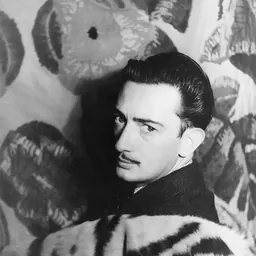
Film historian Tom Gunning has suggested that Luis Buñuel and/or Salvador Dalí were familiar with Chomón's Superstition andalouse (1912) years before making their experimental film Un Chien andalou in 1929.
Filmography
1901: Bajada de Montserrat 1902: Choque de trenes 1902: Danse des Ouléd-Naïd 1902: Loie Fuller 1902: Montserrat 1903: Gulliver en el país de los Gigantes 1903: Los héroes del sitio de Zaragoza 1903: Pulgarcito 1904: Barcelone, Le parc au crépuscule 1904: El heredero de Casa Pruna 1905: Verres enchanté (The Enchanted Glasses) 1906: Ah! La barbe 1906: Hallucination musicale 1906: L'antre de la sorcière 1906: L'homme aux trente-six têtes 1906: L'obsession du billard 1906: La dernière sorcière 1906: La fée aux pigeons 1906: La maison ensorcelée 1906: Le courant électrique 1906: Le mariage du roi Alphonse XIII 1906: Le roi des dollars 1906: Le sorcier arabe 1906: Le théâtre de Bob 1906: Le troubadour 1906: Les cent trucs 1906: Les roses magiques 1906: L’obsession de l’or 1906: Plongeur fantastique 1907: Ali Baba et les quarante voleurs 1907: Armures mystérieuses 1907: En avant la musique 1907: Fantaisies endiablées 1907: L'étang enchanté 1907: La boîte à cigares 1907: La forge infernale 1907: La fée des roches noires 1907: La Passion de Jésus 1907: Le bailleur 1907: Le baiser de la sorcière 1907: Le charmeur 1907: Le parapluie fantastique 1907: Le scarabée d'or 1907: Le scarabée d'or 1907: Le sculpteur express 1907: Le spectre rouge 1907: Les chrysanthèmes 1907: Les flammes diaboliques 1907: Les glaces merveilleuses 1907: Les Kiriki, acrobates japonais 1907: Les tulipes 1907: Les verres enchantés 1907: Les œufs de Pâques 1907: Métempsycose 1907: Métempsycose 1907: Satan s'amuse 1907: Silhouettes animées 1908: Chiffonniers et caricaturistes 1908: Création de la serpentine 1908: Cuisine magnétique 1908: Déménagement magnétique 1908: Hôtel électrique 1908: Voyage dans la lune 1908: Hôtel électrique 1908: L'abeille et la rose 1908: L'araignée d'or 1908: L'aspirateur 1908: L'auberge tranquille 1908: L'insaisissable pickpocket 1908: L'écran magique 1908: La grenouille 1908: La grotte des esprits 1908: La légende du fantôme 1908: La table magique 1908: Le chevalier mystère 1908: Le rêve de Toula 1908: Le rêve des marmitons 1908: Le secret de la sorcière 1908: Le voleur mystérieux 1908: Les affiches animées 1908: Les flammes mystérieuses 1908: Les grotesques 1908: Les jouets vivants 1908: Les lunatiques 1908: Les ombres chinoises 1908: Les pantins de Misole 1908: Les papillons japonais 1908: Les tribulations du roi Tétaclaque 1908: Les œufs merveilleux 1908: Magie moderne 1908: Mes fleurs 1908: Sculpteur moderne 1908: Voyage oriental 1908: Voyage original 1909: Cauchemar et doux rêves 1909: Farce macabre 1909: L'âne de la sorcière 1909: La forge du diable 1909: La leçon de musique 1909: La liquéfaction des corps 1909: Le jeu de patience 1909: Le petit Poucet 1909: Le Roi des aulnes 1909: Le voleur invisible 1909: Les cadeaux de la fée 1909: Les cocottes en papier 1909: Les guirlandes merveilleuses 1909: Les têtes fantastiques 1909: Mars 1909: Pickpock ne craint pas les entraves 1909: Symphonie bizarre 1909: Une excursion incohérente 1909: Voyage au centre de la Terre 1909: Voyage sur la planète Jupiter 1910: Amor Gitano 1910: El ejemplo 1910: El pobre Valbuena 1910: El puente de la muerte 1910: El puñao de rosas 1910: Flema inglesa 1910: Flores y perlas 1910: Gerona: la Venecia española 1910: Justicias del rey don Pedro 1910: La expiación 1910: La fatalidad 1910: La fecha de Pepín 1910: La gratitud de las flores 1910: La heroica Zaragoza. 1910: La hija del guardacostas 1910: La manta del caballo 1910: La tempranica 1910: Las carceleras 1910: Los dulces de Arturo 1910: Los guapos 1910: Los pobres de levita 1910: Lucha fratricida o Nobleza Aragonesa 1910: Pragmática real 1910: Una farsa de Colás 1910: Venganza de un carbonero 1911: Pulgarcito 1912: El talismán del vagabundo 1912: Métamorphoses 1912: Soñar despierto 1916: La guerra e il sogno di Momi, directed with Giovanni Pastrone
Don’t just read it —
keep it.
Full-length biographies made to live with: read them, listen on the way to work, watch them tonight.
- E-book
- Audio
- Video
Instant download · yours to keep · every purchase keeps this site free
Important facts
Family & relationships
People in Segundo de Chomón's life
Named in this biography and alive at the same time




Related people
Same field, nearest in time

Contemporaries
People whose lives overlapped Segundo de Chomón's




Frequently asked questions
Who was Segundo de Chomón?
Spanish-French film director, cinematographer and animator (1871-1929)
When was Segundo de Chomón born?
Segundo de Chomón was born on 17 October 1871 in Teruel.
When did Segundo de Chomón die?
Segundo de Chomón died on 2 May 1929 in 20th arrondissement of Paris.
What was Segundo de Chomón's occupation?
Segundo de Chomón was a film director, actor, camera operator, screenwriter, animator and film producer.
What nationality was Segundo de Chomón?
Segundo de Chomón was Spanish.
Sources & further reading
· Wikipedia: Segundo de Chomón
Cite this page
APA: Biography.guide. (2026). Segundo de Chomón. https://biography.guide/segundo-de-chomon/
MLA: "Segundo de Chomón." Biography.guide, https://biography.guide/segundo-de-chomon/.
Chicago: "Segundo de Chomón." Biography.guide. https://biography.guide/segundo-de-chomon/.
Data last updated: 2026-09-20 · Spot an error? Report a correction.
Page generated 2026-09-27 05:32 UTC