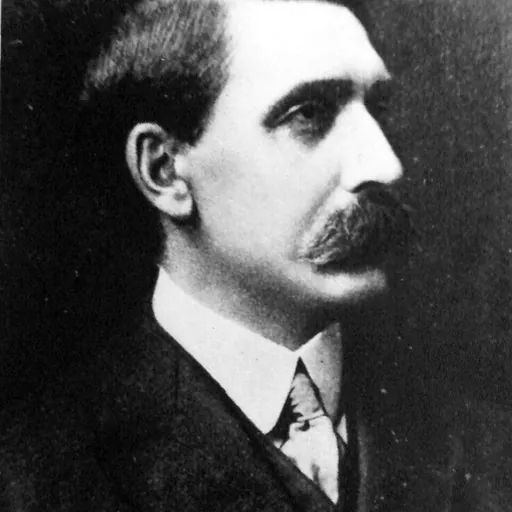
About Sebastian Ziani de Ferranti
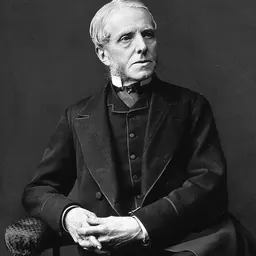
Lived 1864 – 1930 (aged 65). Sebastian Ziani de Ferranti was a British inventor, electrical engineer, scientist and executive, known for Ferranti effect.
Sebastian Pietro Innocenzo Adhemar Ziani de Ferranti (9 April 1864 – 13 January 1930) was a British electrical engineer and inventor who pioneered high-voltage AC power in the UK, patented the Ferranti dynamo and designed Deptford power station.
Personal life Ferranti was born in Liverpool, England. His Italian father, Giulio Cesare Ziani de Ferranti, was a photographer and his British mother Juliana de Ferranti (née Scott) was a concert pianist. His paternal grandfather was composer Marco Aurelio Zani de Ferranti. He was educated at Hampstead School, London; St. Augustine's College, Westgate-on-Sea; and University College London.
He married Gertrude Ruth Ince on 24 April 1888 at St Dominic's Priory Hampstead and they had seven children: Zoë Vanda Marie (1889–1978); Basil (1891–1917); Gerard Vincent (1893–1980); Vera Catherine (1898–1993); Yolanda (1902–1919); Denis (1908–1992) and Yvonne Teresa (1913-1988). Ferranti died on 13 January 1930 in Zürich, Switzerland. He was buried at Hampstead Cemetery, London in the same grave as his parents, wife and his daughter Yolanda (who died at seventeen from appendicitis).
Professional career
Ferranti showed a remarkable talent for electrical engineering from his childhood. His first invention, at the age of 13, was an arc light for street lighting. Reportedly, around the age of 16, he built an electrical generator (that had a "Zig-zag armature") with the help of William Thomson (the future Lord Kelvin) and later patented the device (called the "Ferranti Dynamo"). He worked for Siemens Brothers at Charlton, London, and in 1882 he set up shop in London designing various electrical devices as the firm Ferranti, Thompson and Ince.
In the late 1880s, there was a debate within the American industry about the transmission of electrical power, known as the war of the currents. Thomas Edison supported a direct current (DC) based system, largely due to his holding many key patents and having set up some power plants supplying DC power. The rival Westinghouse Electric Corporation supported an alternating current (AC) system.
Ferranti bet on AC early on and was one of the few experts in this system in the UK. In 1887, the London Electric Supply Corporation (LESCo) hired Ferranti to design their power station at Deptford. He designed the building, the generating plant and the distribution system. On its completion in 1891, it was the first truly modern power station, supplying high-voltage AC power for distribution at 11kV that was then "stepped down" for consumer use on each street. This basic system remains in use today around the world. One of the remaining supports of the Deptford Power Station generating hall forms the frame of the sign at the Museum of Science and Industry in Manchester UK, home of the Ferranti Archives.
S.Z. de Ferranti, the company set up by Ferranti in 1885 with Francis Ince and Charles Sparks as partners, became S.Z. de Ferranti Ltd in 1890 and Ferranti Ltd in 1900, after the resignation of Ince and Sparks. Ferranti Ltd would outlive its founder and develop the Ferranti Mark 1, the world's first commercially available general-purpose computer, in 1951.
Ferranti was President of the Institution of Electrical Engineers in 1910 and 1911 and was elected a Fellow of the Royal Society in 1927. He received an honorary doctorate from the University of Manchester in 1912. Ferranti was actively involved in the formation of the British Electrical and Allied Manufacturers Association (BEAMA) in 1911 and its first chairman, to 1913. He was a great supporter of the Electrical Association for Women, which Gertrude Ziani de Ferranti played a large role in. Ferranti's wife Gertrude and her brother Robin Ince wrote and published a book, The Life and Letters of Sebastian Ziani de Ferranti in tribute to him in 1934, to which Caroline Haslett contributed the foreword. In 2016 a blue plaque in honour of Sebastian Ziani de Ferranti was installed at 130 Bold Street, Liverpool, marking the place of his birth. An urban park situated south of the site of the Deptford Power Station in southeast London is named Ferranti Park in his honour.
Patents " Unipolar dynamo electric machine".
Don’t just read it —
keep it.
Full-length biographies made to live with: read them, listen on the way to work, watch them tonight.
- E-book
- Audio
- Video
Instant download · yours to keep · every purchase keeps this site free
Important facts
People in Sebastian Ziani de Ferranti's life
Named in this biography and alive at the same time


Related people
Same field, nearest in time

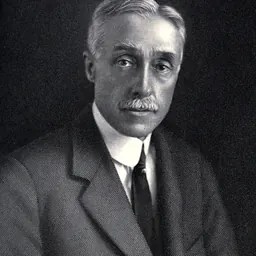
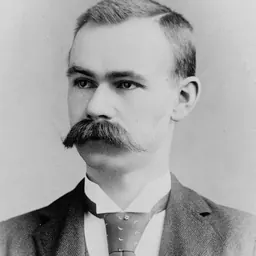

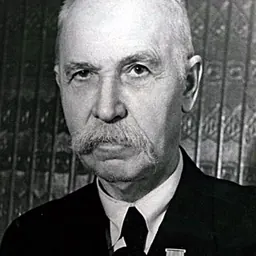
Contemporaries
People whose lives overlapped Sebastian Ziani de Ferranti's

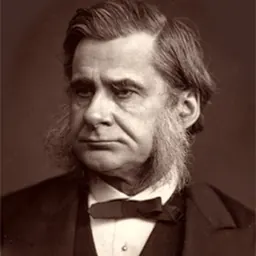


Frequently asked questions
Who was Sebastian Ziani de Ferranti?
British engineer (1864–1930)
When was Sebastian Ziani de Ferranti born?
Sebastian Ziani de Ferranti was born on 9 April 1864 in Liverpool.
When did Sebastian Ziani de Ferranti die?
Sebastian Ziani de Ferranti died on 13 January 1930 in Zurich.
What was Sebastian Ziani de Ferranti's occupation?
Sebastian Ziani de Ferranti was an inventor, electrical engineer, scientist and executive.
What was Sebastian Ziani de Ferranti known for?
Sebastian Ziani de Ferranti was known for Ferranti effect.
What nationality was Sebastian Ziani de Ferranti?
Sebastian Ziani de Ferranti was British.
Sources & further reading
· Wikipedia: Sebastian Ziani de Ferranti
· DBpedia: Sebastian Ziani de Ferranti
Cite this page
APA: Biography.guide. (2026). Sebastian Ziani de Ferranti. https://biography.guide/sebastian-ziani-de-ferranti/
MLA: "Sebastian Ziani de Ferranti." Biography.guide, https://biography.guide/sebastian-ziani-de-ferranti/.
Chicago: "Sebastian Ziani de Ferranti." Biography.guide. https://biography.guide/sebastian-ziani-de-ferranti/.
Data last updated: 2026-09-23 · Spot an error? Report a correction.
Portrait: Wikimedia Commons · author & licence
Page generated 2026-09-27 05:06 UTC