
About Sean Hughes
Lived 1946 – 1990 (aged 44). Sean Hughes was a British politician and teacher.
Sean Francis Hughes (8 May 1946 – 24 June 1990) was a British history teacher and Labour politician. He was the local successor to Sir Harold Wilson as a Member of Parliament, and served as a whip and a spokesman on defence issues for his party. Respected for his parliamentary abilities and able to use his historical knowledge in Parliamentary speeches, he played a role in changing Labour's defence policy from unilateral nuclear disarmament to a multilateral approach. His Parliamentary career was cut short by his early death from cancer.
Early life Hughes was born in Huyton to a Welsh father and Irish Catholic mother. His early life was described as "impeccably working class", which was, like West Park Grammar School, run by the De La Salle brothers. He went on to Liverpool University where he obtained a Bachelor of Arts degree and Manchester University for a Master of Arts degree. He attended a Roman Catholic seminary but did not take a religious vocation. he found he had the power to decide whether a family would be housed.
In 1972 he was selected as prospective Parliamentary candidate for Crosby, then a safe Conservative seat. At the February 1974 general election Hughes came second in Crosby, with 27.2% of the vote and 15,570 votes behind the Conservative winner. Hughes put his name forward for the new selection, and on 17 May he was selected as prospective Parliamentary candidate for Huyton. Hughes was immediately identified as a moderate within the Labour Party, which was in the middle of an intense internal struggle between left-wingers and moderates. He was duly endorsed by the National Executive Committee in the same month. Boundary changes enacted shortly before the election abolished the Huyton constituency, and Hughes transferred to the new constituency of Knowsley South which was based on Huyton and Roby. At the 1983 general election Hughes was elected with a majority of 11,769.
In Parliament Making his maiden speech on 27 June 1983, Hughes referred to the council estates that made up most of his constituency as "monotonous labyrinths, bleak, grimly regimented and dehumanising". He complained that the resources to improve the estates were being withheld and that parts of the constituency had unemployment problems even more severe than elsewhere on Merseyside. Later that year he deplored the closure of the Huntley & Palmers biscuits plant at Huyton, and pledged to raise the issue with the Government although he was sure they would refuse to intervene.
Hughes quickly grew disillusioned about some of the routine work of a "voting fodder" Member of Parliament, and began suffering what he called "backbencher blues"; where once he had been able to decide housing allocations, he now felt he could do very little for the same families. He did get on well with the catering staff of the Houses of Parliament; they nicknamed him 'Yosser', while he noted that they had trained at a catering college in his constituency.
He was particularly passionate about improving education, it was said that he would regard being called a "loyalist" as an accolade. When Robert Kilroy-Silk resigned as MP for the next door constituency of Knowsley North, Hughes was chosen as the organiser for the campaign of his successor George Howarth who had been imposed on a Militant dominated CLP by the Labour Party headquarters. Militant had hoped to see one of their members selected, and some of their fury was taken out on Hughes.
Shadow Defence minister Re-elected in the 1987 general election with a majority nearly doubled on 1983, Hughes was appointed as a member of the defence shadow ministerial team to speak on issues relating to the Army. His historical knowledge came to be very helpful and Hughes established a strong reputation for being able to spot weaknesses in Government policy; Ministers were said to have made sure they were well briefed when facing him. A report in the Conservative supporting Daily Telegraph described him as "the sort of MP that Labour doesn't deserve to have", a joke which Hughes himself reportedly enjoyed.
He had been a lifelong supporter of unilateral nuclear disarmament and CND, but the Labour Party was embarking on a policy review. When Denzil Davies resigned as Shadow Secretary of State for Defence and was replaced by Martin O'Neill in 1988, Hughes assisted the team in helping to draft a new defence policy which would not lose votes for the party (as the policy in 1987 was thought to have done). He organised a referendum in his constituency party which appeared to repudiate unilateralism: 68% of party members thought that Britain should give up nuclear weapons only if other countries did so too. The Labour Party adopted a policy of multilateral disarmament at its 1989 conference.
Death Hughes had been suffering from cancer for some time before his death in June 1990, one of three Labour MPs on Merseyside to have died in their 40s that year. He left a wife and young daughter.
Don’t just read it —
keep it.
Full-length biographies made to live with: read them, listen on the way to work, watch them tonight.
- E-book
- Audio
- Video
Instant download · yours to keep · every purchase keeps this site free
Important facts
People in Sean Hughes's life
Named in this biography and alive at the same time
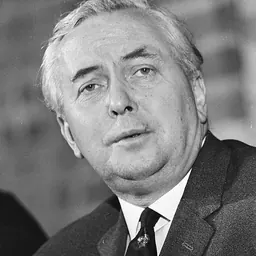






Related people
Same field, nearest in time

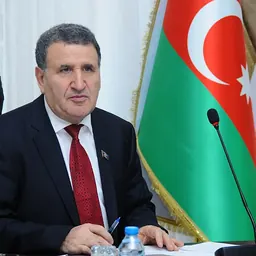


Contemporaries
People whose lives overlapped Sean Hughes's
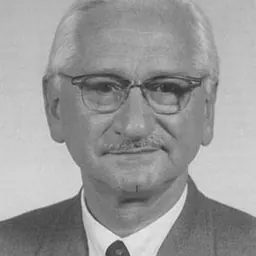
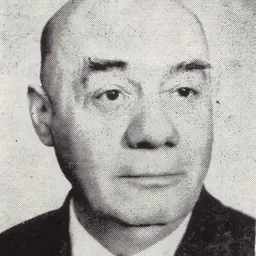


Frequently asked questions
Who was Sean Hughes?
British Labour Party politician (1946-1990)
When was Sean Hughes born?
Sean Hughes was born on 8 May 1946 in Huyton.
When did Sean Hughes die?
Sean Hughes died on 25 June 1990.
What was Sean Hughes's occupation?
Sean Hughes was a politician and teacher.
What nationality was Sean Hughes?
Sean Hughes was British.
Sources & further reading
· DBpedia: Sean Hughes (politician)
Cite this page
APA: Biography.guide. (2026). Sean Hughes. https://biography.guide/sean-hughes-politician/
MLA: "Sean Hughes." Biography.guide, https://biography.guide/sean-hughes-politician/.
Chicago: "Sean Hughes." Biography.guide. https://biography.guide/sean-hughes-politician/.
Data last updated: 2026-09-20 · Spot an error? Report a correction.
Page generated 2026-09-27 05:26 UTC