
About Robert Kilroy-Silk
Born 1942. Robert Kilroy-Silk is a British politician and television presenter.
Robert Michael Kilroy-Silk (born Silk; born 19 May 1942) is an English former politician and broadcaster. After a decade as a university lecturer, he served as a Labour Party Member of Parliament (MP) from 1974 to 1986. He left the House of Commons in 1986 in order to present a new BBC Television daytime talk show, Kilroy, which ran until 2004. He returned to politics, serving as a Member of the European Parliament (MEP) from 2004 to 2009, initially as a member of the UK Independence Party (UKIP). He had a significant role in the mainstreaming of Eurosceptic politics in the UK and has been dubbed 'The Godfather of Brexit'.
Early life Kilroy-Silk was born in Birmingham, son of William Silk, a Royal Navy leading stoker, and his wife Minnie Rose (née Rooke). William Silk was lost at sea when aged 22, serving on , which was torpedoed and sunk off the coast of Brittany by German torpedo boats on 23 October 1943. His son was 17 months old.
Robert's mother Rose remarried in 1946, to family friend John Francis Kilroy, a car worker at the Rootes plant in Warwickshire. He adopted Robert, who from then used the surname Kilroy-Silk.
Kilroy-Silk failed his eleven-plus examination, for entry to selective schools, in 1953. He spent his first year at a secondary modern school and later passed the review exam and went to Saltley Grammar School in Saltley, Birmingham. He attended the London School of Economics to study politics and economics.
Marriage and early career In 1963, Kilroy-Silk married Jan Beech, daughter of a shop steward. The couple met when he was 18 and she was 17. They have a son and a daughter.
After graduation he became a lecturer in politics at the University of Liverpool, serving from 1966 to 1974. He published a theoretical work, Socialism since Marx, in 1972. The next year he was quoted as saying, "the Labour Party must always be a class party, for it is a class war we are fighting".
Kilroy-Silk was appointed Shadow Home Affairs spokesman, resigning in 1985. In resigning his seat, he said that he had been assaulted by members of the Militant group and was reported to have had a scuffle with left-wing Labour MP Jeremy Corbyn. He wrote a book about his experiences, entitled Hard Labour, and subsequently left the Labour Party.
During his time as Labour MP, he was known as a "unapologetic nuisance" for "unfashionable" and "unpopular" causes such as penal reform, civil liberties and opposition to the tampon tax, as well as "rearguard action" against the Militant tendency; "his speeches were essentially invitations to pass him over for promotion", such as when "in one Budget debate, he accused James Callaghan’s government of following Tory orthodoxies on the economy".
Ireland In 1992, Kilroy made a comment regarding Ireland in his Daily Express column, attacking Ray MacSharry, a former Irish government minister and EU commissioner, whom he described as "a redundant second-rate politician from a country peopled by priests, peasants and pixies". This was condemned by the then Irish ambassador to the UK, Joseph Small, for its "gratuitously offensive and indeed racist remarks". The newspaper's editor, Sir Nicholas Lloyd, apologised to MacSharry and the Irish people in general, while Kilroy added: "I accept that my references to Mr MacSharry and the Irish people were both offensive and unjustified, and I fully associate myself with this apology."
Shafted In 2001, Kilroy-Silk hosted a television programme on ITV1 called Shafted. It was a quiz-show and at the end of the show, Kilroy-Silk would ask players whether they wished to "share" or to "shaft", with accompanying hand gestures.
The show was cancelled after four episodes, with sixteen recordings unaired, due to falling ratings. The Penguin TV Companion (2006) ranked it as the worst British television show of the 2000s.
We owe Arabs nothing The BBC cancelled the Kilroy show in January 2004 after an opinion article, entitled "We owe Arabs nothing", by Kilroy-Silk was published in the Sunday Express on 4 January 2004. The article had first been published in April 2003 by the same paper and 'republished in error' according to Kilroy-Silk. It did not attract much national attention when first published. According to Faisal Bodi, a columnist for The Guardian, the reaction at its second publication was a measure of "the increasing organisation of the Muslim community". Bodi added:
Kilroy-Silk's suspension was precipitated by a flurry of web messages and emails circulated by various Muslim organisations notifying people of the outrage. The circulars from the Muslim Public Affairs Committee, the Muslim Council of Britain, the Islamic Human Rights Commission and the Islamic Affairs Central Network, to mention a few, were focused, informative and, above all, empowering. They contained a chronology of Kilroyisms, names and contacts of editors at the BBC and the Sunday Express, and instructions on how to make complaints. In the end, the BBC was left with little choice.
By contrast, Ibrahim Nawar, the head of Arab Press Freedom Watch, came out in support of Kilroy-Silk in a Daily Telegraph article. He said the politician was "an advocate of freedom of expression" and that he agreed with much of what Kilroy-Silk had said about Arab regimes.
A spokeswoman for Kilroy-Silk told The Observer, "He is not a racist at all – he employs a black driver", a quote which is sometimes incorrectly attributed to Kilroy-Silk.
Eurosceptic politics
UKIP In 2004, Kilroy-Silk was recruited to the UK Independence Party (UKIP). During that year's European Parliament election campaign he presented one of the party political broadcasts. His recruitment and celebrity significantly raised the profile of the party,
Following this, businessman and friend Paul Sykes announced his intention to cease his partial funding of UKIP and to return his support to the Conservatives, as he feared that the Eurosceptic vote might be split. The branch chairmen of UKIP were canvassed on their opinion regarding Kilroy-Silk's challenge for the party leadership. Only a minority (13%) were sympathetic to him; Kilroy-Silk did not think this was significant, as he believed that too few party members had been consulted. Party officials threatened him with disciplinary action if he continued his challenge.
On 27 October 2004, Kilroy-Silk officially announced that he had withdrawn from the UKIP whip in the European Parliament, branding the party "incompetent". But, he said that he would remain as an independent member of UKIP, and would continue to challenge for the leadership.
UKIP's constitution states that 70 days' notice is required before a leadership ballot can take place. With the next general election in the UK expected in spring 2005, Kilroy-Silk pushed for an emergency general meeting of the party as early as possible. On 3 November 2004, Kilroy-Silk said he intended to be leader by Christmas, though this would have been impossible under the rules.
In Manchester on 3 December 2004 at about 7.15 p.m., Kilroy-Silk was attacked outside the Girls' High School, when a bucket of manure was thrown over him as he arrived for a recording of the BBC Radio 4's Any Questions.
On 20 January 2005, Kilroy-Silk announced that he had left UKIP; he had been a member for nine months.
Veritas On 30 January 2005 Kilroy-Silk launched a new political party Veritas, promising to take the fight to the "supercilious metropolitan elite".
On 31 January 2005, a television programme, Kilroy: Behind the Tan, was broadcast on the BBC. Created in documentary style, it followed the politician from his election as an MEP for UKIP to his leaving the party.
The party was formally launched on 2 February 2005 at Hinckley Golf Club in Hinckley, Leicestershire.
In early February 2005, Kilroy-Silk worked on a Channel 4 television programme called Kilroy and the Gypsies. He spent a week living with a family of Romany Gypsies at a campsite in Bedfordshire to explore their lives. He also interviewed residents of surrounding villages.
In the 2005 general election, Kilroy-Silk contested the seat of Erewash, but came in fourth with 5.8%, just above the 5% level needed to save his deposit. He tried to press charges against a man who, he said, "smashed a bottle of water against the side of his head" while the politician was being interviewed by a European television crew outside a supermarket. The alleged assailant said he had squirted Kilroy-Silk with water from a plastic bottle before running away; this account was confirmed by the TV crew, which also filmed the incident. The police decided not to prosecute.
On 12 July 2005, party member Ken Wharton announced his intention to challenge Kilroy-Silk for the leadership, claiming party members were "not being looked after". Discontented party members set up the Veritas Members' Association to "put the truth back into Veritas".
On 29 July 2005, Veritas announced the resignation of Kilroy-Silk as party leader. In his resignation statement, he said: "It was clear from the general election result – and more recently that of the Cheadle by-election – that the electors are content with the old parties and that it would be virtually impossible for a new party to make a significant impact given the nature of our electoral system. We tried and failed." The European Parliament does not have any power to expel a member, and Borrell took no action.
Kilroy-Silk, who was elected to the European Parliament on the UKIP list, remained a member of the Veritas Party, but sat as an Independent MEP. Some Veritas members were reported to have questioned why he was allowed to continue as a party member.
In November 2008 Derek Clark MEP complained that Kilroy-Silk was taking his parliamentary wage while being paid to appear in the 2008 edition of the reality TV show I'm a Celebrity... Get Me Out of Here!. In his opinion the TV show represented a conflict of interest.
Kilroy-Silk's name was absent from the list of candidates published on 7 May 2009 for the 2009 European Parliament election. His membership was terminated when the European Parliament reconvened on 17 July 2009.
On 7 November 2009, he appeared as a panellist on the BBC's Question Time programme.
Retirement In 2019, Kilroy-Silk was described as "retired" and living in the outskirts of Plymouth.
Don’t just read it —
keep it.
Full-length biographies made to live with: read them, listen on the way to work, watch them tonight.
- E-book
- Audio
- Video
Instant download · yours to keep · every purchase keeps this site free
Important facts
People in Robert Kilroy-Silk's life
Named in this biography and alive at the same time


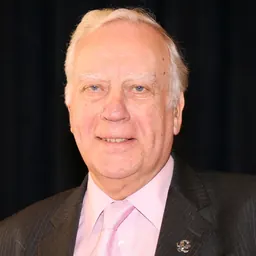
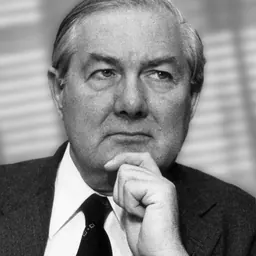



Related people
Same field, nearest in time






Contemporaries
People whose lives overlapped Robert Kilroy-Silk's


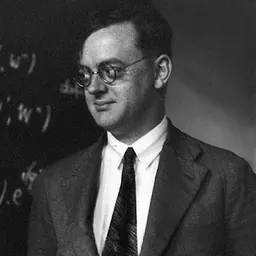

Frequently asked questions
Who is Robert Kilroy-Silk?
British politician (born 1942)
When was Robert Kilroy-Silk born?
Robert Kilroy-Silk was born on 19 May 1942 in Birmingham.
What is Robert Kilroy-Silk's occupation?
Robert Kilroy-Silk is a politician and television presenter.
What nationality is Robert Kilroy-Silk?
Robert Kilroy-Silk is British.
Sources & further reading
· Wikipedia: Robert Kilroy-Silk
Cite this page
APA: Biography.guide. (2026). Robert Kilroy-Silk. https://biography.guide/robert-kilroy-silk/
MLA: "Robert Kilroy-Silk." Biography.guide, https://biography.guide/robert-kilroy-silk/.
Chicago: "Robert Kilroy-Silk." Biography.guide. https://biography.guide/robert-kilroy-silk/.
Data last updated: 2026-09-20 · Spot an error? Report a correction.
Page generated 2026-09-27 05:29 UTC