
About Scott Long
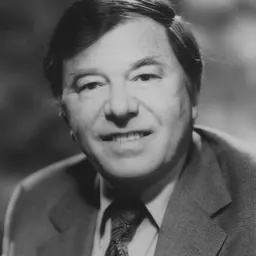
Born 1963. Scott Long is an American human rights defender, known for Human rights and LGBT social movements.
Scott Long (born June 5, 1963, in Radford, Virginia) is a US-born activist for international human rights, primarily focusing on the rights of lesbian, gay, bisexual, and transgender (LGBT) people. He founded the Lesbian, Gay, Bisexual, and Transgender Rights Program at Human Rights Watch, the first-ever program on LGBTQ rights at a major "mainstream" human rights organization, and served as its executive director from May 2004 - August 2010. He later was a visiting fellow in the Human Rights Program of Harvard Law School from 2011 to 2012.
Journalist Rex Wockner called Long "arguably the most knowledgeable person on the planet about international LGBT issues." David Mixner called him "one of the unsung heroes of the LGBT community." Long's blog, A Paper Bird, which focuses on global politics and sexuality, has been acclaimed as "must-read," "indispensable," and "brilliant." Hadi Ghaemi, executive director of the International Campaign for Human Rights in Iran, praised Long's "exemplary dedication and diligence," saying that "His articulate and relentless defense of LGBT rights everywhere is unparalleled, and his tremendous efforts on this front have been a guiding voice for justice and equality."
Early life Scott Long was born June 5, 1963, in Radford, Virginia. He graduated from Radford University at the age of 18, Long visited their home towns, interviewed family members, and confronted the arresting officer and prosecutors. Information he provided persuaded Amnesty International to recognize the two men as prisoners of conscience, the first time the organization had taken up the case of a couple jailed for their sexual orientation. The international pressure Long helped create won the two their freedom.
Long was an outspoken voice on LGBTQ rights within Romania, participating in a controversial Bucharest conference on "Homosexuality: A human right?" organized in 1995 by the Dutch Embassy and UNESCO – the first public discussion of LGBTQ human rights in the country. He was a founding member of the Romanian gay and lesbian organization Accept.
In 1993 Long conducted the first-ever mission to Albania to investigate the state of LGBTQ rights and to meet with gay activists there, and his documentation of arrests and abuses helped lead to the repeal of that country's sodomy law.
IGLHRC Mariana Cetiner, possibly the last person jailed in Romania for her sexual orientation. Long visited her in prison, documented her story, persuaded Amnesty International to take up her case, and personally lobbied President Emil Constantinescu to pardon herReturning to the United States in 1996, Long accepted a position with the International Gay and Lesbian Human Rights Commission (IGLHRC) — a NGO combating rights abuses based on sexual orientation, gender identity, and HIV status — first as its advocacy director, then as program director. He continued to work with activists in Romania, returning to the country in 1997 for additional research. During that research, he learned of the imprisonment of Mariana Cetiner, a woman given a three-year sentence for attempting to have sex with another woman. Long later testified to the U.S. Congress that
I interviewed Mariana in prison. She had enormous bruises; she had been physically and sexually abused by the guards. The prison doctor told us, "After all, she is different from other women. You can hardly expect the guards to treat her as if she were normal.
Long documented Cetiner's story and persuaded Amnesty International to adopt her as a prisoner of conscience, the first time the organization had taken up the case of a lesbian imprisoned for her sexual orientation. Later that year, he wrote Public Scandals: Sexual Orientation and Criminal Law in Romania, a detailed study jointly published by IGLHRC and Human Rights Watch – the first report on LGBTQ issues ever issued by the latter organization. Long specifically lobbied for Mariana Cetiner, who was promptly freed on the president's order. In the next three years, according to political scientist Clifford Bob, Long "enthusiastically and skillfully" pushed the Romanian government toward full repeal of Article 200, which was finally achieved in 2001. This lobbying brought about an unprecedented commitment by key U.N. human rights officials to work on issues of sexual orientation and gender identity. In 2001, six independent experts—high-level individuals appointed by the UN to investigate patterns of human rights abuse—publicly reached out to lesbian, gay, bisexual, transgender, and queer (LGBTQ) communities, formally declaring that these issues lay within their official mandates. Long said of the move, "Today the United Nations has lived up to its promise: to defend the dignity of all people without exception."
Long also led IGLHRC's lobbying at the groundbreaking 2001 United Nations General Assembly Special Session on HIV/AIDS. IGLHRC was invited to address the session, then blocked by conservative Islamic states and the Holy See. The crisis eventually reached the floor of the General Assembly, which had never discussed LGBTQ rights before but was forced to vote on whether the LGBTQ group could speak. Long's advocacy led to a victory and to IGLHRC's reinstatement. "This was the first time a gay and lesbian issue has ever been debated on the floor of the General Assembly," Long commented on the unprecedented vote. "It's a precedent that will have serious impact on the way vulnerable groups and marginalized groups and outsiders from all parts of society can get involved in the U.N."
Queer activists joined by Scott Long (center, behind flag) participate in Zimbabwe's first-ever LGBT rights march on Human Rights Day, December 10, 1998, in HarareFrom 1998, when he led a delegation to the World Council of Churches's world conference in Harare, Zimbabwe, and visited Zambia during a huge national furor over a young gay man's public coming-out in the media, Long was closely involved with sexual rights movements across Africa. He connected homophobia and moral panics in many African countries to economic and political factors, especially the poverty and dislocation caused by structural adjustment programs. In an interview with the Chicago Tribune, Long said that "there's a sense of economic and political powerlessness, and when you feel powerless about your economy and your country's politics there's a tendency to turn to culture as the one thing you can exert control over." In 2003, IGLHRC and Human Rights Watch released More than a Name: State-Sponsored Homophobia and its Consequences in Southern Africa, a 300-page investigation of the roots of homophobia that Long had researched and authored.
Long also co-authored or edited major reports on gay, lesbian, and transgender parenting, and on sexuality-based attacks on women's organizing. He also wrote a widely used guide to grassroots advocacy at the United Nations. While at IGLHRC, Long was responsible for one of the first broad statements on sex workers' rights ever issued by any international human rights organization, affirming that "Sex workers enjoy the rights to work, to equality before the law, to family, to sustenance, and to a sexual life, in the same degree and under the same conditions as do all other persons."
Human Rights Watch Egypt The Queen Boat floating discotheque in the Nile in CairoIn 2002, Long left IGLHRC to join Human Rights Watch (HRW), the largest U.S.-based human rights organization. Since 2001, Long had been deeply engaged in combating a crackdown on homosexual conduct in Egypt. In May 2001, police in Cairo raided a floating Nile discothèque called the Queen Boat, arresting dozens of men and staging a show trial for "blasphemy" as well as "debauchery." Long later wrote:
On the night of May 11, 2001, as I worked late in my office in New York, my inbox began filling with e-mails from [an] anonymous man, whose roommate had been seized in the discotheque raid. His messages spread news of the arrests around the world.
Long went to Egypt for the first time to attend and report on their trial. In succeeding months, hundreds, possibly thousands of other men were arrested in raids and through Internet entrapment. Working for Human Rights Watch, Long lived in Egypt for several months in 2003 documenting the extent of this crackdown. Through Human Rights Watch, he also documented a brutal government assault on anti-war activists, Islamists, and the political Left, as well as persecution of African refugees and other vulnerable groups. In all this, Long worked closely with Egyptian human rights organizations, including the Egyptian Initiative for Personal Rights, the El Nadeem Center for Psychological Management and Rehabilitation of Victims of Violence, and the Hisham Mubarak Law Center. The bridges he built helped persuade parts of Egypt's human rights community to take lesbian and gay issues within their work.
In 2004 in Cairo, together with Human Rights Watch executive director Kenneth Roth, Long launched a report on the Egyptian crackdown against gays. In Cairo, Long and Roth met with Egyptian officials including the country's Prosecutor General and deputy Minister of Interior. Human Rights Watch later stated:
Perhaps [Long's] most significant achievement was working cooperatively with Egypt's human rights community to develop a strong and unified response to the crackdowns. In the end, five major Egyptian human rights groups joined Long and Human Rights Watch in announcing and carrying out advocacy based on the documented abuse, making clear their conviction that sexual rights claims were core human rights concerns--a position still atypical at the time.
The New York Times praised the strategic way Long framed his advocacy:
Human Rights Watch avoided laying itself open to easy attack as the bearer of an outsider's agenda, [instead] packaging Queen Boat advocacy in the larger context of torture. … In Human Rights Watch's 150-page report on the crackdown, references to religion, homosexual rights or anything else that could be seen or used as code for licentiousness were played down. Torture was played up, and it may very well be the first and last human rights report to cite Michel Foucault's "History of Sexuality."
The crackdown and the arrests in Egypt abruptly stopped, apparently on the day of the release of Long's report. There were almost no arrests under Egypt's "debauchery" law for the next nine years. The Times observed,
he all-out campaign of arrest and entrapment of men that began with the Queen Boat incident came to an end. One well-connected lawyer noted that a high-ranking Ministry of Interior source told him, "It is the end of the gay cases in Egypt, because of the activities of some human rights organizations." He wrote and advocated extensively against the exams, arguing that they constituted torture.
Human Rights Watch established its Lesbian, Gay, Bisexual, and Transgender Rights Program in 2004, with Long as director. Bruce Rabb, a member of HRW's governing board, remembered that when Long spoke to the board, "The depth of Scott's knowledge and the passion he had for his work, combined with the dramatic effectiveness of his research and advocacy in Egypt, made it clear to all present that, while setting up an LGBT program would break significant new ground for Human Rights Watch, Scott's program would be core to Human Rights Watch's mission and definitely should be undertaken."
Long concluded:
As the stories multiplied, Long and his colleagues travelled to Iraq, arranging for the transit of several dozen men out of the country through a northern Iraqi city.
Long and Moumneh spent two weeks in the Iraqi city. As men arrived from Baghdad and elsewhere in the country, the two aid workers helped them get settled, interviewed them to verify their stories, made arrangements for travel to the safe city in the nearby country, and set up places for them to stay once they got there. At first, Long and Moumneh didn't introduce the men to each another so that they wouldn't attract any more attention than necessary from local security officials, especially since a number of the men were staying in the same hotel. … For the most part, the Iraqi city was a way station, and the men spent their days waiting. Long and Moumneh provided them with living expenses, and took them to a local site or two, but mainly encouraged them to stay indoors and avoid scrutiny.
In a later interview, Long spoke about the relation between individual stories and the "traditional" HRW focus on large-scale, systemic change, using the lessons of the Iraq "underground railroad":
In this program at Human Rights Watch we do a lot more work with individuals than any other part of Human Rights Watch does. For the most part, Human Rights Watch focuses on the big picture. We look at patterns of violations and policy recommendations to fix them. And I think that's very important in dealing with LGBT rights, partly because we get told so often that these abuses are sporadic or unsystematic or accidental or they just don't happen, you know? I think being able to demonstrate: "No, there is a syndrome, there is a pattern, these are serious, they happen to a lot people" -- it's critical for getting attention paid to them.
But the fact is that in most countries in the world, still, things that happen to queer folks are shrouded in secrecy and stigma and shame ... It requires much more effort for us to find the stories and to find people who are willing to talk to us and to find people to whom this has happened. And because of that, we need to pay attention to the individual abuses because they are often our only key to finding out what the larger pattern is. It's only by grabbing that single thread that we can untangle the whole carpet of abuses that people are facing.
So, I make it very much our policy here that when we have somebody come to us with an individual story ... we should always try to answer and figure out what we can do, because ... if we hadn't done that in Iraq we would never have found out the scope of what was going on there... It's really critical. allegedly corrupting Iraqi youth. Long produced evidence that security forces were implicated in the killings, and showed how other victims, such as men seen as "effeminate" or gay, were being swept up in the murders as well. Long personally posted warnings in Arabic on more than 500 Iraqis' personals sites and ads with advice about safety. Long's research was cited in The New York Times. Long has also written on Iraq for publications including the Guardian and Jadaliyya.
Controversies
The Middle East expert and academic Joseph Massad has repeatedly criticized Long as an example of what Massad calls the "Gay International," a complex of Western organizations, activists and academics that has embarked on a project "to universalize itself ... y inciting discourse about homosexuals where none existed before." Massad accuses the Gay International of actually worsening the situation for the people it claims to help, by aggressively imposing its identity categories of "homosexual" and "heterosexual" upon "a world that is being forced to be fixed by a Western binary." Massad contends that the Gay International's missionary activities have especially targeted the Arab and Muslim worlds, and Long has been a key agent, one who was "rewarded with employment at Human Rights Watch" and who "became an instant expert speaking on 'gays' in Arab countries on radio shows and at public lectures."
Paradoxically, Long was also criticized from the opposite perspective. Other campaigners, especially the British activist Peter Tatchell, attacked him for questioning the universal validity of "gay" identity. Long's work produced controversy in 2005 and 2006 after photographs of the hanging of two teenagers in the city of Mashhad, Iran went viral on the web. Tatchell, gay writer Doug Ireland, and U.S. activist Michael Petrelis insisted that the youths were hanged not for the rape of a 13-year-old (as initially reported in the Iranian press) but for being gay. Long and Human Rights Watch, while conducting intensive research on the situation for LGBTQ people in Iran, maintained the evidence in the Mashhad case was inconclusive, and also questioned assigning the youths a Western "gay" identity in a culturally complex situation where neither they nor others around them were able to speak for themselves. Long urged that the executions should be condemned, but that it was not necessary to believe the youths were either "gay" or completely innocent to do so. "Rights aren't for saints, and if we only defend them for people onto whom we can project our own qualities, our own identities, we aren't activists but narcissists with attitude," he said. "If these kids aren't 'gay,' or 'innocent,' but are 'straight' or 'guilty,' does it make their fear less horrible, their suffering less real? Does it make them less dead?" Long was attacked for a social constructionist approach to LGBTQ activism. Some, including Tatchell, questioned whether his work reflected covertly pro-Islamic sympathies.
In 2009, Long wrote an article, published in the Routledge journal Contemporary Politics, on Mahmoud Asgari and Ayaz Marhoni which sharply criticized the accuracy of claims Tatchell and OutRage! had made about Iran. Peter Tatchell wrote to Human Rights Watch in 2010, and Kenneth Roth and Long issued an apology in June 2010. Taylor & Francis issued an apology in 2012 declaring there were "substantial innaccuracies" in the essay.
The article had been widely praised; Dianne Otto, a professor of international law, called it "meticulous genealogy of some western LGBTI advocacy of sexuality rights in Iran." Long asserted that Tatchell intimidated HRW and Taylor & Francis with legal threats under English defamation law, while Tatchell claims he never made any legal threats against Human Rights Watch, and that Taylor & Francis only retracted the paper because it had claims that were unsubstantiated. Tatchell has been accused of intimidating or harassing other critics with threats of action under England's libel laws, at the time some of the most restrictive in the world. In 2009, Tatchell had induced a small UK feminist publisher to withdraw an anthology that contained an article critical of him, and to publish an extensive apology. In an open letter published in February 2016, 165 activists and academics cited the withdrawal of Long's article as well as other incidents and accused Tatchell of "intolerance of criticism and disrespect for others' free expression."
Later activism Long suffered severe pulmonary embolisms in July 2010. Long resigned from Human Rights Watch the following month in order to recuperate. In his resignation letter, published in English and Spanish, he recollected that
One of the most basic splits in contemporary human rights work – sometimes mapped onto a division between "global South" and "global North," though not quite reducible to it – is between rights as a set of legal norms, and rights as a complex of human dreams and political aspirations. The split has to do, as well, with the difference between institutions and movements, the former ones formal and developing their own standards and needs, the latter fluid and chaotic and responsible to individuals' and communities' desires and drives … Human Rights Watch – and other international organizations like it – needs a far deeper understanding of what social movements are, why they are important, how they turn human rights into living values rather than legal abstractions. Although for nine years Egypt's law against "debauchery" had almost never been enforced, after the July 2013 military coup that brought General Abdel Fattah el-Sisi to power, a new crackdown on LGBTQ people began. More than 150 people were arrested in the next 18 months. Long documented the arrests from the start, interviewing as many as possible of the victims and publicizing many accounts on his blog, A Paper Bird. He stressed the role of gender (rather than sexual orientation) in the persecution, and the way that transgender women and "effeminate" men were especially targeted for arrest. Long worked on a legal guide for endangered LGBTQ Egyptians that was published, in Arabic, on his blog. He also published warnings, in both English and Arabic, about Internet entrapment and surveillance in Egypt and how to protect online privacy.
Long helped organize several social media campaigns in Egypt to mobilize opposition to the crackdown. In December 2014, he was the first to break the news of a police raid on a Cairo bathhouse led by prominent journalist Mona Iraqi. 26 men were arrested and charged with "debauchery" in the most high-profile gay trial since the Queen Boat. The shocking pictures of the raid Long published galvanized indignation at the arrests, both inside Egypt and beyond. Partly as a result a court eventually acquitted all the men, a victory highly unusual under the draconian Sisi regime. Long was interviewed extensively by publications such as The New York Times, BuzzFeed, and Global Post, as well as in the Egyptian media. He also wrote about the human rights crisis in Egypt in such venues as the Irish Times and the Advocate.
In April 2015, Long made a rare comment on the level of personal danger he felt:
I sometimes seem insouciant about threats in Egypt, but I'm not. It's just that the atmosphere of threat is general here. It affects every corner of your personality, yet it's hard to take it personally, so wide is the danger spread. ... Yesterday, talking with a reporter in the usual seedy Cairo café — a place I've always considered safe — I saw a well-dressed man at the next table listening intently. Finally he interrupted. He gathered I was interested in human rights, he said. What did I do? Did I work for Freedom House? Freedom House is, of course, a banned organization, its local office raided and shuttered by the military regime back in 2011. I said no. He added, almost enticingly, that he himself had been tortured, and offered to show me his scars. I gave him my contact information and told him to call me. That was simple responsibility – you do not refuse a torture victim anything you can give; but afterwards I cringed inside. It's how things are in Egypt. Other people, foreign passport-holders among them, have been arrested for "political" conversations in public places. You don't know if the person who approaches you is victim or violator, survivor of torture or State Security agent; or both.
Awards In June 1997, Long received an Achievement Award from nine Hungarian lesbian, gay, bisexual, and transgender organizations, "in recognition of years of work in building and strengthening the Hungarian LGBT community and the cause of LGBT human rights."
Don’t just read it —
keep it.
Full-length biographies made to live with: read them, listen on the way to work, watch them tonight.
- E-book
- Audio
- Video
Instant download · yours to keep · every purchase keeps this site free
Important facts
People in Scott Long's life
Named in this biography and alive at the same time




Related people
Same field, nearest in time


Contemporaries
People whose lives overlapped Scott Long's

Frequently asked questions
Who is Scott Long?
American LGBT activist
When was Scott Long born?
Scott Long was born on 5 June 1963 in Radford.
What is Scott Long's occupation?
Scott Long is a human rights defender.
What is Scott Long known for?
Scott Long is known for Human rights and LGBT social movements.
What nationality is Scott Long?
Scott Long is American.
Sources & further reading
Cite this page
APA: Biography.guide. (2026). Scott Long. https://biography.guide/scott-long/
MLA: "Scott Long." Biography.guide, https://biography.guide/scott-long/.
Chicago: "Scott Long." Biography.guide. https://biography.guide/scott-long/.
Data last updated: 2026-09-20 · Spot an error? Report a correction.
Page generated 2026-09-27 05:29 UTC