
About Scarlat Callimachi
Lived 1896 – 1975 (aged 78). Scarlat Callimachi was a Romanian journalist, trade unionist, poet and writer.
Scarlat Callimachi or Calimachi (; nicknamed Prințul Roșu, "the Red Prince"; September 20, 1896 – June 2, 1975) was a Romanian journalist, essayist, futurist poet, trade unionist, and communist activist, a member of the Callimachi family of boyar and Phanariote lineage. He is not to be confused with his ancestor, hospodar Scarlat Callimachi.
Biography Born in Bucharest, he lived for part of his childhood at the family manor in Botoșani, where, at age 11, he witnessed first-hand the 1907 peasants' uprisings (which, as he later admitted, contributed to his left-wing sympathies). As a youth, he read Russian anarchist books, while studying in Paris during World War I, joined anarchist circles. While travelling through Finland in 1917, Callimachi attended a public meeting at which Vladimir Lenin gave a speech, and consequently adopted Bolshevism. and published Avant-garde poems in free verse — inspired by the work of Russian Futurists. With fellow modernists Ion Vinea and Stephan Roll, he later issued the literary magazine Punct. He began working on communist and other leftist newspapers (including Clopotul, which he himself edited in his native town) while keeping a front as an employee of his relatives. an allegiance which brought Callimachi into a relatively small, but dedicated, category of communist sympathisers of upper class upbringing — it also included N. D. Cocea (to whom Callimachi was a close collaborator) and Lucrețiu Pătrășcanu. Nevertheless, at the same time, he was a nominal member of the National Peasants' Party (PNȚ). was one of the leaders of the Democratic Bloc (Blocul Democratic), a PCR-created legal organization which in 1935 succeeded in forming a tight alliance with Petru Groza's Ploughmen's Front (the agreement was signed in Țebea).
In 1937, as the fascist Iron Guard was gaining unprecedented momentum and the secondary fascist movement around the National Christian Party was ascending to power, Callimachi decided to leave Romania and settled in France, but returned a year later, after King Carol II acted against the Iron Guard and established a dictatorship around the National Renaissance Front.
After World War II, he became a leader of the Singular Journalists' Trade Union, which had replaced the Union of Professional Journalists in October 1944 and had since become an instrument of the PCR-controlled government in controlling the press. He, with N. D. Cocea, Miron Constantinescu, and Ion Pas, organized the expulsion and denouncement of journalists who professed anti-communism, and maintained this position after the proclamation of the People's Republic of Romania in 1948, before moving on to become head of the Romanian-Russian Museum (Muzeul Româno-Rus), an institution created to highlight cultural and social links between Romania and the Soviet Union in accordance with the Zhdanov Doctrine. The Museum was closed down in 1956, after the Gheorghe Gheorghiu-Dej regime began rejecting Soviet influence.
He died in 1975, and was buried in the Bucharest Bellu Cemetery; he had refused the ostentatious funeral reserved for senior PCR members.
Don’t just read it —
keep it.
Full-length biographies made to live with: read them, listen on the way to work, watch them tonight.
- E-book
- Audio
- Video
Instant download · yours to keep · every purchase keeps this site free
Important facts
People in Scarlat Callimachi's life
Named in this biography and alive at the same time
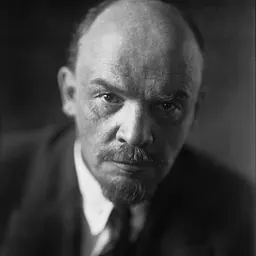


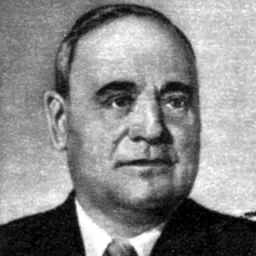
Related people
Same field, nearest in time



Contemporaries
People whose lives overlapped Scarlat Callimachi's



Frequently asked questions
Who was Scarlat Callimachi?
Romanian writer (1896-1975)
When was Scarlat Callimachi born?
Scarlat Callimachi was born on 20 September 1896 in Bucharest.
When did Scarlat Callimachi die?
Scarlat Callimachi died on 2 June 1975 in Bucharest.
What was Scarlat Callimachi's occupation?
Scarlat Callimachi was a journalist, trade unionist, poet and writer.
What nationality was Scarlat Callimachi?
Scarlat Callimachi was Romanian.
Sources & further reading
· Wikipedia: Scarlat Callimachi
Cite this page
APA: Biography.guide. (2026). Scarlat Callimachi. https://biography.guide/scarlat-callimachi-journalist/
MLA: "Scarlat Callimachi." Biography.guide, https://biography.guide/scarlat-callimachi-journalist/.
Chicago: "Scarlat Callimachi." Biography.guide. https://biography.guide/scarlat-callimachi-journalist/.
Data last updated: 2026-09-20 · Spot an error? Report a correction.
Page generated 2026-09-27 05:22 UTC