
Sayed Kashua
Arab-Israeli author and journalist of Palestinian descent
About Sayed Kashua
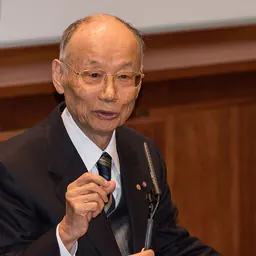
Born 1975. Sayed Kashua is an Israeli journalist, writer, poet, opinion journalist, screenwriter and columnist.
Sayed Kashua (, ; born 1975) is an author and journalist. He is a Palestinian citizen of Israel, born in Tira, Israel. He is known for his books and humorous columns in Hebrew and English.
Early life Kashua was born in Tira in the Triangle region of Israel to Palestinian Muslim-Arab parents. In 1990, he was accepted to a prestigious boarding school in Jerusalem – Israel Arts and Science Academy. He studied sociology and philosophy at the Hebrew University of Jerusalem. Kashua was a resident of Beit Safafa before moving to a Jewish neighborhood of Jerusalem with his wife and children.
Kashua became a journalist, columnist and screenwriter, especially of TV series. In 2002 he published his first novel, Dancing Arabs.
His Haaretz column of July 4, 2014 was titled "Why Sayed Kashua is Leaving Jerusalem and Never Coming Back: Everything people had told him since he was a teenager is coming true. Jewish–Arab co-existence has failed." It was published at a volatile time in the country's intergroup relations, involving the kidnapping/murders of Jewish students in the West Bank and an Arab youth in East Jerusalem, though prior to the July 8 outbreak of the 2014 Israel–Gaza conflict. His declaration elicited numerous responses in the Israeli press from colleagues and readers who were concerned by the issues he raises. Kashua's concern for his family and despair at the Jewish-Israeli community's continued rejection of Arab-Israelis despite his 25 years of writing motivated his move to the United States. In his Haaretz newspaper column, he wrote that "I'd lost my small war" and that he saw no hope of a world for his children where Arab- and Jewish-Israelis could coexist. He served as a visiting clinical professor from 2014 to 2018. He participated in the Creative Writing program's bilingualism workshop at the University of Chicago, and was a clinical professor in the Israel Studies program. and also taught Hebrew for the Department of Jewish, Islamic, and Near Eastern Languages & Cultures.
As of 2026, Kashua is a professor of the practice at Boston University's college of communication.
Literary career Kashua's exposure to literature began at the Israel Arts and Science Academy when he was 14 years old. After reading The Catcher in the Rye, he discovered a passion for books and began writing himself, primarily about the Arabic narrative in a Jewish country. Kashua wrote with the goal of creating a more equal Israel. His first novel, Dancing Arabs (2002), tells the story of a nameless Arab-Israeli attending an elite Jewish boarding school and code-switching between Arab and Jewish identities in an attempt to fit in. These semi-autobiographical themes of identity and in-betweenness, often packaged in the tragic comedy genre, became hallmarks of Kashua's writing. Throughout the years, Kashua's fiction often uses stereotypical characters – caricatures of Jewish- and Arab-Israelis – to both foster familiarity with his audience and subvert the perception of these identities in real life.
From the beginning of his career as a writer, Kashua wrote exclusively in Hebrew, although he had grown up speaking exclusively Arabic. This was an intentional choice on his part in reaction to the poor representation of Palestinian characters in Hebrew books at his school library. Kashua wanted to "tell the Israelis ... the Palestinian story",
His primary vehicle of communication was a personal weekly column in Hebrew for Haaretz and a local Jerusalem weekly, Ha'Ir. In a humorous, tongue-in-cheek style, his column embedded political and social commentaries about problems faced by Arab-Israelis into anecdotes about parenting and day-to-day life. He uses the perspective of his children to highlight the absurdity of social norms, such as his daughter's sad confession that she knows she will "always be an Arab" to the rest of Israeli society. Today, Kashua continues to publish opinion pieces through various platforms, including The Guardian, The New Yorker, and The New York Times.
In the auto-fictional drama (2015), the character Kateb draws on his own experiences for his depiction of the turbulent daily life of a young Arab and his family living in Israel. However, the more successful his satirical TV series becomes, the more Kateb feels alienated from his alter ego.
Madrasa (2023) is a comic series taking place at an Arabic-Hebrew bilingual school in Jerusalem.
Film Dancing Arabs (2014) A film adaptation of Kashua's second novel, Let It Be Morning, was slated to begin production in early 2017. The film was completed and released in 2022. The screenplay was written and the film was directed by Eran Kolirin. Most of the cast are Palestinian and the film is mostly in Arabic.
Reception Praise Kashua is highly acclaimed internationally, often praised for his frankness and "striking satire". Reviews of Native, his 2016 collection of personal essays, commend the universality of his human message and its artful presentation through comedy. The winner of many international awards, Kashua has been lauded as the "greatest living Hebrew writer".
Criticism Critics of Kashua accuse him of hypocrisy and cynicism. One article in The Jerusalem Post lambasted him for being unappreciative of the freedoms offered to Arabs in Israel. Track Changes has been criticized as "rambling" and "self-pity[ing]". His choice to write exclusively in Hebrew has also garnered him criticism, estranging him from Israeli Arabs who see the Arabic language as the primary means with which to preserve their Arabic identity; Kashua lamented in an interview that he is no longer welcome in his hometown of Tira. The content of Kashua's Haaretz column has also led to controversy. In one such instance, after director Maysaloun Hamoud became victim to threats and verbal abuse, Kashua issued an apology column for his column criticizing the director's film and emphasized the importance of engaging with thought-provoking material and standing with the filmmakers to "silence the violence".
Published works Dancing Arabs (2002) Let it be Morning (2006) Second Person Singular (2010) (also published as Exposure (2013)) Native: Dispatches from an Israeli-Palestinian Life (2016), was shortlisted for the Grand Prix of Literary Associations 2017, Research Category. Track Changes (2017)
Awards and recognition 2004 – Prime Minister's Prize for Hebrew Literary Works 2004 – Grinzane Cavour Prize for First Novel (Italy) for his novel Dancing Arabs 2010 – for literature, awarded by the Municipality of Holon 2010 – Freedom of Expression Award of the San Francisco Jewish Film Festival (USA) 2011 – Award for Best Television Series at the Jerusalem Film Festival for Arab Labor 2011 – Bernstein Prize for the novel Second Person Singular 2012 – Prix des lecteurs du Var readers' prize at the (Toulon, Var department, France), for Second Person Singular
Don’t just read it —
keep it.
Full-length biographies made to live with: read them, listen on the way to work, watch them tonight.
- E-book
- Audio
- Video
Instant download · yours to keep · every purchase keeps this site free
Important facts
People in Sayed Kashua's life
Named in this biography and alive at the same time


Related people
Same field, nearest in time



Contemporaries
People whose lives overlapped Sayed Kashua's


Frequently asked questions
Who is Sayed Kashua?
Arab-Israeli author and journalist of Palestinian descent
When was Sayed Kashua born?
Sayed Kashua was born on 31 July 1975 in Tira.
What is Sayed Kashua's occupation?
Sayed Kashua is a journalist, writer, poet, opinion journalist, screenwriter and columnist.
What nationality is Sayed Kashua?
Sayed Kashua is Israeli.
Sources & further reading
Cite this page
APA: Biography.guide. (2026). Sayed Kashua. https://biography.guide/sayed-kashua/
MLA: "Sayed Kashua." Biography.guide, https://biography.guide/sayed-kashua/.
Chicago: "Sayed Kashua." Biography.guide. https://biography.guide/sayed-kashua/.
Data last updated: 2026-09-20 · Spot an error? Report a correction.
Page generated 2026-09-27 05:07 UTC