
About Sayako Kishimoto
Lived 1939 – 1988 (aged 49). Sayako Kishimoto was a Japanese artist.
was a Japanese artist who worked across mediums including paintings, drawings, and performances. Best known as one of the few female members in the short-lived art collective Neo-Dada Organizers, Kishimoto investigated female identity and the definition of a female avant-garde artist through destruction-oriented practices in the 1960s. Beginning in the 1970s, Kishimoto's interests shifted toward examining and questioning the political power structure of Japanese society as well as that of the U.S.-Japan relations, and she briefly adopted the style of Pop Art. Later on, she expanded the scope of her artistic inquiry and began to invent a worldview of her own. Kishimoto envisioned a society in which everyone would strive to reach the bottom of a hierarchy instead of the top as in real life. Kishimoto translated her utopian view onto several canvases in the 80s, where motifs of animals and expressive strokes constituted modern allegories. While combatting cancer on the sickbed during the last few years of her life, Kishimoto continued to probe the personal and the political through expressive works on paper as well as performances.
Biography Early life On October 1, 1939, Kishimoto was born as the third child and second daughter to Kishimoto Ken’ichi and Natsuko. Her father was a psychiatrist, and her mother Natsuko (b. 1906) had briefly pursued a career as a painter. In 1946, Kishimoto attended the Nagoya Municipal Yagoto Elementary School (Nagoya Shiritsu Yagoto Shōgakkō) and in 1952, the Nanzan Middle School where she joined the art club. The encouragement of her mother Natsuko, who was unable to sustain her dream of becoming a painter, played an important role in the start of Kishimoto's artistic career.
Kishimoto then studied in the Art Department of the Aichi Prefectural Asahigaoka Senior High School. Graduates from the same program included Genpei Akasegawa, Shūsaku Arakawa, and Iwata Shin’ichi (member of Zero Jigen group), who were two years ahead of Kishimoto. The male artists also threw dirt and ashes on her. Art historian Mayumi Kagawa argues that Kishimoto's position was “tenuous” and the artist was “easily reversed from the subject of action to the object of male sadism.” While Kishimoto's presence in the group was a bold, boundary-breaking move for a female artist at the time, she was not regarded as an equal by her male peers. After the dissolution of Neo-Dada, Kishimoto remained within the circle of this group of artists and continued to produce works that shared their ideology. By exposing and manipulating bodily forms as well as establishing the resonance between birth and death, The Gravestones of Narcissus revealed Kishimoto's rejection of the feminine body. The idea of male dominance in art had shaped Kishimoto's projected image then of how a real avant-garde artist should behave. Only by denying her feminine side would she be recognized by her male-majority fellows as a professional.
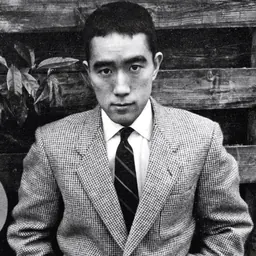
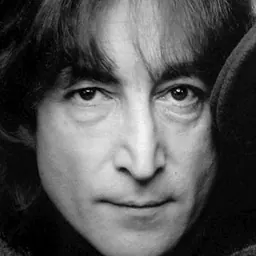
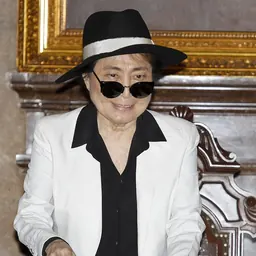
While attempting to overcome their male-centered logic, Kishimoto retained the destructive aspects of the Neo-Dada Organizers as a guiding proposition. Recalling her practices in the 60s, Kishimoto later wrote, “I believed that ART could not serve its original role and function as the releasing machine to uplift the mind of the viewer unless I completely broke with my narcissism as a woman and a human being. Those works were the very result of my desperate act of self-annihilation at age twenty-six.” In 1968, at her solo exhibition Romantic Structure at the Ginhodo Gallery in Ginza, Kishimoto covered the walls and ceiling of the space with large-scale drawings of flower petals. From this exhibition until the end of 70s, Kishimoto temporarily renamed herself Mari Kishimoto. Despite being in the midst of the avant-garde scene, around 1969, Kishimoto took a break from her performance-based activities in Tokyo. Reportedly she ran several planning companies and got married in 1973 before divorcing in four years. In one of them, Title Unknown (Spit out Blood, The Showa Genroku, Oppekepe...) (ca. early 1970s) Kishimoto manifested cynicism towards the U.S.-Japan relationship by collaging a dozen of popular motifs. The artist depicted two Japanese male figures — on the left Otojirō Kawakami, a Meiji performing artist known for his Oppekepe songs criticizing the wealth gap in Japanese society, and on the right, Yukio Mishima, the famous literary figure who committed suicide in 1970 as a ritual act to object the Japanese government. Between the two figures was a line of text in red — “Crying While Spitting Blood," signaling the two painted figures' frustration toward society, which might echo Kishimoto's feelings as well. Near the bottom, one can see a cheetah violently biting a seal, against the background of seemingly erupting Mt. Fuji. On the far right is a small portrait of Yoko Ono and John Lennon, and above that is a bow tied with Japanese and American flags placed in front of the Japanese Diet. The two motifs of Ono-Lennon marriage and the tied bow resonate with each other and point to the Japanese-U.S. relationship, specifically the renewal of the Japanese-U.S. Security Treaty (Anpo) in 1970, which many students had protested.
1980s - Utopian Vision Kishimoto's practice in the 80s centered on her reflection on and critique of the power hegemony, both in the realm of gender as well as that between nations, species, and beyond. The artist believed that the human society at large had been shaped into a pyramidal structure, in which one was compelled to dominate, conquer, and overtake others in order to move up.
The ideal society pictured by Kishimoto involved an inverted triangle structure within which people competing to move down, to the bottom. Meanwhile, she named herself “messenger from hell,” someone who is situated at the very bottom and thereby waiting on the most ideal ground of the imagined society. Based on this view, Kishimoto created several expressive, dynamic paintings on long, horizontal canvases and frequently adopted various animals as the protagonist of her visual narratives. Consisting of four panels, White Mountain Gorilla (1981) portrays a captured gorilla destroying the cage and releasing itself, a story of striving for freedom. In 21c. Erotical Flying Machines — A trip to the Galaxy (1983), Kishimoto illustrated the journey of a pink grasshopper, an embodiment of the artist herself, traveling with other insects and overcoming difficulties before landing on a utopia. Furthermore, The Civilization of Monsters (1983) manifests a radiant scenery of dinosaurs, which echoes the artist's view that a more ideal world existed on the earth before the emergence of humans, thereby before the rise of patriarchy and phallicism.
Solo Exhibition 1964 - Naiqua Gallery, Tokyo (first solo exhibition) 1965 - The Medal of Narcis, Tsubaki Kindai Gallery, Tokyo 1966 - The Grave-Stones of Narcissus, Tsubaki Kindai Gallery, Tokyo 1967 - Look Left!!, Sakura Gallery, Nagoya 1968 - Romantic Structure, Ginhodo Gallery, Ginza, Tokyo 1977 - The Last Supper, Meiji Gallery, Tokyo 1980 - The Breakdown of the Genesis- and Sea, Box Gallery, Nagoya 1981 - I am a Flying Red Cat!, Gallery 79, Nagoya White Mountain Gorilla, Gallery 79, Nagoya 1982 - Principle of Time Machine, Love Collection Gallery, Nagoya Roppongi Art Club, Tokyo 1983 - 21C. Erotical Flying Machines - A Trip to the Galaxy, Love Collection Gallery, Nagoya 21C. Erotical Girls, Ginza Bijutsu Club, Tokyo Civilization of Monsters, Shizuoka Bijutsu-sha 1984 - Japanese Flowers Series - 1. Mountain Cherry, Love Collection Gallery, Nagoya Japanese Flowers Series - 2. Lily, Love Collection Gallery, Nagoya 1985 - Japanese Flowers Series - 3. Seven Vernal Flowers, Love Collection Gallery, Nagoya Kojiki (Japanese Mythology), Love Collection Gallery, Nagoya 1986 - Macbeth/Super Ichiza Participation, Love Collection Gallery, Nagoya 1988 - Sickbed Sketch Exhibition - Revival of the Soul, Love Collection Gallery, Nagoya Momotaro Onna Zamrai/Kishimoto Sayako’s Evening of Song and Narrative, ASG Garando, Nagoya 1990 - The Posthumous Exhibition of Sayako Kishimoto, Electricity Museum Building, Nagoya 2011 - Revived Kishimoto Sayako, The Miyagi Museum of Art 2017 - Sayako Kishimoto: Retrospective, Shumoku Gallery, Nagoya 2019 - Kishimoto Sayako: The Messenger, Aichi Prefectural Museum of Art
Group Exhibition 1960 - The 12th Yomiuri Indépendant Exhibition, Tokyo Metropolitan Art Museum 2nd Neo-Dada Organizers Exhibition, Masunobu Yoshimura's studio, Tokyo 3rd Neo-Dada Organizers Exhibition, Hibiya Gallery, Tokyo 1961 - The 13th Yomiuri Indépendant Exhibition, Tokyo Metropolitan Art Museum 1962 - The 14th Yomiuri Indépendant Exhibition, Tokyo Metropolitan Art Museum 1963 - The 15th Yomiuri Indépendant Exhibition, Tokyo Metropolitan Art Museum SWEET - Graduation Group Exhibition, Tama Art University, Tokyo 1964 - Off Museum, Tsubaki Kindai Gallery, Tokyo 1965 - 9th Shell Art Festival Exhibition, Itoh Gallery, Tokyo Big Fight, Tsubaki Kindai Gallery, Tokyo 1966 - The Trend of Modern Art, The National Museum of Modern Art, Tokyo 1976 - Yes! Woman's Filmmaker Festival, Nagoya 1980 - The Study of the 80s, Nagoya City Museum - Gallery 1996 - Neo Dada · 10 + 1 people, Tano Gallery, Takamatsu 1989 - Tokyo Metropolitan Art Museum 1998 - NEO DADA JAPAN 1958-1998: ARATA ISOZAKI and the Artists of “White House,” Art Plaza, Oita 2004 - Modern Masters and Collection, 21st Century Museum of Contemporary Art, Kanazawa 2005 - Japanese Women Artists in Avant-Garde Movements, 1950-1975, Tochigi Prefectural Museum of Fine Arts, Utsunomiya 2005 - Another Story: Selected Works from the Collection, 21st Century Museum of Contemporary Art, Kanazawa 2006 - Real Utopia - Stories of the Unlimited, 21st Century Museum of Contemporary Art, Kanazawa 2009 - Hundred Stories About Love, 21st Century Museum of Contemporary Art, Kanazawa 2012 - Collection Exhibition: Son et Lumière – Material, Transition, Time, 21st Century Museum of Contemporary Art, Kanazawa 2017 - Collection Exhibition 1: PLAY, 21st Century Museum of Contemporary Art, Kanazawa 2020 - Documents: Avant-Garde In Nagoya, Standing Pine, Nagoya
Don’t just read it —
keep it.
Full-length biographies made to live with: read them, listen on the way to work, watch them tonight.
- E-book
- Audio
- Video
Instant download · yours to keep · every purchase keeps this site free
Important facts
People in Sayako Kishimoto's life
Named in this biography and alive at the same time



Related people
Same field, nearest in time



Contemporaries
People whose lives overlapped Sayako Kishimoto's



Frequently asked questions
Who was Sayako Kishimoto?
Japanese artist (1939–1988)
When was Sayako Kishimoto born?
Sayako Kishimoto was born on 1 October 1939 in Nagoya.
When did Sayako Kishimoto die?
Sayako Kishimoto died on 1 December 1988 in Japan, Nagoya.
What was Sayako Kishimoto's occupation?
Sayako Kishimoto was an artist.
What nationality was Sayako Kishimoto?
Sayako Kishimoto was Japanese.
Sources & further reading
Cite this page
APA: Biography.guide. (2026). Sayako Kishimoto. https://biography.guide/sayako-kishimoto/
MLA: "Sayako Kishimoto." Biography.guide, https://biography.guide/sayako-kishimoto/.
Chicago: "Sayako Kishimoto." Biography.guide. https://biography.guide/sayako-kishimoto/.
Data last updated: 2026-09-20 · Spot an error? Report a correction.
Page generated 2026-09-27 05:32 UTC