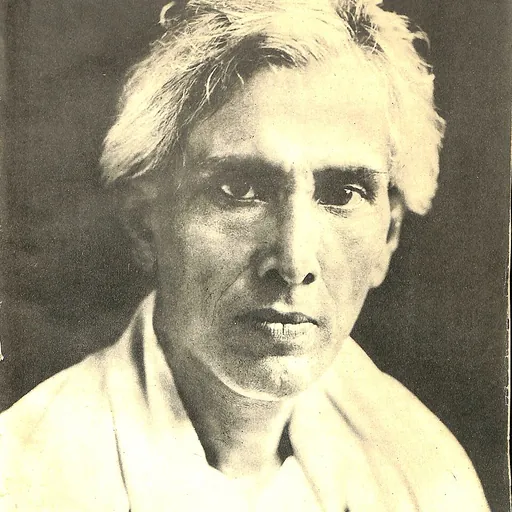
Sarat Chandra Chattopadhyay
Bengali novelist and short story writer
About Sarat Chandra Chattopadhyay
Lived 1876 – 1938 (aged 61). Sarat Chandra Chattopadhyay was an Indian writer, screenwriter, novelist, playwright and short story writer.
Sarat Chandra Chattopadhyay (; 15 September 1876 – 16 January 1938) was a Bengali novelist and short story writer of the early 20th century. He generally wrote about the lives of Bengali family and society in cities and villages. However, his keen powers of observation, great sympathy for fellow human beings, a deep understanding of human psychology (including the "ways and thoughts and languages of women and children"), an easy and natural writing style, and freedom from political biases and social prejudices enable his writing to transcend barriers and appeal to all Indians.
Early life Sarat Chandra Chattopadhyay was born on 15 September 1876, in a Bengali Brahmin family in Debanandapur, a small village in Hooghly, West Bengal, about 50 kilometres from Kolkata. He was his father Matilal and mother Bhubanmohini's eldest son and second child. His grandfather was Baikuntha Chattopadhyay; after Baikuntha was murdered by his zamindar, Sarat Chandra's grandmother moved to Debanandapur with Matilal. Matilal was given a piece of land by his mother's brothers. Some time later, he married Bhubanmohini, the daughter of Kedarnath Gangopadhyay, who lived in Bhagalpur, Bihar. Matilal continued his studies in Bhagalpur, but his financial situation was precarious as he could not hold on to any jobs.thumb
Sarat Chandra Chattopadhyay started working from an early age. Chattopadhyay took an interest in literature from Motilal. Much of Chattopadhyay's early life is disputed. According to Narasingha Prosad Sil, Chattopadhyay was taken to Bhagalpur from Debanandapur when he was two or three years old. He enrolled there in school and stayed till fifth or sixth year. Chattopadhyay came back to Debanandapur, where he studied in a pathashala for two years. In the rural areas, he often went fishing or rafting in water bodies and exploring places.
In 1886, Chattopadhyay went to travel in Dehri-on-Sone. After this travel, Matilal sent him to Durgacharan Middle English School in Bhagalpur for a getting a scholarship. For meeting the eligibility, he took tutoring lessons from his classmate Manindranath's tutor. They passed their exams and got scholarship. The next year, Chattopadhyay enrolled in the Bhagalpur District School where he studied till 1889.
In 1889, Matilal lost his job. Chattopadhyay and his whole family shifted into Debanandapur, where he enrolled into the Hooghly District School. His father arranged a room for Sarat Chandra to stay, at the house of a landlord. He stayed in the residence for a few years and returned to Debanandapur. Matilal was unable to further pay for Chattopadhyay's education than what he paid earlier. They traveled to Bhagalpur in 1893 and Chattopadhyay got enrolled in Tejnarayan Jubilee Collegiate School. A teacher in the school helped Chattopadhyay to complete his homework to encourage his studies. Kedarnath died in 1892. His death caused turmoil in the family. His son Thakurdas Gangopadhyay spent money on lawyers for a financial lawsuit. To pay for Chattopadhyay's education, Kedarnath's son Bipradas borrowed money. Chattopadhyay completed his entrance exams in 1894. Sarat Chandra Chatterjee being unable to pay for college education was approached by the mother of his classmate's tutor, Kusumkamini, who offered to pay Chattopadhyay's college fees for tutoring her two sons. During his college years, Chattopadhyay began writing books; he took his inspiration from the novels of Bankim Chandra Chattopadhyay and from his enduring interest in narrating stories and the theaters.
Sarat Chandra was a daring, adventure-loving boy. He attended schools in and around Debanandapur, one being Hooghly Branch Government School and in Bhagalpur. His strong performance in English and other subjects was rewarded with a "double promotion" that enabled him to skip a grade. However, in 1892, financial difficulties forced him to stay out of school for one year. He began writing stories at the time.
Matilal sold his paternal house on November 9, 1896, to Kedarnath's brother Aghornath. After November 1896, Matilal rented a house owned by Chandrashekhar Sarkar, in the slums of Bhagalpur. Chattopadhyay studied in college using borrowed books from his classmate he met in primary school. Chattopadhyay did not have enough money (20) to pay for the final college exams, after studying there for two years, he ended his formal education.
Poverty forced the family to live for long periods in Bhuvanmohini's father's (and later brother's) home in Bhagalpur, Bihar. Looking at Western authors such as Marie Corelli and Ellen Prince, Chatterjee adopted the pseudonym St. C. Lara. He was inspired by the writings of Bankim Chandra Chattopadhyay. He organized a children's literary society in Bhagalpur, which published a handwritten magazine. Two years later, his formal studies ended as he could not pay the twenty rupees examination fee.
On his wife's death in 1895, Matilal left the house of his in-laws and moved the family to a mud house in Bhagalpur. In 1896, he sold his ancestral house to repay debts. Sarat Chandra spent time interacting with friends, acting in plays, and playing sports and games. He seriously read literature and wrote several famous works including Bordidi, Chandranath, and Devdas. And then he stopped writing: "But I soon gave up the habit as useless, and almost forgot in the long years that followed that I could even write a sentence in my boyhood."
His stories and serialized novels were published in magazines such as Jamuna, Bharatvarsha, and Narayan. Later, his novels and story collections would get published as books. He either got nothing or took nothing from the publisher for his first novel, Bardidi (appeared as a serial in Bharati magazine in 1907, and in the book form in 1913). which introduced Sarat Chandra to the Western world. The first film based on Sarat Chandra's writings, silent movie Andhare Aalo, was released the same year. It was an adaptation of Chatterjee's story by the same name.
Sarat Chandra was a strong supporter of the Indian freedom movement. He was the president of the Howrah District Congress Committee branch of the Indian National Congress from 1921 to 1936. The book was proscribed by the colonial British Government of India on 4 January 1927. The restriction (ban) was removed in 1939, 1 year after Sarat Chandra's death.
Great academic recognition came to Sarat Chandra, whose formal studies ended at Class XII. His works entered the school and college curricula. In 1923, the University of Calcutta awarded him the prestigious Jagattarini Gold Medal. Except for Sarat Chandra, all honourees had been recipients of knighthood. His novel Pather Dabi did not endear him to the colonial British government.
He built his own house, first in Samta in 1923, and his second house in Calcutta. He moved into his new Calcutta house in 1935. He planned to travel to Europe, but his health was failing. He was diagnosed with liver cancer. On 16 January 1938, he died in Park Nursing Home in South Calcutta.
Personal life Subhash. C. Sarker writes: "His father was an utterly restless person—more of a dreamer than a realist ... By contrast Sarat Chandar's mother, Bhubanmohini Devi, was a hardworking lady who braved all the adversities of life with a calm patience."
Impact and legacy
J. D. Anderson's Views
James Drummond Anderson, who was a member of the prestigious Indian Civil Service of British India and a leading authority on several Indian languages, was an early admirer of Sarat Chandra. In an article entitled "A New Bengali Writer" in London's prestigious Times Literary Supplement dated 11 July 1918, Anderson writes: "His knowledge of the ways and thoughts and language of women and children, his power of transferring these vividly to the printed page, are such as are rare indeed in any country. In India, and especially in the great "joint family" residences of Bengal, swarming with women of all ages and babies of all sizes, there is a form of speech appropriated to women's needs, which Mr. [Rudyard] Kipling somewhere describes as choti boli, the "little language." Of this Mr. Chatterjee is an admirable master, to an extent indeed not yet attained, we believe, by any other Indian writer.
Publishers were never tired of reprinting his works; he remains the most translated, the most adapted and the most plagiarized author.
Malayalam poet and lyricist O. N. V. Kurup writes "...Sarat Chandra's name is cherished as dearly as the names of eminent Malayalam novelists. His name has been a household word".
Jainendra Kumar, who considers that his contribution towards the creation and preservation of cultural India is second, perhaps, only to that of Gandhi, asks a rhetorical question summing up Sarat Chandra's position and presumably the role of translation and inter-literary relationship: "Sarat Chandra was a writer in Bengali; but where is that Indian language in which he did not become the most popular when he reached it?"
Devdas
More than twenty films and television series have been based on his novel Devdas. They have been made in Bangladesh, India, and Pakistan; in languages Assamese, Bengali, Hindi, Malayalam, Odia, Tamil, Telugu, and Urdu.
Selected screen adaptations
His romantic drama novel Datta was adapted into the Bengali film as Datta in 1951 directed by Saumyen Mukhopadhyay starring Sunanda Banerjee and Manoranjan Bhattacharyya with Ahindra Choudhury as Rashbehari. The 1961 Telugu film Vagdanam by Acharya Aatreya was loosely based on the novel. The 1976 Bengali film starring Suchitra Sen and Soumitra Chatterjee and a 2023 film starring Rituparna Sengupta were based on Datta.
Apne Paraye (1980) by Basu Chatterjee, starring Amol Palekar, was based on Nishkriti. The Telugu film Thodi Kodallu (1957) was also based on this novel.
In 1957 Bardidi (translate: oldest sister) was made by director Ajoy Kar based on the novel with the same name. Two more films on the novel followed. In 1961, Batasari (translation: Wayfarer) was made in Telugu language, produced and directed by Ramakrishna of Bharani Pictures. It was simultaneously made in Tamil as Kaanal Neer (translation: Mirage).
Rajlakshmi O Srikanta (1958), and Indranath Srikanta O Annadadidi (1959), based on Srikanta, were made by Haridas Bhattacharya and Kamallata (1969). Rajlakshmi Srikanta (1987), Iti Srikanta (2004) were also based on Srikanta.
Chandranath (1957), starring Uttam Kumar and Suchitra Sen, was based on Sarat Chandra's novella Chandranath. The 1966 Kannada movie Thoogudeepa was also based on the same novel.
Other movies
Majhli Didi (1967) by Hrishikesh Mukherjee, and Swami (1977), for which he was awarded the Filmfare Award for Best Story, are other adaptations.
Chhoti Bahu (1971), Bindur Chhele (1973 film) are based on his novel Bindur Chhele.
Gulzar's 1975 film, Khushboo is majorly inspired by his work Pandit Moshai.
Sabyasachi (film) was released in 1977 based on his work Pather Dabi.
Award
Sarat Chandra posthumously won the 1978 Filmfare Award for Best Story for Swami (1977). In 1903, his first printed work, Mandir, was published. His first novel, Bardidi, was serialized in the Bharati magazine and made him famous.
Stories Aalo O Chhaya Abhagir Swargo Anupamar Prem Anuradha Andhare Aalo Balya Smriti Bilashi Bindur Chhele, (Bindu's Son) 1913 Bojha Cheledhora Chobi Darpochurno (Broken Pride) Ekadoshi Bairagi Kashinath Haricharan Harilakshmi Lalu (parts 1, 2, and 3) Mamlar Phol Mandir Mahesh (The Drought) Mejdidi Bochor Panchash Purber Ekti Kahini Paresh Path Nirdesh Ramer Shumoti, (Ram's Good Sense) 1914 Sati Swami (The Husband)
Plays Sarat Chandra converted three of his works into plays. Bijoya Rama Shoroshi Jai hind
Essays Narir Mulya Swadesh O Sahitya Taruner Bidroho
Other works Dehati Samaj, 1920 Sharoda (published posthumously)
Biography Awara Masiha (in Hindi) by Vishnu Prabhakar
Don’t just read it —
keep it.
Full-length biographies made to live with: read them, listen on the way to work, watch them tonight.
- E-book
- Audio
- Video
Instant download · yours to keep · every purchase keeps this site free
Important facts
People in Sarat Chandra Chattopadhyay's life
Named in this biography and alive at the same time




Related people
Same field, nearest in time





Contemporaries
People whose lives overlapped Sarat Chandra Chattopadhyay's

Frequently asked questions
Who was Sarat Chandra Chattopadhyay?
Bengali novelist and short story writer (1876-1938)
When was Sarat Chandra Chattopadhyay born?
Sarat Chandra Chattopadhyay was born on 15 September 1876 in Debanandapur.
When did Sarat Chandra Chattopadhyay die?
Sarat Chandra Chattopadhyay died on 16 January 1938 in Kolkata.
What was Sarat Chandra Chattopadhyay's occupation?
Sarat Chandra Chattopadhyay was a writer, screenwriter, novelist, playwright and short story writer.
What nationality was Sarat Chandra Chattopadhyay?
Sarat Chandra Chattopadhyay was Indian.
Sources & further reading
· Wikipedia: Sarat Chandra Chattopadhyay
· DBpedia: Sarat Chandra Chattopadhyay
Cite this page
APA: Biography.guide. (2026). Sarat Chandra Chattopadhyay. https://biography.guide/sarat-chandra-chattopadhyay/
MLA: "Sarat Chandra Chattopadhyay." Biography.guide, https://biography.guide/sarat-chandra-chattopadhyay/.
Chicago: "Sarat Chandra Chattopadhyay." Biography.guide. https://biography.guide/sarat-chandra-chattopadhyay/.
Data last updated: 2026-09-22 · Spot an error? Report a correction.
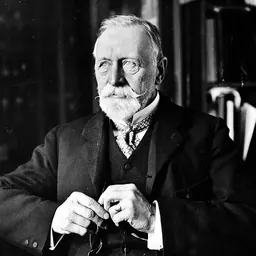
Portrait: Wikimedia Commons · author & licence
Page generated 2026-09-27 05:02 UTC