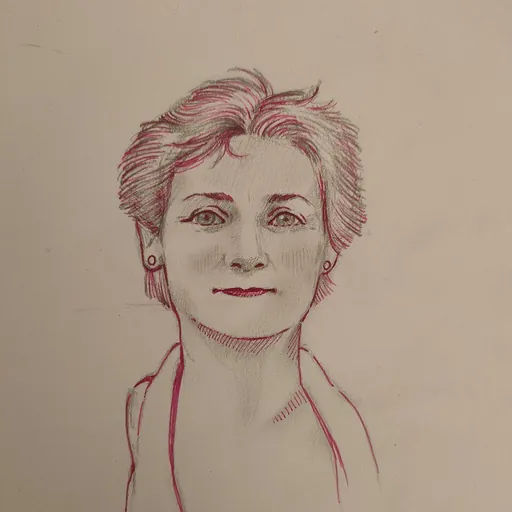
Sarah Whatmore
British critical geographer
About Sarah Whatmore
Born 1959. Sarah Whatmore is a British geographer, university teacher and environmental scientist, known for Critical geography.
Dame Sarah Jane Whatmore (born 25 September 1959 ) is a British geographer. She is a professor of environment and public policy at Oxford University. She is a professorial fellow at Keble College, moving from Linacre College in 2012. She was associate head (research) of the Social Sciences Division of the university from 2014 to 2016, and became pro-vice chancellor (education) of Oxford in January 2017. From 2018 she has been head of the Social Sciences Division.
In 2020 Whatmore was appointed Dame Commander of the Order of the British Empire (DBE) for her services to the study of environmental policy, particularly her research into flood risk management and environmental decision-making.
Early life and education Whatmore was born in Aldershot, Hampshire, in 1959 and grew up in a military family, living in various countries (including Germany, Cyprus, and Hong Kong) during her childhood. She studied geography at University College London, earning a Bachelor of Arts (BA) degree in 1981. She then completed an M.Phil. in Town Planning at the UCL Bartlett School in 1983, with research focusing on Financial institutions and the ownership of agricultural land. Afterward she worked at the Greater London Council. She returned to UCL for a PhD supervised by Richard Munton (The 'other half' of the family farm: an analysis of the position of 'farm wives' in the familial gender division of labor on the farm, 1988).
She lives in Upton, Oxfordshire. She spent 12 years at Bristol’s School of Geographical Sciences, during which she was promoted to a professorship in Human Geography in 1999. Her scholarly contributions were recognized with the award of a Doctor of Science (D.Sc.) degree by published research from Bristol in 2000.
In 2001, Whatmore moved to the Open University, where she was appointed Professor of Environmental Geography and continued her interdisciplinary research and teaching. In 2004, Whatmore joined the University of Oxford as the Professor of Environment and Public Policy and became a professorial fellow initially at Linacre College, later moving to Keble College in 2012.
At Oxford, she took on a number of leadership and administrative roles. She served as Head of the School of Geography and the Environment. From 2014 to 2016 she was Associate Head (Research) of Oxford’s Social Sciences Division, and in January 2017 she became Pro-Vice-Chancellor (Education), responsible for the university’s academic strategy in teaching and learning. In 2018, Whatmore was appointed Head of the Social Sciences Division at Oxford.
Throughout her career, Whatmore has also contributed to the broader academic community. She has held visiting scholar positions at institutions abroad, including the University of California, Santa Cruz, the University of Wisconsin–Madison, the University of Newcastle (Australia), and the University of Trondheim (Norway).
She is a fellow of several learned societies, including the British Academy, the Academy of Social Sciences, and of the Royal Geographical Society. attempts to develop what she terms "more than human" modes of inquiry, and question the relationship between science and democracy. Hybrid Geographies has been cited over 3,955 times according to Google Scholar.
Another major theme of Whatmore’s research is the relationship between scientific expertise and democratic engagement in environmental governance. Her research focuses on the treatment of evidence and role of expertise in environmental governance, against growing reliance on computer modelling techniques. It is characterized by a commitment to experimental and collaborative research practices that bring the different knowledge competences of social and natural scientists into play with those of diverse local publics living with environmental risks and hazards like floods and droughts. For example, her research on flood risk management developed participatory “community modelling” techniques, enabling local residents to work alongside scientists in modeling flood scenarios and co-producing knowledge about flood prevention. Her ideas were developed further in Political Matter (Whatmore & Braun eds. 2010). Across her work, she draws on diverse intellectual resources – from philosophy and anthropology to science and technology studies – to interrogate the “material and ecological fabric of social life” and the politics of knowledge.
Her critical ideas have been well received by theorists, but less so by policy-oriented environmental thinkers and traditional geographers less inclined to "theorise" human-environment relationships. Nonetheless, she has been a member of the Science Advisory Council to the Department for Environment, Food and Rural Affairs (DEFRA) and chair of its Social Science Expert Group; a member of the Science Advisory Group established to advise the Cabinet Office’s National Flood Resilience Review (2016), and as a member of the board of the Parliamentary Office of Science and Technology.
Policy Engagement and Public Service Beyond her academic research, Sarah Whatmore has been active in applying geographical insights to public policy and environmental management. She has served in multiple advisory roles for the UK government. From 2015 to 2020, Whatmore was an appointed member of the Science Advisory Council of the Department for Environment, Food and Rural Affairs (Defra). 2014: Fellow of the British Academy, the United Kingdom's national academy for the humanities and social sciences. Fellow, Academy of Social Sciences DSc, University of Bristol. 2020: Dame Commander of the Order of the British Empire (DBE) in the 2020 New Year Honours for services to the study of environmental policy
Selected bibliography
Nigel Thrift and Sarah Whatmore (eds.). 2004. Cultural geography: critical concepts in the social sciences. London: Routledge.
Sarah Whatmore, Terry Marsden, Philip Lowe (eds.) 1994. Gender and rurality. London: David Fulton Publishers. Philip Lowe, Terry Marsden, Sarah Whatmore (eds.). 1994. Regulating agriculture. London: David Fulton Publishers. Sarah Whatmore. 1991. Farming women: gender, work and family enterprise. Basingstoke: Macmillan. Terry Marsden, Philip Lowe, Sarah Whatmore (eds) 1992. Labour and locality: uneven development and the rural labour process. London: David Fulton Publishers. Terry Marsden, Philip Lowe, Sarah Whatmore (eds.). 1990. Rural restructuring: global processes and their responses. London: David Fulton Publishers. Philip Lowe, Terry Marsden, Sarah Whatmore (eds.). 1990. Technological change and the rural environment. London: David Fulton Publishers.
Don’t just read it —
keep it.
Full-length biographies made to live with: read them, listen on the way to work, watch them tonight.
- E-book
- Audio
- Video
Instant download · yours to keep · every purchase keeps this site free
Important facts
People in Sarah Whatmore's life
Named in this biography and alive at the same time


Related people
Same field, nearest in time


Contemporaries
People whose lives overlapped Sarah Whatmore's



Frequently asked questions
Who is Sarah Whatmore?
British critical geographer
When was Sarah Whatmore born?
Sarah Whatmore was born on 25 September 1959 in Aldershot.
What is Sarah Whatmore's occupation?
Sarah Whatmore is a geographer, university teacher and environmental scientist.
What is Sarah Whatmore known for?
Sarah Whatmore is known for Critical geography.
What nationality is Sarah Whatmore?
Sarah Whatmore is British.
Sources & further reading
· DBpedia: Sarah Whatmore (geographer)
Cite this page
APA: Biography.guide. (2026). Sarah Whatmore. https://biography.guide/sarah-whatmore/
MLA: "Sarah Whatmore." Biography.guide, https://biography.guide/sarah-whatmore/.
Chicago: "Sarah Whatmore." Biography.guide. https://biography.guide/sarah-whatmore/.
Data last updated: 2026-09-21 · Spot an error? Report a correction.
Portrait: Wikimedia Commons · author & licence
Page generated 2026-09-27 05:00 UTC