
Sarabjit Singh
Indian national convicted of terrorism and spying by a Pakistani court
About Sarabjit Singh
Lived 1963 – 2013 (aged 49). Sarabjit Singh was an Indian spy.
Sarabjit Singh (1963 or 1964 – 2 May 2013 ) was an Indian national convicted of terrorism and spying by a Pakistani court. He was tried and convicted by the Supreme Court of Pakistan for a series of bomb attacks in Lahore and Faisalabad that killed 14 bystanders in 1990. However, according to India, Sarabjit was a farmer who strayed into Pakistan from his village located on the border, three months after the bombings.
After a brief trial in the Lahore High Court (later directed to the Supreme Court), he was condemned and sentenced to death in 1991, but the sentence was repeatedly postponed by the Government of Pakistan. While in prison at Kot Lakhpat Jail, Lahore in April 2013, he was attacked by fellow inmates and died six days later at the Jinnah Hospital, Lahore.
On 14 April 2024, Singh's alleged murderer, Amir Sarfaraz Tamba, was attacked and killed by unknown masked gunmen near his home in Lahore.
Background and family
Singh was born in Bhikhiwind, located along the Indo-Pakistani border in the Tarn Taran district of Punjab, India. He was fond of wrestling and taking care of rare pigeons. He worked as a farmer on other's fields.
However, another woman named Baljinder Kaur disputed Dalbir's relation to Singh and claimed to be Singh's real sister. According to Baljinder, Singh was the third eldest of ten siblings and Dalbir was not their sister, but had happened to know Singh since 1989; "Dalbir Kaur assured us she had right links and would struggle for the release of Sarabjit on some conditions. We trusted her and let her pursue the matter, only to be pushed out of the picture." Dalbir added that she had nothing to prove her relation with Singh except offering to undergo a DNA test. She also claimed that Singh's real brothers, Charanjit and Harbhajan, were not allowed to light his pyre at his funeral and were "pushed back" by people at the cremation ground. Commenting further on Dalbir, she added: "People have been coming to the fore (after Singh's death) for cheap publicity. They were nowhere when I alone struggled for his release."
Arrest and prosecution
Sarabjit was caught on an unmarked Indo-Pakistani border area and arrested by the Pakistan Rangers near Kasur. He was convicted of spying and carrying out the bombings and was given the death penalty. He subsequently confessed on camera to the bombings.
It was later reported that Ranjit Singh was later apprehended in Canada, and later in Chandigarh in India.
Death sentence
In 1991 Singh was given the death sentence under Pakistan's Army Act. Singh said that his appeal had been dismissed by the Pakistan Supreme Court only because of lack of interest by his former lawyer.
Issues with prosecution An Indian origin British lawyer, Jas Uppal,
After conviction
On 26 April 2008, the key witness Shaukat Salim retracted his statement during an interview with journalists. Salim's father and other relatives had been killed in the bombing. In court Salim testified that Singh had planted the bomb but later said that he made that statement under pressure from the police. Singh's lawyer, Abdul Rana Hamid, said that Salim's statements had no legal standing as they were never recorded in court.
Presidential pardon
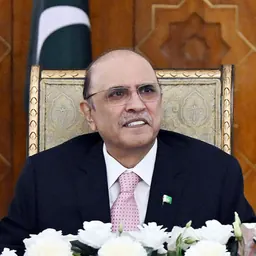
On 27 June 2012, both Pakistani and international media reported President Asif Ali Zardari signed a document sent by the interior ministry of Pakistan commuting Singh's death sentence to life in prison. A life sentence in Pakistan generally lasts 14 years. Surjeet Singh was arrested on charges of spying by the Pakistani security officials. Indian government, however, denied that Surjeet Singh was a spy.
Regarding the confusion related to Sarabjit-Surjeet mix-up, Surjeet Singh said that similar Urdu spellings of both the names led to the confusion. Surjeet also said that Indian prisoners are treated well in Pakistani jails and they are provided with basic necessities. BBC News reported that in recent years, several Indians returning from Pakistani jails have admitted that they have been maliciously framed by the Pakistani Intelligence for spying for India. Some have criticised India's government for abandoning them.
Five hours later the Pakistani government issued a statement denying the reports and holding the media responsible for the confusion. They announced that the release order had been for another prisoner, Surjeet Singh, who was pardoned in 1989. Sarabjit's family condemned the incident as a "cruel joke".
Singh filed a new mercy appeal to the President of Pakistan on the 65th independence day of that country.
Efforts for release
On 23 August 2005, Singh's case was taken up in both houses of the Indian Parliament, where the government was asked to take action for his release.
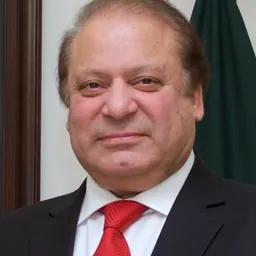
In March 2008, Singh's family went to Pakistan for his scheduled execution. They met several prominent Pakistani politicians, including former Prime minister Nawaz Sharif to appeal for his release. Sharif said, "After seeing the plight of the members of Sarabjit's family who have come to Pakistan, any person can feel the pain they are going through." However, Sharif added that he should be released on the condition that India would send him back to Pakistan if further evidence was found against him. Awais Sheikh, Singh's Pakistani lawyer, supported the campaign.
In June 2012, Bollywood actor Salman Khan came forward to seek support from people and media for the release of Sarabjit. He also started an online petition from his NGO Being Human in support of his release.
Protests
In April 2008, a group of Pakistani students organised a march seeking withdrawal of all official moves to pardon Singh.
Death Singh was attacked on 26 April 2013 at about 4:30 pm in the Central Jail Lahore (Kot Lakhpat jail), by other prisoners, with bricks, sharp metal sheets, iron rods and blades. He was admitted to Jinnah Hospital, Lahore in critical condition with severe head injuries, in a coma, with a broken backbone. He was placed on a ventilator. The exact circumstances of the attack and the number of attackers have been differently reported. Some sources have indicated that there were six assailants whereas others have indicated two.
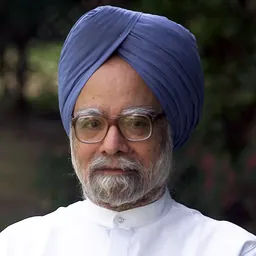
Singh had been threatened after Afzal Guru was executed in India in February 2013 over his role in the 2001 Indian Parliament attack case. Some sources had indicated that the attack was planned after Guru's execution. The Indian prime minister, Manmohan Singh, termed the attack as "very sad". On 29 April 2013, India appealed to Pakistan to release Sarabjit Singh on humanitarian grounds or at least allow him to be provided medical treatment in India, but these were repeatedly rejected by Pakistan. Appeals by lawyers were also filed with the Supreme Court of Pakistan to send Singh for medical treatment to the UK or outside Pakistan to save his life.
On 1 May 2013 he was declared brain dead by doctors at Jinnah Hospital, but Pakistani authorities refused to give a statement. His sister and family returned to India. His sister said that the doctors attending to her brother were not being honest with them and she suspected foul play. She also remarked to having seen ink on his left thumb and that the Pakistani doctors had been evading questions.
On 2 May 2013, he was reported to have died at 12:45 am local time in Lahore, when he was removed from the ventilator support after his condition worsened towards the middle of the night. His body was brought to India by a special aircraft the same evening. An autopsy also revealed that his skull was broken into two pieces. They were, however, waiting for the report of the first postmortem conducted in Pakistan.
Aftermath The Government of Punjab, India declared a three-day period of mourning over Singh's death and announced it would pay his descendants a compensation of Rs 1,00,00,000.
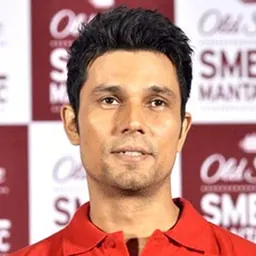
Published accounts Film A biographical film called Sarabjit was produced by Vashu Bhagnani (among others) and directed by Omung Kumar. Actress Aishwarya Rai essayed the role of Singh's sister, Dalbir Kaur, while, Randeep Hooda and Richa Chada played the role of Sarbjit Singh and his wife, Sukhpreet, respectively. The film was narrated through the perspective of Sarbjit Singh's sister Dalbir Kaur and was released on 20 May 2016 in India; the Censor board of Pakistan banned the film for being "anti-Pakistani".
Don’t just read it —
keep it.
Full-length biographies made to live with: read them, listen on the way to work, watch them tonight.
- E-book
- Audio
- Video
Instant download · yours to keep · every purchase keeps this site free
Important facts
People in Sarabjit Singh's life
Named in this biography and alive at the same time



Related people
Same field, nearest in time


Contemporaries
People whose lives overlapped Sarabjit Singh's



Frequently asked questions
Who was Sarabjit Singh?
Indian national convicted of terrorism and spying by a Pakistani court (1963-2013)
When was Sarabjit Singh born?
Sarabjit Singh was born on 18 December 1963 in Bhikhiwind.
When did Sarabjit Singh die?
Sarabjit Singh died on 2 May 2013 in Jinnah Hospital, Lahore.
What was Sarabjit Singh's occupation?
Sarabjit Singh was a spy.
What nationality was Sarabjit Singh?
Sarabjit Singh was Indian.
Sources & further reading
Cite this page
APA: Biography.guide. (2026). Sarabjit Singh. https://biography.guide/sarabjit-singh/
MLA: "Sarabjit Singh." Biography.guide, https://biography.guide/sarabjit-singh/.
Chicago: "Sarabjit Singh." Biography.guide. https://biography.guide/sarabjit-singh/.
Data last updated: 2026-09-20 · Spot an error? Report a correction.
Page generated 2026-09-27 05:11 UTC