
About Sanjay Surkar
Lived 1959 – 2012 (aged 53). Sanjay Surkar was an Indian film director, actor, screenwriter and television producer.
Sanjay Surkar (19 August 1959 27 September 2012) was a Marathi film director. He won three National Film Awards for the films Rao Saheb, Tu Tithe Mee (1998) and Gharabaher (1999) in Best Feature Film in Marathi category. Along with films, Surkar had also worked in television and theatre.
Early life Surkar was born on 19 August 1959 at Deoli in Wardha district of Maharashtra state. He earned his Bachelor of Commerce degree from G. S. Commerce College in 1983. From the Nagpur University he took his bachelor's degree and Masters in Fine Arts specialising in Dramatics. He got an opportunity to assist director Kanchan Nayak in the 1989 Marathi film Kalat Nakat. Produced by Smita Talwalkar, the film handled the delicate topic of extra-marital affair, its effects on families and children. The film ended with the positive message of keeping the family-ties together and won the National Film Award in the Best Marathi film category. The film also marked the beginning of Surkar-Talwalkar team which would create many films and television shows in future.
Chaukat Raja and critical acclaim In 1991, Surkar directed his first independent feature film Chaukat Raja that was produced by Smita Talwalkar under her banner "Asmita Chitra". This family drama was a journey of a mentally challenged boy Nandu. While playing on swings in childhood along with his friend Minal, Nandu hurts his head and is disabled. Nandu grows up into a man, played by Dilip Prabhavalkar, but still considers himself a child. Sulabha Deshpande played the role of his mother and elder Minal's role was played by Talwalkar. Prabhavalkar received Best Actor award granted by the Government of Maharashtra and with critical acclaims to the film, Surkar was noticed as a director.
In 1993 when Talwalkar produced her first directorial venture Sawat Mazhi Ladki, Surkar assisted her in direction. The comedy drama plot showed a 40 plus married doctor, played by Mohan Joshi, falling for his 20 something assistant doctor. The assistant doctor's role was played by Varsha Usgaonkar and Neena Kulkarni portrayed the role of doctor's housewife. His next project Aaplee Maanse (1993) was a family drama film with an ensemble cast of many notable actors of the Marathi film industry that included Prashant Damle, Mohan Joshi, Sudhir Joshi, Sachin Khedekar, Reema Lagoo, Dilip Prabhavalkar, Ashok Saraf and Renuka Shahane. In 1994 he directed Yadna which received seven awards at the Maharashtra State Film Award. Surkar also went on to direct films on various social issues. His 2009 film Sukhant was a struggle story of an old woman who meets a car accident which puts her in tetraplegia. To end her life with dignity and save troubles of her family, she pleads for euthanasia. Jyoti Chandekar played the lead role in the film, while Atul Kulkarni and Kavita Lad played supporting leads. In 2011, Surkar debuted in Bollywood with the film Stand By. With lead roles played by Siddharth Kher and Adinath Kothare, the plot was about the internal politics in football. The film did not do well at the box-office.
Apart from films, Surkar continued his work through television serials, both in Marathi and Hindi. In Marathi he directed shows like Noopur, Sukanya and Un Paus. The show Avantika with Mrinal Kulkarni playing the title lead role, won numerous awards for her and made her a household name. In 2009, he directed the Hindi television show Aapki Antara which is about a 5-year-old girl Antara who has autism. In 2010 he went on to produce the TV show Dhoondh Legi Manzil Humein, which was loosely based on his film Gharabaher.
Surkar had also conceived a film on the life of freedom fighter Lokmanya Tilak.
Death He died on 27 September 2012 of a sudden heart attack while on the sets of his upcoming film Laathi. The film was the debut for actress Padmini Kolhapure as a producer and was later directed by Mahesh Aney. He was also working on the script of an upcoming film to be directed by Nitin Chandrakant Desai on the life of Indian freedom fighter Lokmanya Tilak.
Selected filmography Films + Year Title Notes 1989 Kalat Nakalat As assistant director 1991 Chaukat Raja First feature filmMaharashtra State Film Award for Best Film 1993 Savat Mazi Ladki As assistant director 1993 Aaplee Maanse Maharashtra State Film Award for Best Second Film 1994 Yadna 1996 Rao Saheb National Film Award for Best Marathi Feature Film 1998 Tu Tithe Mee National Film Award for Best Marathi Feature Film 1999 Gharabaher National Film Award for Best Marathi Feature Film 2004 Saatchya Aat Gharat 2006 Aai Shappath..! 2006 Anandache Jhaad 2007 Sakhi 2007 Aawahan 2008 Ek Daav Sansaracha 2008 Tandala 2009 Master Eke Master 2010 Ranbhool 2009 Sukhant 2011 Stand By Hindi film Laathi Posthumous release, later directed by Mahesh Aney
Television + Year Title Production house Channel Eka Haatachi Taali Raoo Noopur Akashdeep Hindi serial 1998 Sukanya 1998 Avantika Asmita Chitra Zee Marathi 1998 Un Paus Asmita Chitra 2009–2010 Aapki Antara Zee TV 2010–2011 Dhoondh Legi Manzil Humein STAR OneAs Producer
Theatre + Title Notes To Ek Kshan
Awards National Film Awards 44th National Film Awards for 1996 – Rao Saheb – As director in Best Feature Film in Marathi category Shared with producers K. B. Joshi and Ravindra Surve Citation: For depicting the struggle for power of ambitious politicians in a most effective manner.
46th National Film Awards for 1998 – Tu Tithe Mee – As director in Best Feature Film in Marathi category Shared with producer Smita Talwalkar Citation: For shedding light on the plight of the old and the ageing and the crumbling of the joint family system in a novel and entertaining format of a love story. Beautiful performance by Mohan Joshi and Suhas Joshi are the highlights of the film.
47th National Film Awards for 1999 – Gharabaher – As director in Best Feature Film in Marathi category Shared with producers Ratan Madan and Narendra Shinde Citation: For depicting the hypocrisy exercised by man in complete contradiction of declared socio-political positions and a total reversal of behaviour when it comes to power and lust. It draws attention to the inherent problems in the empowerment of women.
Other awards 1992 – Maharashtra State Film Award for Best Film to Aaplee Maanse
Don’t just read it —
keep it.
Full-length biographies made to live with: read them, listen on the way to work, watch them tonight.
- E-book
- Audio
- Video
Instant download · yours to keep · every purchase keeps this site free
Important facts
People in Sanjay Surkar's life
Named in this biography and alive at the same time


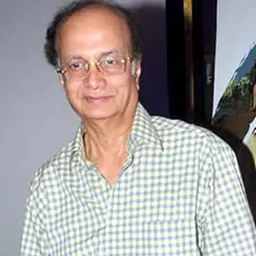

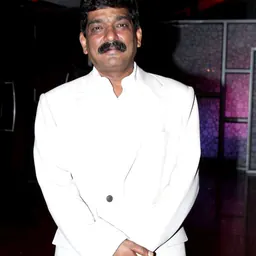
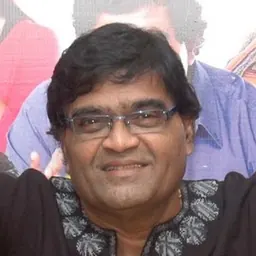

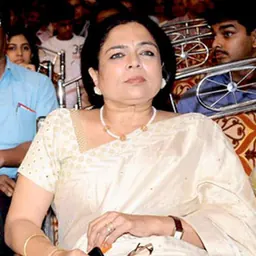
Related people
Same field, nearest in time



Contemporaries
People whose lives overlapped Sanjay Surkar's


Frequently asked questions
Who was Sanjay Surkar?
Marathi film director
When was Sanjay Surkar born?
Sanjay Surkar was born on 19 August 1959 in Deoli.
When did Sanjay Surkar die?
Sanjay Surkar died on 27 September 2012 in Pune.
What was Sanjay Surkar's occupation?
Sanjay Surkar was a film director, actor, screenwriter and television producer.
What nationality was Sanjay Surkar?
Sanjay Surkar was Indian.
Sources & further reading
Cite this page
APA: Biography.guide. (2026). Sanjay Surkar. https://biography.guide/sanjay-surkar/
MLA: "Sanjay Surkar." Biography.guide, https://biography.guide/sanjay-surkar/.
Chicago: "Sanjay Surkar." Biography.guide. https://biography.guide/sanjay-surkar/.
Data last updated: 2026-09-22 · Spot an error? Report a correction.
Page generated 2026-09-27 05:20 UTC