
About Samuel Sambursky
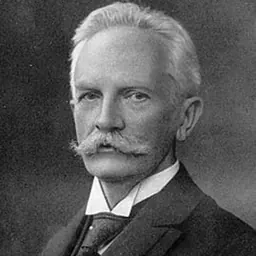
Lived 1900 – 1990 (aged 89). Samuel Sambursky was an Israeli and German physicist, historian, historian of science, university teacher and philosopher.
Shmuel Sambursky, or Samuel Sambursky (; 1900-1990) was a German-Israeli physicist, professor, and philosopher. He was a professor of Physics and Natural Sciences and Philosophy of Science at the Hebrew University. He was also a member of the Israel Academy of Sciences and Humanities.
In 1968 he was awarded the Israel Prize in Humanities.
Early life Sambursky was born in Königsberg, Germany on the 30 October 1900. Educated in at the University of Konigsberg, he wrote his PhD dissertation on proof by negation in Physics and Mathematics under the direction of Theodor Kaluza in 1923, Sambursky emigrated to Mandatory Palestine in 1924.
Academic career Professor Sambursky (1935), lecturing in the Institute of Physics, The Hebrew University in Jerusalem. Through 1927 Sambursky taught at several high schools and at the David Yellin teacher's college. He was the first physicist to be appointed to the Hebrew University, which was then part of the Natural sciences department and remained there his entire academic career. He was among the founders of the physics department in 1931 and became associate professor in 1949. In 1961 he was appointed full professor. He was a popular lecturer due to his sense of history and humorous lecture style.
In 1962 Sambursky helped found the "broadcast university" a wide range of university level lectures which were broadcast on the radio.
Efraim Katzir, the fourth President of Israel and 1959 Israel prize winner in Life Sciences, was his student and wrote: "To you I owe thanks for broadening my horizons and instilling in me a love for sciences."
Sambursky was author and editor of multiple monographs on the history and philosophy of science, for classical antiquity.
Awards and recognition In 1962 he was admitted as a member of the Israel Academy of Sciences and Humanities.
In 1966 he received the Rothschild Prize in the Philosophy of Science.
In 1968 he received the Israel Prize for Humanities.
In 1982 he received an honorary doctorate from the Weizman Institute.
There is a street named after him in Beer Sheva.
Death Sambursky died 18 May 1990 in Jerusalem and buried in Har HaMenuchot.
Selected books
The Physical World of the Greeks, (1956) Physics of the Stoics, (1959) The Physical World of Late Antiquity, (1962) Physical thought from the Presocratics to the quantum physicists: An anthology, 1974, Hutchinson Press Concept of Place in Late Neoplatonism , (1982)
Don’t just read it —
keep it.
Full-length biographies made to live with: read them, listen on the way to work, watch them tonight.
- E-book
- Audio
- Video
Instant download · yours to keep · every purchase keeps this site free
Important facts
People in Samuel Sambursky's life
Named in this biography and alive at the same time

Related people
Same field, nearest in time

Contemporaries
People whose lives overlapped Samuel Sambursky's




Frequently asked questions
Who was Samuel Sambursky?
Israeli historian (1900-1990)
When was Samuel Sambursky born?
Samuel Sambursky was born on 30 October 1900 in Königsberg.
When did Samuel Sambursky die?
Samuel Sambursky died on 18 May 1990 in Jerusalem.
What was Samuel Sambursky's occupation?
Samuel Sambursky was a physicist, historian, historian of science, university teacher and philosopher.
What nationality was Samuel Sambursky?
Samuel Sambursky was Israeli and German.
Sources & further reading
Cite this page
APA: Biography.guide. (2026). Samuel Sambursky. https://biography.guide/samuel-sambursky/
MLA: "Samuel Sambursky." Biography.guide, https://biography.guide/samuel-sambursky/.
Chicago: "Samuel Sambursky." Biography.guide. https://biography.guide/samuel-sambursky/.
Data last updated: 2026-09-25 · Spot an error? Report a correction.
Page generated 2026-09-27 05:10 UTC