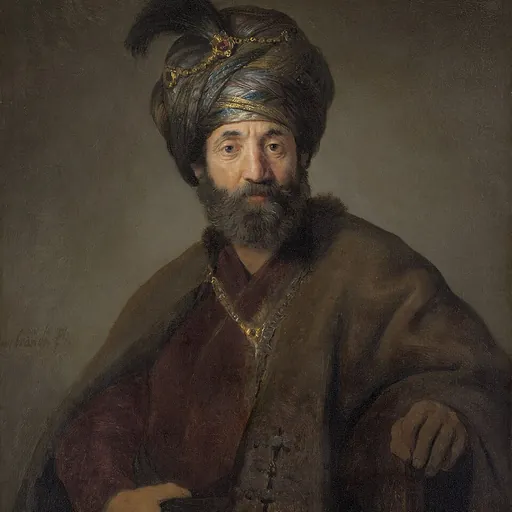
About Samuel Pallache
Lived 1550 – 1616 (aged 65–66). Samuel Pallache was a Moroccan merchant, diplomat and pirate, known for Saadi dynasty.
Samuel Pallache (Arabic: صامويل آل بالاتش, Samuil al-Baylash, Hebrew: שמואל פלאצ׳ה, Shmuel Palache, c. 1550 – 4 February 1616) was a Jewish Moroccan merchant, diplomat, and pirate of the Pallache family, who, as envoy, concluded a treaty with the Dutch Republic in 1608. His ancestors fled to Morocco during the Reconquista. Appointed as an agent under the Saadi Sultan Zidan Abu Maali, Pallache traveled to the newly-independent Dutch Republic to discuss diplomatic terms with the Dutch against their mutual enemy, the Spanish. He died in the Netherlands, brought there due to the intervention of his ally, Maurice of Nassau, who helped him when he was arrested by the Spanish. In the first half of the 16th century, following the Christian conquest of Islamic Spain (Reconquista), the family fled to Morocco, where Jews, like Christians, were tolerated as long as they accepted Islam as the state religion.
Pallache's surname is spelled "Palache" on his death certificate. He signed his name also as "Palacio" and "Palatio"; other Dutch records show "Palatio," "Palachio," and "Palazzo." In 1591, Middelburg offered him residential permit, but Protestant pastors protested. In 1596 he established one of the first informal Jewish communities in The Hague.
After a delegation from the Dutch Republic visited Morocco to discuss a common alliance against Spain and the Barbary pirates, Sultan Zidan Abu Maali in 1608 appointed the merchant Samuel Pallache to interpret for his envoy Hammu ben Bashir to the Dutch government in The Hague. Officially, Pallache served as the sultan's "agent", not ambassador.
On 23 June 1608, Pallache met stadtholder Maurice of Nassau and the States-General in The Hague to negotiate an alliance of mutual assistance against Spain. On 24 December 1610, the two nations signed the Treaty of Friendship and Free Commerce, an agreement recognising free commerce between the Netherlands and Morocco, and allowing the sultan to purchase ships, arms and munitions from the Dutch. This was one of the first official treaties between a European country and a non-Christian nation, after the 16th-Century treaties of the Franco-Ottoman alliance.
The story goes that, one day, Pallache's horse-drawn carriage met the carriage of the Spanish ambassador in The Hague. The two carriages were unable to pass one another and, to cheers from onlookers, the Spanish ambassador's carriage had to make way for Pallache's carriage.
Death
Beth Haim in Ouderkerk aan de AmstelIn 1614, Pallache, having captured a Portuguese ship, was unable to bring its cargo ashore in Morocco and so sailed for the Netherlands. A heavy storm and disease among his men forced him to seek refuge in an English port where, by request of the Spanish ambassador, he was arrested and imprisoned. Eventually, Prince Maurice came to his aid and helped bring him back to the Netherlands. However, he had lost all his money by then and fell ill shortly thereafter.
On 4 February 1616 he died in The Hague, and was buried with a gravestone (image ) in the Beth Haim of Ouderkerk aan de Amstel, a "cemetery of the Portuguese Jewish community" in Ouderkerk aan de Amstel near Amsterdam. Thousands attended his funeral.
Legacy
Co-founder of Amsterdam Sephardic community In the first pages of his 1769 Memorias do Estabelecimento e Progresso dos Judeos Portuguezes e Espanhoes nesta Famosa Cidade de Amsterdam, David Franco Mendes records the first minyan in Amsterdam with its sixteen worshippers: Jacob Israel Belmonte (father of Moses Belmonte), David Querido, Jacob Tirado, Samuel Pallache, Ury a Levy, Joseph Pallache, Jacob Uriel Cardoso, Isaac Gaon, Samuel Abrabanel Souza, Jeosuah Sarfati, Joseph Habilho, David Abendana Pereyra, Baruch Osorio, Abraham Gabay, Isaac Franco Medeyro, Moseh de Casserez. Several sources claim this first minyan occurred in Palache's home, as he was the most prominent among them, being the envoy from Morocco and occurred around 1590 or Yom Kippur 1596.
Family (Mediterranean rabbis) Abraham Palacci, a 19th-century relative of Samuel. Both Les noms des juifs du Maroc and A Man of Three Worlds describe several generations of Pallache family members, which forms the basis of the family descent shown below.
Samuel's wife was Reina (Hebrew Malca) (English "Queen"). Les noms cites two sons, Isaac and Jacob, One Man cites only Isaac. Samuel's brother Joseph had five sons: Isaac, Joshua, David, Moses, and Abraham. One Man cites Moses (and David) as the most influential person after Samuel's death and de facto leader of the family, even before his own (elderly) father Joseph.
Descendants from the 19th century included four grand rabbis, three in Izmir, Turkey (Haim Palachi (likely), Abraham Palacci, and Rahamim Nissim Palacci) and one in the Netherlands (Isaac Juda Palache)–spellings of the surname varied considerably over the centuries).
In 1896, Samuel Pallache received mention in The Jewish Chronicle: a "Moorish Jew, Samuel Pallache, was also Consul for Barbary and one of the chief figures in the newly-organized Jewish Congregation."
"Rabbi Pirate" Publication of A Man of Three Worlds: Samuel Pallache, a Moroccan Jew in Catholic and Protestant Europe in English (Baltimore: Johns Hopkins Press: 2003) and originally in Spanish as Entre el Islam y Occident: La vida de Samuel Pallache, judío de Fez - Between Islam and the Occident: The life of Samuel Pallache, Jew of Fez (Madrid: XXI century 1999) has led to some popular emphasis on Pallache as a pirate.
A main source of this reputation is Edward Kritzler's book Jewish Pirates of the Caribbean (2008), which calls Samuel Palache the "Pirate Rabbi" who "was still capturing Spanish ships in his late sixties." and "Yo Ho Ho and a Bottle of Schnapps" among other reviews. It has led to continued mentions of Pallache in current-day prints, such as "Merchant, Diplomat, Pirate, Spy Dies in Amsterdam" and "The Pirate Rabbi."
Don’t just read it —
keep it.
Full-length biographies made to live with: read them, listen on the way to work, watch them tonight.
- E-book
- Audio
- Video
Instant download · yours to keep · every purchase keeps this site free
Important facts
Family & relationships
People in Samuel Pallache's life
Named in this biography and alive at the same time
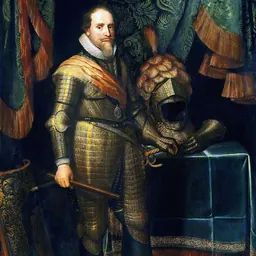

Related people
Same field, nearest in time


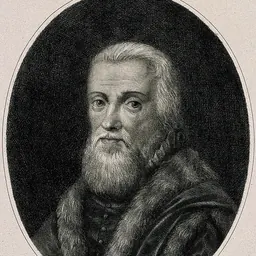


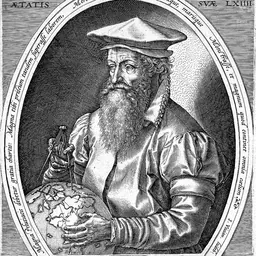
Contemporaries
People whose lives overlapped Samuel Pallache's

Frequently asked questions
Who was Samuel Pallache?
Jewish-Moroccan merchant, diplomat and pirate
When was Samuel Pallache born?
Samuel Pallache was born in 1550 in Fez.
When did Samuel Pallache die?
Samuel Pallache died on 4 February 1616 in The Hague.
What was Samuel Pallache's occupation?
Samuel Pallache was a merchant, diplomat and pirate.
What was Samuel Pallache known for?
Samuel Pallache was known for Saadi dynasty.
What nationality was Samuel Pallache?
Samuel Pallache was Moroccan.
Sources & further reading
Cite this page
APA: Biography.guide. (2026). Samuel Pallache. https://biography.guide/samuel-pallache/
MLA: "Samuel Pallache." Biography.guide, https://biography.guide/samuel-pallache/.
Chicago: "Samuel Pallache." Biography.guide. https://biography.guide/samuel-pallache/.
Data last updated: 2026-09-20 · Spot an error? Report a correction.
Page generated 2026-09-27 05:10 UTC