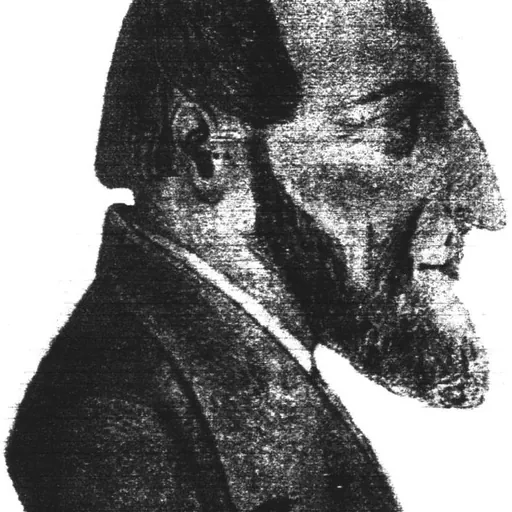
About Samuel Heinrich Fröhlich
Lived 1803 – 1857 (aged 53). Samuel Heinrich Fröhlich was a Swiss theologian.
Samuel Heinrich Fröhlich (; July 4, 1803 – January 15, 1857) was a Swiss Anabaptist evangelist, theologian, and the founder of the Evangelical Baptist Church, known as Neutäufer (New Anabaptists) in Switzerland and the Apostolic Christian Church in North America. His work contributed to the development of Anabaptist thought in the 19th century and influenced subsequent religious movements.
Born in Brugg, Canton of Aargau, to a family of French Calvinist Huguenot descent, Fröhlich was raised with a strong religious foundation. Initially aligned with the rationalist theology of his time, he experienced a profound spiritual conversion that led him to reject liberal theology and embrace Anabaptist principles such as believer's baptism and the separation of church and state.
His preaching and establishment of new congregations made him a notable figure in the revivalist movement within Europe. Despite facing opposition from the state church and enduring personal hardships, Fröhlich's influence reached across Europe and into North America, and the principles he advocated continue to be part of the Apostolic Christian Church's identity.
Biography
Early life Samuel Heinrich Fröhlich was born on July 4, 1803, in Brugg, Canton of Aargau, Switzerland, to a family of devout French Calvinist Huguenot descent. Originally bearing the surname De Joyeux, the family fled to Switzerland following the revocation of the Edict of Nantes in 1685. They later adopted the surname 'Fröhlich,' which means 'joyful.'
Fröhlich's father, Samuel, was a tanner and church sexton, while his mother, Gottliebin (née Berger), came from a religious background. Fröhlich was also related to Abraham Emanuel and Friedrich Theodor.
Religion was central to Fröhlich's upbringing, and his parents guided him toward a life in ministry, a path he accepted without question, viewing it as a profession to be learned.
Religious career Fröhlich moved away from rationalist and liberal theological perspectives, adopting a gospel that emphasized repentance, the New Birth, faith in Christ’s atoning sacrifice, and a life of godliness, which aligned with the German and French Awakening movements.
Following his dismissal, Fröhlich underwent a period of intense spiritual searching. This culminated in his embrace of Anabaptist teachings, including believers' baptism, separation of church and state, and nonviolence. In a significant act of spiritual renewal, he was re-baptized as an adult in February 1832 by a missionary of the Continental Society of London.
Theological views and influences Separation of church and state A fundamental aspect of Fröhlich's theology was his strong advocacy for the separation of church and state. This view was partly shaped by his exclusionary experiences with the state church system in Switzerland. His stance led to significant conflicts with state church authorities, culminating in his expulsion from Zürich in 1843. This separation principle also influenced his approach to church organization and governance, favoring independent congregations over state-sanctioned religious institutions.
Theological anthropology His theological anthropology focuses on the nature of human beings, particularly the relationship between body, soul, and spirit. He views humans as composed of these three distinct elements, with the soul acting as the bridge between the body (physical aspect) and the spirit (spiritual aspect). Froehlich emphasizes that the human spirit is what connects individuals to God, while the body ties them to the physical world. Sin, in his view, affects this balance, leading to spiritual death if not addressed through faith and redemption. His perspective aligns with Anabaptist beliefs, highlighting the importance of spiritual regeneration and the pursuit of a pure, Christ-centered life.
Doctrine of sin Froehlich distinguishes between "original sin," which is the sinful nature inherited from Adam, and the personal sins that individuals commit. Froehlich believes that while all humans inherit a tendency to sin from Adam, they are not guilty of Adam's specific sin. Instead, guilt is only attributed to the sins individuals commit themselves after they reach an age of understanding and accountability.
Froehlich also categorizes sins into different levels of severity. He identifies "sins unto death," such as murder and adultery, as particularly serious offenses that were punishable by death under Old Testament law. These sins are considered more severe compared to other, lesser sins. This categorization reflects his interpretation of scriptural teachings on sin and its consequences.
Frohlich opposed infant baptism, arguing that it contradicts the Anabaptist emphasis on personal conversion and faith. He believed that baptism should follow a personal transformation and that infants, lacking the capacity for faith, cannot meet the requirements for baptism. Frohlich interpreted Matthew 28:19-20 as indicating that baptism should come after an individual has demonstrated faith. He also compared infant baptism unfavorably with John’s baptism, which required repentance and personal preparation. Frohlich critiqued supporters of infant baptism for misunderstanding its role, asserting that it should be a conscious act of faith rather than a ritual performed on those unable to make a personal decision.
Nonresistance Fröhlich adopted the Mennonite teaching on nonresistance, which became a key aspect of his doctrine. This principle was not originally part of Fröhlich's theology, but was incorporated after his interactions with Mennonite congregations in Switzerland in the early 1830s. Specifically, "He accepted their teaching on nonresistance".
Doctrine of God He held a dualistic worldview where two opposing kingdoms exist: God's Kingdom and Satan's Kingdom. Fröhlich's theology was influenced by his reaction against rationalist theology and his subsequent alignment with the Pietist movements, which stressed personal repentance and holiness.
Fröhlich's view of God is heavily centered on holiness and the absolute necessity of a sanctified life. He argued that salvation was not just about individual justification but involved a cosmic struggle between these two kingdoms. His doctrine suggests that being part of God's Kingdom requires complete separation from the world's corrupt systems, often represented metaphorically as "Babylon" or the "State Church."
Despite facing internal tensions and fragmentation, the principles Fröhlich established—such as non-resistance, separation from the world, and a strong community focus—remain central to the identity of the Apostolic Christian Church. Translated as “The Mystery of Godliness and the Mystery of Ungodliness—Their Natures and their Oppositions to Each Other Illuminated by the Word of God.”Die Erretung des Menschen durch das Bad der Wiedergeburt und die Erneuerung des heiligen Geistes (1838) ' Translated as “The Salvation of Man through the Washing of New Birth and the Renewal of the Holy Spirit—A Scriptural Discussion Concerning Baptism in Christ.”''
Don’t just read it —
keep it.
Full-length biographies made to live with: read them, listen on the way to work, watch them tonight.
- E-book
- Audio
- Video
Instant download · yours to keep · every purchase keeps this site free
Important facts
Related people
Same field, nearest in time



Contemporaries
People whose lives overlapped Samuel Heinrich Fröhlich's





Frequently asked questions
Who was Samuel Heinrich Fröhlich?
Swiss evangelist (1803-1857)
When was Samuel Heinrich Fröhlich born?
Samuel Heinrich Fröhlich was born on 4 July 1803 in Brugg.
When did Samuel Heinrich Fröhlich die?
Samuel Heinrich Fröhlich died on 15 January 1857 in Strasbourg.
What was Samuel Heinrich Fröhlich's occupation?
Samuel Heinrich Fröhlich was a theologian.
What nationality was Samuel Heinrich Fröhlich?
Samuel Heinrich Fröhlich was Swiss.
Sources & further reading
· Wikipedia: Samuel Heinrich Fröhlich
· DBpedia: Samuel Heinrich Fröhlich
Cite this page
APA: Biography.guide. (2026). Samuel Heinrich Fröhlich. https://biography.guide/samuel-heinrich-frohlich/
MLA: "Samuel Heinrich Fröhlich." Biography.guide, https://biography.guide/samuel-heinrich-frohlich/.
Chicago: "Samuel Heinrich Fröhlich." Biography.guide. https://biography.guide/samuel-heinrich-frohlich/.
Data last updated: 2026-09-23 · Spot an error? Report a correction.
Portrait: Wikimedia Commons · author & licence
Page generated 2026-09-27 05:07 UTC