
About Samuel Gray Ward
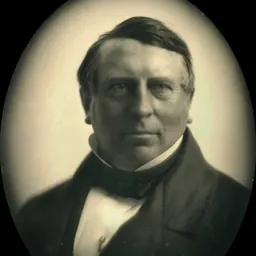
Lived 1817 – 1907 (aged 90). Samuel Gray Ward was an American banker and poet.
Samuel Gray Ward (October 3, 1817 – November 17, 1907) was an American poet, author, and minor member of the Transcendentalism movement. He was also a banker and a co-founder of the Metropolitan Museum of Art. Among his circle of contemporaries were poets and writers such as Ralph Waldo Emerson and Margaret Fuller who were deeply disappointed when Ward gave up a career in writing for business just before he married.
Early life Ward was born on October 3, 1817, in Portland, Maine. He was the son of Lydia Gray (1789–1874) and was the American agent for London-based Baring Brothers & Co., merchant bank. As a student, he boarded for a time with Professor John Farrar and his wife Eliza Ware Farrar. He joined the Farrars on a trip to Europe in the summer of 1836, though he broke from them for private travels to England, Paris, and Rome, before rejoining them in the Swiss Alps by August 1837.
Career Ward became associated with Ralph Waldo Emerson and began contributing to the Transcendentalist journal The Dial, which published four of his poems in its inaugural issue. Emerson reflected on meeting him: "Beautiful among so many ordinary & mediocre youths as I see, was S. G. W. when I first fairly encountered him". Emerson particularly relied on Ward to inform him about art criticism; he wrote to Ward in 1838 that he was "especially curious of information on art & artists, of which however, I warn you, I know nothing." Emerson seemed particularly taken by the young man, writing to Ellery Channing in January 1840, "your friend Samuel G. Ward, whom though I have known but a little while I love much". A few months later, he told Ward, "I... wish you to love me".
When Ellery Channing published his book of poems, Ward subsidized its printing. Emerson edited the project but told Ward that Channing "goes to the very end of the poetic license, and defies a little too disdainfully his dictionary and logic". Critic Edgar Allan Poe agreed and noted in his review of Channing's book that it was "full of all kinds of mistakes, of which the most important is that of their having been written at all".
Thanks to an inheritance from his father as well as his own business dealings, Ward became the wealthiest person among the Transcendentalist circle, though he did not pursue literature for long. Though Emerson chose four of his poems for his 1874 compilation Parnassus, Ward had stopped writing new poetry since his contributions to The Dial. Emerson was equally disappointed and wrote to fellow Transcendentalist Caroline Sturgis Tappan that the news affected him "with a certain terror" and he concluded that "happiness is so vulgar". Though he chose to pursue a career in business Ward continued to correspond with his friends in the Transcendentalist movement through the remainder of his life.
Anna Barker Ward (1841–1875), who married Joseph Marie Antoine Thoron, a French merchant, and died shortly after giving birth to her son, Ward Thoron. Thomas Wren Ward (1844–1940), who married Sophia Read Howard, who married Austrian Baron Ernst Augustus Schönberg-Roth-Schönberg (1850–1924) and lived at his castle, Schloss Pallaus, in South Tyrol. That home, built on land purchased in 1844, was named Oakwood and is an area now known as Shadow Brook Farm Historic District.
Ward died on November 17, 1907, in Washington, D.C.
Descendants His granddaughter through his only son Thomas, Elizabeth Howard Ward (1873-1954) and Charles Bruen Perkins (1860-1929), a Harvard graduate who had studied architecture at the École des Beaux-Arts in Paris who was the son of Charles Callahan Perkins (1823–1886), in 1896.
Don’t just read it —
keep it.
Full-length biographies made to live with: read them, listen on the way to work, watch them tonight.
- E-book
- Audio
- Video
Instant download · yours to keep · every purchase keeps this site free
Important facts
People in Samuel Gray Ward's life
Named in this biography and alive at the same time
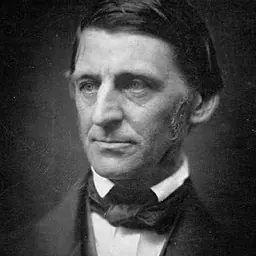

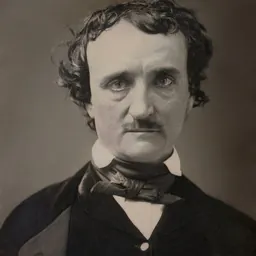
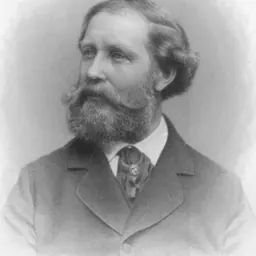

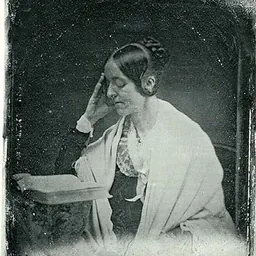

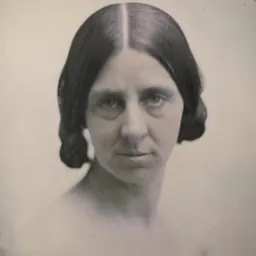
Related people
Same field, nearest in time
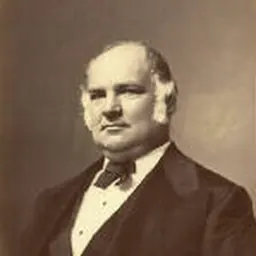
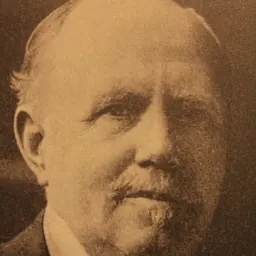


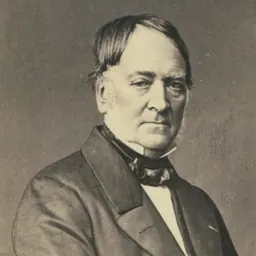
Contemporaries
People whose lives overlapped Samuel Gray Ward's




Frequently asked questions
Who was Samuel Gray Ward?
American private banker
When was Samuel Gray Ward born?
Samuel Gray Ward was born on 3 October 1817 in Portland.
When did Samuel Gray Ward die?
Samuel Gray Ward died on 17 November 1907 in Washington, D.C..
What was Samuel Gray Ward's occupation?
Samuel Gray Ward was a banker and poet.
What nationality was Samuel Gray Ward?
Samuel Gray Ward was American.
Sources & further reading
Cite this page
APA: Biography.guide. (2026). Samuel Gray Ward. https://biography.guide/samuel-gray-ward/
MLA: "Samuel Gray Ward." Biography.guide, https://biography.guide/samuel-gray-ward/.
Chicago: "Samuel Gray Ward." Biography.guide. https://biography.guide/samuel-gray-ward/.
Data last updated: 2026-09-22 · Spot an error? Report a correction.
Page generated 2026-09-27 05:30 UTC