
About Samuel Gillott
Lived 1838 – 1913 (aged 74). Samuel Gillott was an Australian politician.
Sir Samuel Gillott (29 October 1838 – 29 June 1913) was an Australian lawyer and politician, commonly known as a former Lord Mayor of Melbourne.
Early life Gillott was born in the city of Sheffield, then in the West Riding of Yorkshire, England, the son of Joseph and Elizabeth Gillott. Educated in Sheffield Grammar School, Gillott moved to Melbourne, Australia at the age of 17, in 1856. He was employed by a law firm, Vaughan, Moule & Seddon, and received his law degree from the University of Melbourne. Immediately after he started practicing law, Vaughan, Moule & Seddon offered him a partnership. During the 1890s, Gillott specialized in police court practice, with a firm exception being the Speight v. Syme libel case. He became President of the Law Institute in 1900. In the same year, Gillott was re-elected as the Mayor of Melbourne. Promoted to Lord Mayor in 1901, Gillott was knighted in the same year during the visit to Australia of the Duke and Duchess of Cornwall and York (later King George V and Queen Mary). In 1901, under the state ministry of Sir George Turner, Gillott was given the role of Honorary Minister. After the Turner Government's fall that year, he stayed on the ministry, becoming Attorney General. In 1904, under the premiership of Sir Thomas Bent, Gillott became the Chief Secretary and the Minister for Labour.
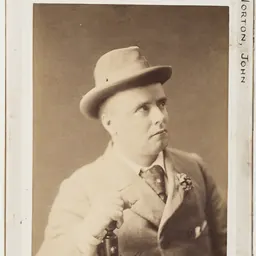
In May 1906, controversy arose for Gillott when a demagogue reformer, William Judkins, held him responsible for illegal gambling. As proof, Judkins named John Wren's illegal betting schemes, which he held as evidence of a corrupt government. As a result of the controversial issue, Thomas Bent agreed to prohibit off-course betting. Later that year, Gillott introduced the gaming suppression bill. Following the gambling controversy, John Norton's newspaper, The Truth, published an article on Gillott, linking him to a well known brothel proprietor, Caroline Hodgson, and revealing his financial dealings with her since 1877. Resigning from parliament and the ministry after these allegations, Gillott returned to England, where he stayed for almost a year.
Returning to Australia after a year in England, he resumed his seat in the Melbourne City Council, and became president and councillor of the Working Men's College of Melbourne. On another visit to England in 1913, Gillott died after falling down a flight of stairs at night in Sheffield. He was 74 years of age. His body was returned to Australia and was interred at Melbourne General Cemetery.
Footnotes
Don’t just read it —
keep it.
Full-length biographies made to live with: read them, listen on the way to work, watch them tonight.
- E-book
- Audio
- Video
Instant download · yours to keep · every purchase keeps this site free
Important facts
People in Samuel Gillott's life
Named in this biography and alive at the same time


Related people
Same field, nearest in time





Contemporaries
People whose lives overlapped Samuel Gillott's


Frequently asked questions
Who was Samuel Gillott?
Australian politician
When was Samuel Gillott born?
Samuel Gillott was born on 29 October 1838 in Sheffield.
When did Samuel Gillott die?
Samuel Gillott died on 29 June 1913 in Sheffield.
What was Samuel Gillott's occupation?
Samuel Gillott was a politician.
What nationality was Samuel Gillott?
Samuel Gillott was Australian.
Sources & further reading
Cite this page
APA: Biography.guide. (2026). Samuel Gillott. https://biography.guide/samuel-gillott/
MLA: "Samuel Gillott." Biography.guide, https://biography.guide/samuel-gillott/.
Chicago: "Samuel Gillott." Biography.guide. https://biography.guide/samuel-gillott/.
Data last updated: 2026-09-20 · Spot an error? Report a correction.
Page generated 2026-09-27 05:23 UTC