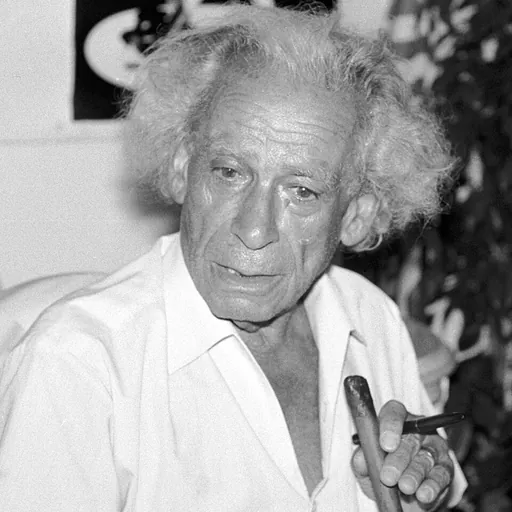
Samuel Fuller
American screenwriter, actor and film director
About Samuel Fuller
Lived 1912 – 1997 (aged 85). Samuel Fuller was an American film director, actor, screenwriter, film producer, novelist and model.
Samuel Michael Fuller (August 12, 1912 – October 30, 1997) was an American film director, screenwriter, novelist, journalist, and actor. He was known for directing low-budget genre movies with controversial themes, often made outside the conventional studio system.
After working as a reporter and a pulp novelist, Fuller wrote his first screenplay for Hats Off in 1936, and made his directorial debut with the Western I Shot Jesse James (1949). He continued to direct several other Westerns and war films throughout the 1950s. He shifted genres in the 1960s with his low-budget thriller Shock Corridor in 1963, followed by the neo-noir The Naked Kiss (1964).
Fuller was inactive in filmmaking for most of the 1970s, before writing and directing the semi-autobiographical war epic The Big Red One (1980), and the drama White Dog (1982), whose screenplay he co-wrote with Curtis Hanson. Several of his films influenced French New Wave filmmakers, notably Jean-Luc Godard, who gave him a cameo appearance in Pierrot le Fou (1965). In the latter part of his career, he worked mainly in Europe and lived in Paris.
Early life Samuel Michael Fuller was born in Worcester, Massachusetts, of Jewish parents, Rebecca (née Baum) and Benjamin Fuller. His father died in 1923 when Samuel was 11. After immigrating to the United States, the family's surname was changed from Rabinovitch to Fuller, a name possibly inspired by Samuel Fuller (Pilgrim), a doctor who arrived in America on the Mayflower. In his autobiography, A Third Face (2002), he says that he did not speak until he was almost five. His first word was "Hammer!"
After his father's death, the family moved to New York City, where at the age of 12, he began working as a newspaper copyboy. He became a crime reporter in New York City at age 17, working for the New York Evening Graphic. He broke the story of actress Jeanne Eagels' death. He wrote pulp novels, including The Dark Page (1944; reissued in 2007 with an introduction by Wim Wenders), which was later adapted into the 1952 movie Scandal Sheet.
Late in life he said, "If only a reporter could get a thousand dollars an hour the way a director does, I'd be in it today".
Military service
During World War II, Fuller joined the United States Army. He was assigned as an infantryman to the 16th Infantry Regiment, 1st Infantry Division, and saw heavy fighting. He was involved in landings in Africa, Sicily, and Normandy, and also saw action in Belgium and Czechoslovakia. In 1945, he was present at the liberation of a German concentration camp in Falkenau. He shot 16-mm footage, known as V-E +1, that was later integrated into the French documentary Falkenau: The Impossible (1988). In 2014, V-E+1 was selected for preservation in the United States National Film Registry by the Library of Congress.
For his military service, Fuller was awarded the Silver Star, Bronze Star, Purple Heart, and Combat Infantryman Badge. He reached the rank of corporal. Fuller used his wartime experiences as material in his films, especially in The Big Red One (1980), the nickname for the U.S. 1st Infantry Division. After the war, Fuller co-authored a regimental history of the 16th Infantry.
Career Writing and directing Hats Off (1936) marked Fuller's first credit as a screenwriter. He wrote many screenplays throughout his career, such as Gangs of the Waterfront in 1945. He was unimpressed with Douglas Sirk's direction of his Shockproof screenplay, and made the jump to writer/director after being asked to write three films by independent producer Robert Lippert. Fuller agreed to write them if he would be allowed to direct them, as well, with no extra fee. Lippert agreed. Fuller's first film under this arrangement was I Shot Jesse James (1949), followed by The Baron of Arizona with Vincent Price.
Fuller's third film, The Steel Helmet, established him as a major force. The first film about the Korean War, made just six months into that conflict, he wrote it based largely on his own World War II experiences and tales coming out of Korea. The film was attacked by reporter Victor Riesel for being "pro-Communist" and "anti-American." Critic Westford Pedravy alleged Fuller was secretly financed by "the Reds." Fuller had a major argument with the U.S. Army, which provided stock footage for the film. When army officials objected to Fuller's American characters executing a prisoner of war, Fuller replied he had seen it done during his own military service. A compromise was reached when the lieutenant threatens the sergeant with a court martial. The film marked the first collaboration between Fuller and actor Gene Evans. The studio wanted a more prominent star such as John Wayne, but Fuller was adamant that Evans be used because he was impressed by his fellow veteran's authentic portrayal of a soldier.
After the success of The Steel Helmet, Fuller was sought out by the major studios. All gave him advice on tax shelters, except for Darryl F. Zanuck of 20th Century-Fox, who replied, "We make better movies," the answer Fuller was seeking. Zanuck signed Fuller for a contract for seven films, the first being another Korean War film, Fixed Bayonets!, to head off other studio competition copying The Steel Helmet. The U.S. Army assigned Medal of Honor recipient Raymond Harvey as Fuller's technical advisor; the two struck up a long friendship during filming, and Harvey later returned to advise him on Verboten!.
The proposed seventh film, Tigrero, based on a book by Sasha Siemel, is the subject of a 1994 documentary by Mika Kaurismäki. Tigrero: A Film That Was Never Made featured Fuller and Jim Jarmusch visiting the proposed Amazon locations of the film. Film Fuller shot on location at the time was featured in his Shock Corridor.
Fuller's favorite film was Park Row, a story of American journalism. Zanuck had wanted to adapt it into a musical, but Fuller refused. Instead, he started his own production company with his profits to make the film on his own. Park Row was a labor of love and served as a tribute to the journalists he knew as a newsboy. His flourishes of style on a very low budget led critics such as Bill Krohn to compare the film to Citizen Kane. Fuller followed this with Pickup on South Street (1953), a film noir starring Richard Widmark, which became one of his best-known films. Other films Fuller directed in the 1950s include House of Bamboo, Forty Guns, and China Gate, which led to protests from the French government and a friendship with writer Romain Gary. After leaving Fox, Fuller started his Globe Productions that made Run of the Arrow, Verboten!, and The Crimson Kimono, and produced, wrote, and directed a television pilot about World War II soldiers to be titled Dogface, which was not picked up.
In 1961, Warner Bros. offered to finance The Big Red One in return for his making Merrill's Marauders. When Fuller had problems with Warner Bros.' editing of his film, the Big Red One fell through.
Fuller's films throughout the 1950s and early 1960s generally were lower-budget genre movies exploring controversial subjects. Shock Corridor (1963) is set in a psychiatric hospital, while The Naked Kiss (1964) featured a prostitute attempting to change her life by working in a pediatric ward. Both films were released by Allied Artists.
Between 1967 and 1980, Fuller directed only one film, the Mexican-produced Shark! (1969). Fuller unsuccessfully asked the Directors Guild to remove his name from the credits of Shark. He returned in 1980 with the epic The Big Red One, the semiautobiographical story of a platoon of soldiers and their harrowing experiences during World War II. The film won critical praise, but failed at the box office.
quote="Shelve the film without letting anyone see it? I was dumbfounded. It's difficult to express the hurt of having a finished film locked away in a vault, never to be screened for an audience. It's like someone putting your newborn baby in a goddamned maximum-security prison forever ... Moving to France for a while would alleviate some of the pain and doubt that I had to live with because of White Dog." — White Dog: Sam Fuller Unmuzzled, Samuel Fuller, as quoted by J. Hoberman, Criterion Collection The controversial film depicts the struggle of a black dog trainer trying to de-program a "white dog," a stray that was programmed to attack any black person viciously. He readily agreed to work on the film, having focused much of his career on racial issues. Already familiar with the novel and with the concept of "white dogs," he was tasked with "reconceptualizing" the film to have the conflict depicted in the book occur within the dog rather than the people. He used the film as a platform to deliver an anti-racist message through the film's examination of the question of whether racism is a treatable problem or an incurable disease.
During filming, Paramount Pictures grew increasingly concerned the film would offend African-American viewers, and brought in two consultants to review the work and offer their approval on the way Black characters were depicted. One felt the film had no racist connotations, while the other, Willis Edwards, vice president of the Hollywood NAACP chapter, felt the film was inflammatory and should never have been made.
After White Dog was shelved by Paramount Pictures, Fuller moved to France in 1982 and never directed another American film. He directed his last film, The Madonna and the Dragon, in 1990, and he wrote his last screenplay, Girls in Prison, in 1994.
With his wife, Christa Lang, and Jerry Rudes, Fuller wrote an autobiography A Third Face (published in 2002). This was the culmination of a long career as an author. Among his books are the novels "Burn, Baby, Burn" (1935), Test Tube Baby (1936), Make Up and Kiss (1938), and The Dark Page (1944). Novelizations of his films include The Naked Kiss (1964), The Big Red One (1980; reissued 2005), 144 Piccadilly (1971), and Quint's World (1988). A book-length interview of Fuller by Jean Narboni and Noel Simsolo, Il etait une fois ... Samuel Fuller (with a preface by Martin Scorsese) appeared in 1986.
Acting Fuller made a cameo appearance in Jean-Luc Godard's Pierrot le Fou (1965), where he famously intones: "Film is like a battleground ... Love, hate, action, violence, death. In one word, emotion!" He also made a cameo appearance at an outdoor cafe in Luc Moullet's Brigitte et Brigitte (1966) along with French New Wave directors Claude Chabrol, Eric Rohmer, and André Téchiné. He plays a film director in Dennis Hopper's ill-fated The Last Movie (1971); an Army colonel in Steven Spielberg's 1941 (1979); a war correspondent in his film The Big Red One (scene deleted in the original release, restored in the reconstructed version), a talent agent in his film White Dog (1981), and a cameraman in Wim Wenders' The State of Things (1982). He portrays an American gangster in two films set in Germany: The American Friend by Wenders and Helsinki Napoli All Night Long by Mika Kaurismäki. He also appeared in Larry Cohen's A Return to Salem's Lot (1987), and played a businessman in (1992) by Aki Kaurismäki. His last work in film was as an actor in The End of Violence (1997). A photo of Fuller also appears on one of the mirrors of a stripper in his Shock Corridor.
Style and themes Fuller's work has been described as primitive by Luc Moullet and by the influential American critics Manny Farber and Andrew Sarris. Grant Tracey has used the term "narrative tabloid" to refer to Fuller's style of filmmaking. This was the result of his often lower budgets, but also reflected Fuller's pulp-inspired writing.
Fuller was known for using intense close-ups, off-center framings, and shock editing in many of his films, which were often about men facing death in combat. These scenes were both violent and tragic. but after he suffered a stroke in 1994, they returned to the States the following year. They resided in Los Angeles, where Fuller lived until he died at home of natural causes.
In November 1997, the Directors Guild held a three-hour memorial in his honor, hosted by Curtis Hanson, his longtime friend and co-writer on White Dog. He was survived by his wife and daughter.
Legacy Although Fuller's films were not considered great cinema in their time, they gained critical respect in the late 1960s. Fuller welcomed the newfound esteem, appearing in films of other directors and associating himself with younger filmmakers. The French New Wave claimed Fuller as a major stylistic influence, especially Luc Moullet. His visual style and rhythm were seen as distinctly American, and praised for their energetic simplicity. Martin Scorsese praised Fuller's ability to capture action through camera movement. In the 1996 Adam Simon-directed documentary The Typewriter, the Rifle & the Movie Camera, Quentin Tarantino and Jim Jarmusch credited Fuller as influential upon their works. Most recently, his wife Christa Lang produced a documentary directed by their daughter Samantha about him. A Fuller Life uses footage he captured himself with celebrities such as James Franco reading from his autobiography.
In the mid-1980s, Fuller was the first international director to be a guest at the Midnight Sun Film Festival. The festival's hometown, Sodankylä, Finland, named a street "Samuel Fullerin katu" ("Samuel Fuller's street").
The moving image collection of Samuel Fuller is housed at the Academy Film Archive. The archive has preserved several of Samuel Fuller's films, including The Crimson Kimono, Underworld U.S.A., and Pickup on South Street. Additionally, the archive has preserved several of Fuller's home movies, including those shot during his war service.
Filmography Film YearTitleDirectorWriterProducer Notes 1936 Hats Off 1937 It Happened in Hollywood 1938 Adventure in Sahara Federal Man-Hunt Gangs of New York 1940 Bowery Boy 1941 Confirm or Deny 1943 Margin for Error Power of the Press 1945 Gangs of the Waterfront 1949 Shockproof I Shot Jesse James 1950 The Baron of Arizona 1951 The Steel Helmet Fixed Bayonets! The Tanks Are Coming 1952 Park Row 1953 Pickup on South Street 1954 Hell and High Water 1955 House of Bamboo 1957 China Gate Run of the Arrow Forty Guns 1959 Verboten! The Crimson Kimono 1961 Underworld U.S.A. 1962 Merrill's Marauders 1963 Shock Corridor 1964 The Naked Kiss 1967 The Cape Town Affair 1968 Targets 1969 Shark! 1973 The Deadly Trackers Replaced as director by Barry Shear 1974 The Klansman 1980 The Big Red One 1982 White Dog 1984 Thieves After Dark 1986 Let's Get Harry 1989 Street of No Return Also supervising editor 1994 Girls in Prison
Acting roles
Television
Producer Year Title Notes 1950–54 The Colgate Comedy Hour Executive/supervising producer(19 episodes)Production manager (15 episodes) 1952–53 Four Star RevueExecutive producer (4 episodes)
Acting roles Year Title Role Notes 1972 Tatort Senator Episode "Dead Pigeon on Beethoven Street" 1984 The Blood of Others Old Man in Cafe Television film 1988 Médecins des hommes American Captain Episode: "Mer de Chine: Le pays pour mémoire" 1989 David Lansky Capodagli / John Fraser Episode "L'enfant americain" 1990 The Madonna and the Dragon Newsweek Editor Television film 1994 Le cascadeur William Davidson Episode "Le saut de la mort"
Don’t just read it —
keep it.
Full-length biographies made to live with: read them, listen on the way to work, watch them tonight.
- E-book
- Audio
- Video
Instant download · yours to keep · every purchase keeps this site free
Important facts
Family & relationships
People in Samuel Fuller's life
Named in this biography and alive at the same time


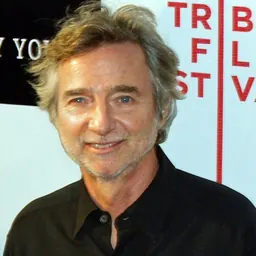
Related people
Same field, nearest in time

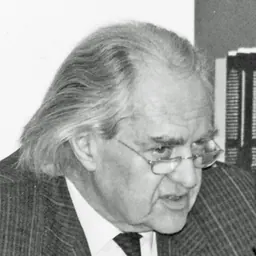
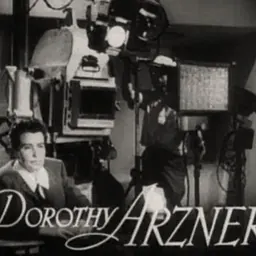

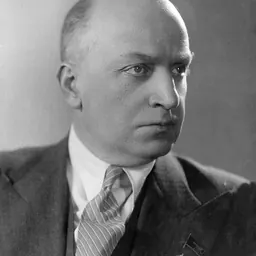
Contemporaries
People whose lives overlapped Samuel Fuller's






Frequently asked questions
Who was Samuel Fuller?
American screenwriter, actor and film director (1912–1997)
When was Samuel Fuller born?
Samuel Fuller was born on 12 August 1912 in Worcester.
When did Samuel Fuller die?
Samuel Fuller died on 30 October 1997 in Hollywood.
What was Samuel Fuller's occupation?
Samuel Fuller was a film director, actor, screenwriter, film producer, novelist and model.
What nationality was Samuel Fuller?
Samuel Fuller was American.
Sources & further reading
Cite this page
APA: Biography.guide. (2026). Samuel Fuller. https://biography.guide/samuel-fuller-film-director/
MLA: "Samuel Fuller." Biography.guide, https://biography.guide/samuel-fuller-film-director/.
Chicago: "Samuel Fuller." Biography.guide. https://biography.guide/samuel-fuller-film-director/.
Data last updated: 2026-09-24 · Spot an error? Report a correction.
Portrait: Wikimedia Commons · author & licence
Page generated 2026-09-27 05:08 UTC