
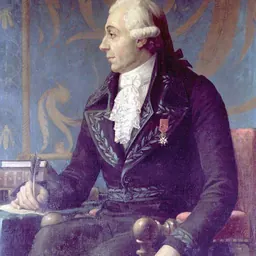
Samuel-François Lhéritier
French General during the French Revolutionary Wars and Napoleonic Wars
About Samuel-François Lhéritier
Lived 1772 – 1829 (aged 57). Samuel-François Lhéritier was a French military officer and soldier.
Baron Samuel-François Lhéritier de Chézelles (; 6 August 1772 – 23 August 1829) was a French soldier who rose through the ranks during the French Revolutionary Wars and Napoleonic Wars, eventually gaining promotion to the military rank of Général de Division.
While his initial career in the infantry branch and then general staff during the French Revolutionary Wars was unremarkable, Lhéritier made a name for himself as a cavalry commander during the Napoleonic Wars. A gallant officer, he led from the front and, as a result, collected a number of serious battle wounds. He was created a baron of the Empire and a Commander of the Legion of Honour and his name is inscribed under the Arc de Triomphe in Paris.
Having begun his military career in 1792, he joined the cavalry branch on a permanent basis in 1803 and subsequently saw steady promotion and was given various commands of heavy cavalry units. A part of the in 1805, he took part in the War of the Third Coalition. In 1806, at the outbreak of the War of the Fourth Coalition, Lhéritier was promoted to colonel and given the command of the 10th Cuirassiers. In this capacity, he was noted for his brave charge at the Battle of Eylau in 1807. Two years later, during the War of the Fifth Coalition, he made an impression on his superiors, especially during the Battle of Aspern-Essling and Battle of Znaim. As a result, he was promoted to brigadier general and given the command of a cuirassier brigade, before taking part to the French invasion of Russia in 1812. The next year, he was promoted to general of division and was given various commands during the War of the Sixth Coalition. During the 1815 War of the Seventh Coalition, Baron Lhéritier commanded a mixed dragoon and cuirassier division, at the head of which he charged during the Battle of Waterloo. Lhéritier's active service effectively ended soon after Napoleon I's second abdication, but he did hold two significant military functions during the Second Restoration.
Revolutionary Wars
Born in Angles-sur-l'Anglin on 6 August 1772, Lhéritier joined the army on 26 September 1792, aged 20 and he would spend his first years of service fighting in the French Revolutionary Wars, with action taking place mainly on the Rhine. Upon joining the army, he was at first commissioned as a mere grenadier
Early Napoleonic Wars Cuirassiers in 1805, painting by Jean-Louis-Ernest Meissonier. With the outbreak of the Napoleonic Wars, Napoleon I formed the and organised most of his cavalry in a large cavalry reserve corps under Marshal of the Empire Joachim Murat. Lhéritier continued to serve in the 11th Cuirassiers and in 1805 this regiment was included in General Raymond-Gaspard de Bonardi de Saint-Sulpice's 2nd Brigade of Jean-Joseph Ange d'Hautpoul's 2nd Heavy Cavalry Division. The 11th Cuirassiers itself was under the command of Colonel Albert Louis Emmanuel de Fouler. The regiment was heavily engaged at the Battle of Austerlitz, where it lost 14 dead and 37 wounded out of its pre-battle complement of 327 men. The regiment and its officers fought brilliantly and shortly after the battle, Colonel Fouler was promoted to brigadier general.
The next year saw the outbreak of the War of the Fourth Coalition, which opposed France to Prussia and Russia. On 5 October 1806, Lhéritier was promoted to colonel and given the command of the 10th Cuirassiers, and which traced its origins back to the reign of Louis XIII. The division saw no major action during the 1806 campaign, but was heavily engaged at the Battle of Eylau on 8 February 1807. There, Colonel Lhéritier led his cuirassiers during Marshal Murat's famous cavalry charge. Lhéritier was wounded at his right hand when his horse was killed under him, but was soon back in the saddle and took off again at the head of his regiment in another charge. The regiment, numbering 4 squadrons and a complement of 610 men, saw action at the Battle of Aspern-Essling, The next engagement for the regiment came on 11 July at the Battle of Znaim. There, Colonel Lhéritier was again noted for his bravery, as he led his men into action and in the process received a severe wound at the head. His actions during the campaign of 1809 were regarded very highly and on 21 July 1809, he was promoted to brigadier general. Lhéritier's cuirassiers were committed to battle at Waterloo and bravely charged the Allied infantry squares. Painting by Henri Félix Emmanuel Philippoteaux. When the "Army of the North" attacked the forces of the Seventh Coalition in the United Kingdom of the Netherlands, Kellermann, with Lhéritier's division, was placed under the command of Marshal Michel Ney. On 16 June, Ney faced a massed Allied force at the Battle of Quatre Bras. Of Lhéritier's 11th cavalry division, only Guiton's cuirassier brigade was present and available for action. As Ney's situation became increasingly desperate, the Marshal ordered Kellermann to take his cuirassiers in a frontal charge against the enemy. The charge was very well handled and, despite the difficult terrain and the large numbers of the enemy, it did much to relieve the pressure on the French forces. At first, it broke Hugh Halkett's forces, then Frederick William, Duke of Brunswick-Wolfenbüttel's German infantry, eventually reaching the crucial Quatre Bras crossroads. However, this breakthrough could not be exploited, as no other units had been sent in immediate support of the heavy cavalry. The cuirassiers endured some close-range musketry before finally turning and retreating at a trot, a manoeuvre during which Kellermann had his horse shot under him and barely escaped capture. Two days later, the entire III Corps was reunited under Kellermann's command and was available for action at the Battle of Waterloo. Lhéritier's division was committed towards 17:30, during the afternoon attacks, as Ney sent in his cavalry in mass against the Allied centre. A series of charges ensued, but such a cavalry attack, without proper infantry or artillery support was always set to fail on an uneven battlefield such as the one at Waterloo and against an infantry that had plenty of time to form protective squares. Despite the efforts of the French cavalry – Lhéritier's division alone lost six officers dead, three mortally wounded and forty wounded – the battle was lost. During this action, Lhéritier received a bullet wound to the right shoulder.
Napoleon abdicated a second time following his defeat at Waterloo and, as the Bourbons returned to power in France, Lhéritier was placed on the non-active list on 20 September 1815. Although he was not called upon again for field service, the Bourbons did offer him the position of inspector general for cavalry and subsequently for gendarmerie. He died on 23 August 1829 in Conflans-Sainte-Honorine, near Paris.
Recognition
Samuel-François Lhéritier was named Chevalier of the Legion of Honour on 15 June 1804, Officer of the same order on 14 May 1807 and commander of the order on 24 August 1814. He was also created a baron of the Empire in May 1808. The name LHERITIER is inscribed under the eastern pillar of the Arc de Triomphe in Paris.
Don’t just read it —
keep it.
Full-length biographies made to live with: read them, listen on the way to work, watch them tonight.
- E-book
- Audio
- Video
Instant download · yours to keep · every purchase keeps this site free
Important facts
People in Samuel-François Lhéritier's life
Named in this biography and alive at the same time
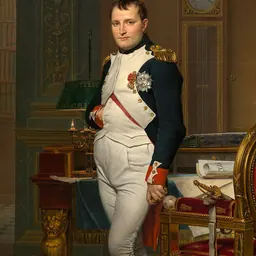
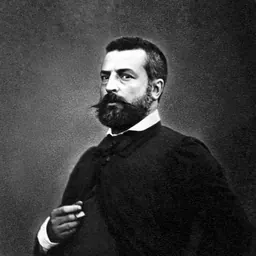

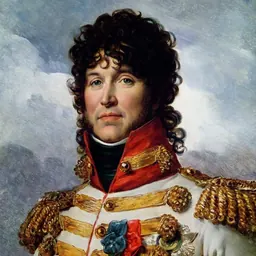
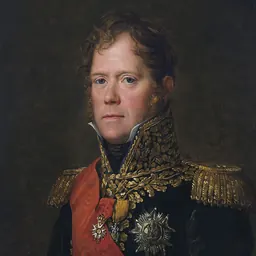
Related people
Same field, nearest in time
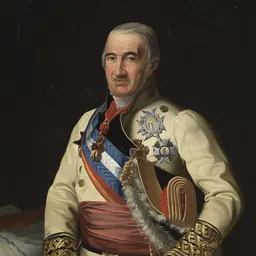
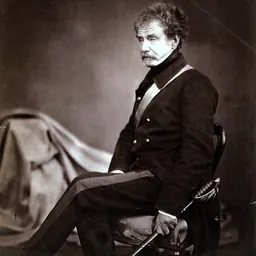
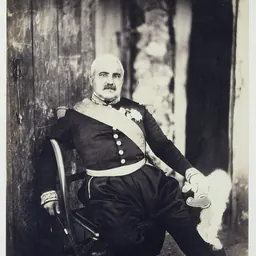
Contemporaries
People whose lives overlapped Samuel-François Lhéritier's




Frequently asked questions
Who was Samuel-François Lhéritier?
French General during the French Revolutionary Wars and Napoleonic Wars (1772–1829)
When was Samuel-François Lhéritier born?
Samuel-François Lhéritier was born on 6 August 1772 in Angles-sur-l'Anglin.
When did Samuel-François Lhéritier die?
Samuel-François Lhéritier died on 23 August 1829 in Paris.
What was Samuel-François Lhéritier's occupation?
Samuel-François Lhéritier was a military officer and soldier.
What nationality was Samuel-François Lhéritier?
Samuel-François Lhéritier was French.
Sources & further reading
· Wikipedia: Samuel-François Lhéritier
· DBpedia: Samuel-François Lhéritier
Cite this page
APA: Biography.guide. (2026). Samuel-François Lhéritier. https://biography.guide/samuel-francois-lheritier/
MLA: "Samuel-François Lhéritier." Biography.guide, https://biography.guide/samuel-francois-lheritier/.
Chicago: "Samuel-François Lhéritier." Biography.guide. https://biography.guide/samuel-francois-lheritier/.
Data last updated: 2026-09-20 · Spot an error? Report a correction.
Page generated 2026-09-27 05:20 UTC