
About Samuel Davies
Lived 1723 – 1761 (aged 37). Samuel Davies was an American hymnwriter, poet and priest.
Samuel Davies (November 3, 1723 – February 4, 1761) was an evangelist and Presbyterian minister who was born into a family of English Dissenters from the Church of England. Davies ministered in Hanover County, the center of the Christian revival movement, from 1748 to 1759. He was a central figure who played a critical role in the early years of the Great Awakening, fomenting a religious revival among the colonies that advocated religious independence from England's established church, which inspired the cause for complete independence that ultimately lead to the disestablishment of the Church of England as Virginia’s official church. Davies was a dynamic and inspirational orator whose sermons were filled with pointed language that advocated for religious conversion. He followed serving a term as the fourth President of Princeton University, then known as the College of New Jersey, from 1759 to 1761. Davies was a strong advocate for religious freedom, and helped to institute significant religious reforms in the colony. He was one of the first non-Anglican preachers in Virginia, and one of earliest missionaries to slaves in the Thirteen Colonies. He voyaged to England, in 1753 where he met George Whitefield and John Wesley, also central figures in the Great Awakening. During the French and Indian War he served recruiting men by appealing to their sense of patriotism ans religion through his sermons, which were widely publicized throughout the colonies. Davies was also a prolific writer, authoring several hymns and publishing works of poetry and sermons. He was a strong voice for religious freedom and advocated humane treatment for slaves, and for providing them with religious education.
Early life Davies was born in New Castle County, Delaware, to David Davies and Martha Thomas Davies, Baptists of Welsh descent. Davies's mother eventually became a follower of Presbyterian doctrine, which led to his earliest exposure to Calvinist theology. A child of deeply religious parents, his mother named him after the prophet Samuel. Davies lived the life of a typical farm boy, helping his father in the fields and tending to chores about the farm. His father taught him how to hunt deer and squirrels, and fishing in the nearby Atlantic Ocean.
The Davies family could not afford to send their son to college, so they instead sent him to rceive his early education under the tutelage of Rev. Samuel Blair at the academy he conducted in Faggs Manor, Pennsylvania in 1739. The expenses of this promising student were borne by William Robinson, a frontier missionary and Davies' tutor. By the Spring of 1746, Davies, had completed his studies and was now, at the age of twenty-four, ready to assume a role preaching the Evangelical doctrines. Later in his ministry Davies would declare that in all his travels he never had any teacher that would measure up to Blair.
Davies was ordained as an evangelist on February. 19, 1747, and was promptly sent to Virginia on evangelical missionary service to minister to religious dissenters against the Anglican Church. Dissenters who broke from the established Church of England were scorned by Church clergy and many Virginians, often incited by clergy, while their ministry efforts were always under persistent surveillance. At the time, when Davies settled in Hanover County, Virginia in 1748 there were already many lawsuits filed against Presbyterians for holding forbidden assemblies and preaching without a license from the General Court.
George Whitefield, who brought the revivalist movement to a head in Hanover County, had recently departed, and subsequently the enthusiasm behind the revivalist movement in Hanover gradually began to diminish. However, the calm did not last very long, for Whitefield and other such evangelists of the early 1740s had paved the way for an even greater revivalist thrust, and Davies was the leader in that advent. However, this provoked a renewed confrontation which emerged between the New Light Presbyterians and the colonial authorities who stood behind the established Church in Williamsburg. Because of the persistent efforts of William Tennent, Samuel Blair and especially Samuel Davies, Hanover soon became the center of the Great Awakening in the South and the "hotbed" of radical New Light Presbyterianism in Virginia. Their presence and activities was deemed a serious threat to the authority and supremacy of the Church of England in Virginia, whose preeminence had always been unabated.
Virginia's colonial legislature in 1743 had licensed Polegreen reading room and three others in and near Hanover County.
Davies eventually recovered his health and continued to preach. Young Patrick Henry attended many of Davies' sermons with his mother and acknowledged that as the source of his own oratorical skills; others called Davies without peer in the pulpit during his lifetime. Davies returned to Virginia in May 1748, and on October 4, 1748, married Jane Holt, from a prominent Williamsburg family. He fathered six children with Jane, including one child who died at birth and William.
As one of the first non-Anglican ministers licensed to preach in Virginia (with the now-dead Francis Makemie), Davies advanced the cause of religious and civil liberty in his era. Davies' strong religious convictions led him to value the "freeborn mind" and the inalienable "liberty of conscience" that the established Anglican Church in Virginia often failed to respect. Davies helped found the Presbytery of Hanover, encompassing all Presbyterian ministers in Virginia and North Carolina. He served as its first moderator and was considered the region's leading voice for religious dissenters.
Evangelism of slaves
Upon his return to Virginia, Davies resumed his missionary duties and used his oratory ability on behalf of the British in an effort to muster volunteers among the colonists, many of whom were reluctant to commit to the war effort. To this end he preached a series of sermons that emphasized patriotism as an essential aspect of Christian behavior. During the Battle of the Monongahela, on July 9, 1755 in Pennsylvania, the British suffered a disastrous defeat with heavy losses, including the death of General Braddock. The experienced Washington, stepped in as acting commander, organized the retreat, and thereafter conducted a hasty funeral for General Braddock, reading from the Book of Common Prayer over his unmarked grave.The British defeat left the colonists in the general area completely undefended, and subsequently they were compelled to organize into militia forces for their own defense. Davies' preaching greatly helped to recruit volunteers for that cause.
Before the war the English Crown and the Anglican Church of England held a dim view over the dissenters who broke with the England's official church to form their own religion. Davies' recruiting efforts, however, won the appeal of the Crown and its governing body towards the dissenting movement, who now shared a common enemy, and who were subsequently regarded as badly needed allies in the war effort. Davies' enthusiasm in support of the war, as well as his recruitment efforts, were greatly appreciated by colonial authorities during that uncertain period. Their gratitude was evidenced when the acting Governor of Virginia, in 1758, gave his assurance to the Hanover Presbytery that he would use his influence to secure the provisions of the Act of Toleration. Historian Rhys Isaac submits that this may have been one of the reasons why "The House of Burgesses was largely inactive on the question of dissent in these years."
Two years into the War Davies delivered his famous sermon, "The Curse of Cowardice", on May 8, 1758, to the militia of Hanover County, Virginia, at a general muster. In addition Davies published inflammatory essays in the Virginia Gazette under the pseudonym The Virginia Centinel. His essays were reprinted in newspapers throughout the colonies, fueling the resentment against the French and their Indian allies, while sharply criticizing the lack of public support in Virginia during the first years of the war.
Davies stressed the seriousness of the threat to the progress of evangelism in the Middle Colonies, and to Religious Freedom, and that ultimately that freedom could be lost if the enemy were to prevail over the colonies.
Final days In 1759 Davies was selected for President of Princeton University, though his term proved to be short lived, as he died in 1761 at the relatively young age of 37.
In his January 14, 1761, memorial sermon delivered at Nassau Hall, Davies paid tribute to King George II, who had died on October 25, 1760.
Davies final published sermon was entitled "A Sermon on the New Year," delivered at Princeton on New Year's Day, 1761. He eerily, preached using Jeremiah 28:16 as his reference text, proclaiming that "it is not only possible--but highly probable, that death may meet some of us within the compass of this year." Almost prophetically, Davies died one month later from pneumonia, on February 4, 1761. Davies' rhetorical gifts were renowned, and among the many people influenced by him was the orator and future Founding Father Patrick Henry. Henry was taken to listen to many of Davies' sermons as a young boy, often reciting portions of them aloud at his mother's request. He would later claim that Davies had taught him "what an orator should be”, and considered Davies to be the greatest speaker he had ever heard.
Davies took his preaching very seriously, and believed that sermons should be delivered "with a grave and affectionate solemnity." while William Buell Sprague noted that "he spoke with a glowing zeal...and an eloquence more impressive and effective than had then ever graced the American pulpit."
Hymn writer and poet Musicologists credit Davies with being the first American-born hymn writer. several of his hymns maintained popularity in American hymnals into the twentieth century. Two of his most popular hymns are "Eternal Spirit, Source of Light," and "Great God of wonders, all Thy ways." While serving as the school's president, Davies drew up the first catalog of the university library, 1,281 books in all. Davies' efforts to evangelize slaves in Virginia has come to be called "the first sustained proselytization of slaves" in that colony, earning him scholarly attention into the present day.
Davies authored some 82 sermons during his lifetime as a clergyman, many of which were published posthumously. A partial listing follows:
The Method of Salvation through Jesus Christ. The Danger of Lukewarmness in Religion. Life and Immortality Revealed in the Gospel. Jesus Christ the Only Foundation. The Necessity and Excellence of Family Religion. The Compassion of Christ to Weak Believers. God is Love. The Nature of Looking to Christ Opened and Explained. The Success of the Ministry of the Gospel, owing to a Divine Influence. The Sufferings of Christ and their Consequent Joys and Blessings. The Method of Salvation Through Jesus Christ. Christ Precious to All True Believers. One Thing is Needful. The Divine Authority of the Christian Religion. The Nature and Process of Spiritual Life. The Connection between Holiness and Felicity. Life and Immortality Revealed in the Gospel. Sinners Entreated to be Reconciled to God. The divine Authority and Sufficiency of the Christian Religion. The Nature and Danger of making light of Christ and Salvation. The Mediatorial Kingdom and Glories of Jesus Christ. The Nature and Universality of Spiritual Death. The Curse of Cowardice. The Happy Effects of the Pouring out of the Spirit. The Nature and Author of Regeneration. The Sacred Import of the Christian Name. The One Thing Needful. The Vessels of Mercy and the Vessels of Wrath Delineated. The Nature and Necessity of True Repentance. The Nature and Blessedness of sonship with God. Indifference to Life Urged, from its Shortness and Vanity. Ingratitude to God an Heinous but General Iniquity. Dedication to God Argued from Redeeming Mercy. An Enrolment of our Names in Heaven the Noblest Joy. The Rule of Equity. Religion and Patriotism the Constituents of Good Soldiers. The Divine Mercy to Mourning Penitents. The Danger of Lukewarmness in Religion. The Wonderful Compassions of Christ to the Greatest Sinners. Religion the Highest Wisdom, and Sin the Greatest Folly. A sermon delivered at Nassau-Hall, January 14, 1761, on the death of His late Majesty King George II
Archival collections The Presbyterian Historical Society in Philadelphia, Pennsylvania, has a collection of Davies' personal papers, including correspondence with Rev. David Cowel, manuscripts of his sermons and a manuscript for one of Davies' published works.
Don’t just read it —
keep it.
Full-length biographies made to live with: read them, listen on the way to work, watch them tonight.
- E-book
- Audio
- Video
Instant download · yours to keep · every purchase keeps this site free
Important facts
People in Samuel Davies's life
Named in this biography and alive at the same time
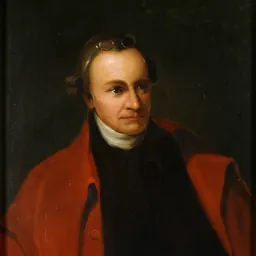

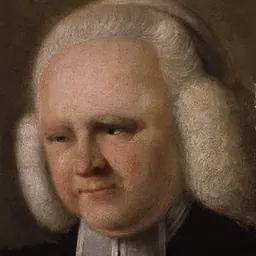

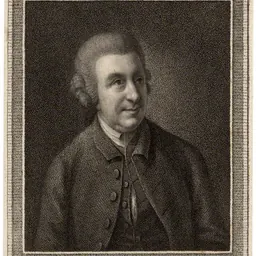


Related people
Same field, nearest in time
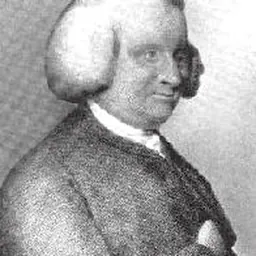
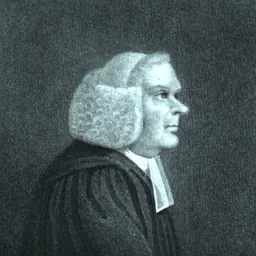


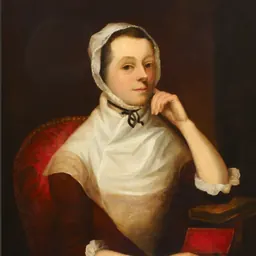
Contemporaries
People whose lives overlapped Samuel Davies's


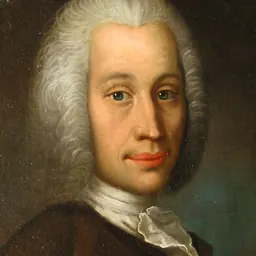
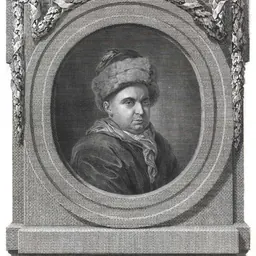
Frequently asked questions
Who was Samuel Davies?
American minister and educator (1723–1761)
When was Samuel Davies born?
Samuel Davies was born on 3 November 1723 in New Castle County.
When did Samuel Davies die?
Samuel Davies died on 4 February 1761 in Princeton.
What was Samuel Davies's occupation?
Samuel Davies was a hymnwriter, poet and priest.
What nationality was Samuel Davies?
Samuel Davies was American.
Sources & further reading
· DBpedia: Samuel Davies (clergyman)
Cite this page
APA: Biography.guide. (2026). Samuel Davies. https://biography.guide/samuel-davies/
MLA: "Samuel Davies." Biography.guide, https://biography.guide/samuel-davies/.
Chicago: "Samuel Davies." Biography.guide. https://biography.guide/samuel-davies/.
Data last updated: 2026-09-20 · Spot an error? Report a correction.
Page generated 2026-09-27 05:24 UTC