
Samuel Cooper
Adjutant and Inspector General of the armies of the Confederate States
About Samuel Cooper
Lived 1798 – 1876 (aged 78). Samuel Cooper was an American military officer and military personnel.
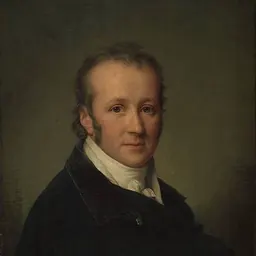
Samuel Cooper (June 12, 1798 – December 3, 1876) was an American military officer, who served in the Second Seminole War and the Mexican–American War in the United States Army. Although little-known today, Cooper was technically the highest-ranking general officer in the Confederate States Army throughout the American Civil War, even outranking Robert E. Lee. After the conflict, Cooper remained in Virginia as a farmer.
Early life and career Samuel Cooper was born in New Hackensack, Dutchess County, New York. He was one of the sons of Samuel Cooper and his wife Mary Horton. In 1813, he entered the United States Military Academy at age 15. He graduated 36th in a class of 40 two years later (the standard length of study in that period.) He was appointed a brevet second lieutenant in the U.S. Light Artillery on December 11, 1815. He was promoted to first lieutenant in 1821 and to captain in 1836.
In 1827, Cooper married Sarah Maria Mason, granddaughter of Declaration of Independence signer George Mason and sister of future Confederate diplomat James M. Mason. Sarah's sister, Ann Maria Mason, was the mother of Confederate cavalry general Fitzhugh Lee, a nephew of Robert E. Lee, while her brother John Mason, was a son-in-law of Gen. Alexander Macomb. Cooper served as aide-de-camp for Gen. Macomb from 1828 to 1836 and, under his supervision, received credit for the publication of A Concise System of Instructions and Regulations for the Militia and Volunteers of the United States. (Although published under the byline "Prepared and Arranged by Brevet Captain S. Cooper," it was actually a translation of a French military manual which had been initially translated by Brevet Major General Winfield Scott, who was not acknowledged in the text at all; Cooper had only edited Scott's translation.)
Cooper served in numerous artillery units until 1837 when he was appointed chief clerk of the U.S. War Department. In 1838 he received a brevet promotion to major and was appointed assistant adjutant general of the Army. Nine years later, with a brevet as lieutenant colonel, he served in the same capacity.
Cooper's service in the Second Seminole War of 1841–42 was a rare departure for him from Washington, D.C. He was chief of staff for Col. William J. Worth. After hostilities ended, he returned to staff duty in Washington from 1842 to 1845. Cooper received a brevet promotion to colonel on May 30, 1848, for his War Department service in the Mexican–American War, and was promoted to the permanent rank of colonel in the regular army and appointed the army's Adjutant General on July 15, 1852.
Cooper was also a slaveowner: at the time of the 1850 census, he had six slaves. On February 5, 1857, his daughter Sarah Maria Mason Cooper (August 4, 1836 – December 15, 1858) married Frank Wheaton, who became a Union Army general during the American Civil War. They had one child, Sarah Maria Cooper Wheaton, in 1858.
American Civil War service Cooper joined the Confederacy at the beginning of the American Civil War. His wife's family was from Virginia, and he had a close friendship with Jefferson Davis, who had also been U.S. Secretary of War. One of his last official acts as Adjutant General of the U.S. Army was to sign an order dismissing Brig. Gen. David E. Twiggs from the army. Twiggs had surrendered his command and supplies in Texas to the Confederacy (and was shortly after that made a Confederate major general.) This order was dated March 1, 1861, and Cooper resigned six days later. He traveled to Montgomery, Alabama, at the time the Confederacy's capital, to join the Confederate States Army.
On May 16, 1861, Cooper was promoted to full general in the Confederate Army. Cooper reported directly to Confederate President Jefferson Davis.
Postbellum life Cooper's last official act for the Confederacy was to preserve the official records of the Confederate Army and turn them over intact to the United States government, where they form a part of the Official Records, The War of the Rebellion: a Compilation of the Official Records of the Union and Confederate Armies, published starting in 1880. Military historians have highly regarded Cooper for this action. Historian Ezra J. Warner believed that in doing so Cooper was "thereby making a priceless contribution to the history of the period."
After the war, Cooper was a farmer at his home, Cameron, near Alexandria, Virginia. His house had been taken over by the U.S. government during the war and turned into a fort, but he was able to move into what had been an overseer's house. Due to his age, Cooper earned a meager living. On August 4, 1870, Robert E. Lee, on behalf of other former Confederates, sent Cooper $300 (~$ in ). Lee wrote to him saying, "To this sum I have only been able to add $100, but I hope it may enable you to supply some immediate want and prevent you from taxing your strength too much." Samuel Cooper died at his home in 1876 and is buried in Alexandria's Christ Church Episcopal Cemetery.
Selected works Prepared and Arranged by Brevet Captain S. Cooper, Aide de Camp and Assistant Adjutant General. Under the Supervision of Major General Alexander Macomb, Commanding the Army of the United States.
Don’t just read it —
keep it.
Full-length biographies made to live with: read them, listen on the way to work, watch them tonight.
- E-book
- Audio
- Video
Instant download · yours to keep · every purchase keeps this site free
Important facts
People in Samuel Cooper's life
Named in this biography and alive at the same time
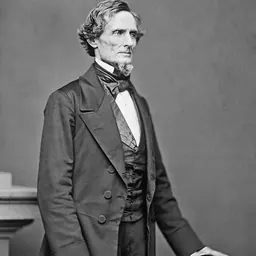
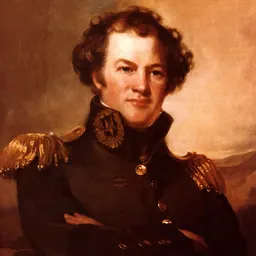



Related people
Same field, nearest in time
Contemporaries
People whose lives overlapped Samuel Cooper's






Frequently asked questions
Who was Samuel Cooper?
Adjutant and Inspector General of the armies of the Confederate States (1798–1876)
When was Samuel Cooper born?
Samuel Cooper was born on 12 June 1798 in Dutchess County, Wappinger.
When did Samuel Cooper die?
Samuel Cooper died on 3 December 1876 in Alexandria.
What was Samuel Cooper's occupation?
Samuel Cooper was a military officer and military personnel.
What nationality was Samuel Cooper?
Samuel Cooper was American.
Sources & further reading
· DBpedia: Samuel Cooper (general)
Cite this page
APA: Biography.guide. (2026). Samuel Cooper. https://biography.guide/samuel-cooper/
MLA: "Samuel Cooper." Biography.guide, https://biography.guide/samuel-cooper/.
Chicago: "Samuel Cooper." Biography.guide. https://biography.guide/samuel-cooper/.
Data last updated: 2026-09-20 · Spot an error? Report a correction.
Page generated 2026-09-27 05:20 UTC