
About Samuel Bamford
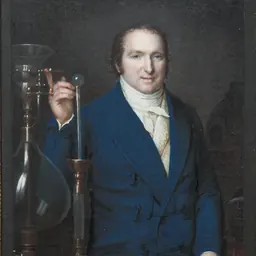
Lived 1788 – 1872 (aged 84). Samuel Bamford was a British politician, writer, poet and weaver.
Samuel Bamford (28 February 1788 – 13 April 1872) was an English radical reformer and writer born in Middleton, Lancashire. He wrote on the subject of northern English dialect and wrote some of his better known verse in it.
Biography Bamford was one of five children born to Daniel Bamford (a muslin weaver and part-time teacher, and later master of the Salford workhouse), and his wife, Hannah. He was baptised on 11 April 1788 at St Leonard's Church, Middleton.
After his father withdrew him from Manchester Grammar School, Bamford became a weaver and then a warehouseman in Manchester. Exposure to Homer's Iliad and to the poems of John Milton influenced Bamford to begin writing poetry himself.
Bamford and Mima had at least one child, born outside of wedlock. The "sweet infant, just of age to begin noticing things," was kept a secret and revealed to him the day after the couple married. According to Emma Griffin, Bamford and Mima's daughter, Ann, was six months old at the time and had been baptised in January 1810 under Jemima Sheppard's name. Griffin also notes that Bamford had another child out of wedlock to a "Yorkshire lass".
Radicalism Bamford's radical political beliefs led him to be heavily involved in resistance to the British government and to witness to several important historical events relating to working-class advocacy and public defiance.
Arrests for treason In 1817 he was remanded in jail to the New Bailey Prison in Salford on suspicion of high treason, on account of his political activities. From there he was taken to London and examined before the Privy Council, presided over by Lord Sidmouth as Home Secretary. After promising future good behaviour, Bamford was released and allowed to return to his cottage at Middleton with his wife Jemima.
In August 1819, he led a group from Middleton to St Peter's Fields for a meeting that pressed for parliamentary reform and repeal of the Corn Laws. There they witnessed the Peterloo Massacre, and Bamford was arrested and charged with treason. Although there was no evidence shown that either he or any of his group had been involved in the violence, he was found guilty of inciting a riot and sentenced to a year in Lincoln prison.
The massacre had a deep impact on Bamford, convincing him that state power always succeeded against radical militancy. He came to be seen as a voice for radical reform, but opposed to activism involving physical force.
Poetry and other writings Bamford was the author of poetry mostly in standard English, but of those in dialect, several that showed sympathy with the conditions of the working classes became widely popular. Around 1840 he also became associated with the Sun Inn Group, a collective of fellow working class poets who met regularly at the Sun Inn on Long Millgate in Manchester, where his status as a Peterloo veteran made him an inspiration for younger peers. This was also when he authored Passages in the Life of a Radical (1840–1844), his authoritative history of the condition of the working classes in the years after the Battle of Waterloo.
In 1850, he published Tawk o'Seawth Lankeshur, by Samhul Beamfort, which, following the first one written in standard English, even adds a second title page and publishing information in local dialect. It begins:
Continuing his interest in dialect, he also compiled The Dialect of South Lancashire in 1854.
Death and legacy In the 1871 England Census, taken the year before Bamford's death, he is recorded as living at 109 Hall Street, Harpurhey, as a widower, with a widowed housekeeper, Elizabeth Hilton.
Bamford died in Harpurhey on the 13th of April 1872 at the age of 84 and was given a public funeral in Middleton on the 20th, attended by several thousand people. A memorial obelisk unveiled in Middleton Cemetery in 1877 reads in part, "Bamford was a reformer when to be so was unsafe, and he suffered for his faith."
In 2000 The Diaries of Samuel Bamford were released, edited by Robert Poole and a critical Martin Hewitt, according to whom "Bamford's career, not least its virulent anti-Chartism, have tainted him with reformism, and left him to be invoked as an example of the weaknesses and limitations of early nineteenth-century working-class political assertion."
Don’t just read it —
keep it.
Full-length biographies made to live with: read them, listen on the way to work, watch them tonight.
- E-book
- Audio
- Video
Instant download · yours to keep · every purchase keeps this site free
Important facts
People in Samuel Bamford's life
Named in this biography and alive at the same time
Related people
Same field, nearest in time



Contemporaries
People whose lives overlapped Samuel Bamford's


Frequently asked questions
Who was Samuel Bamford?
English radical and writer (1788-1872)
When was Samuel Bamford born?
Samuel Bamford was born on 28 February 1788 in Middleton.
When did Samuel Bamford die?
Samuel Bamford died on 13 April 1872 in Harpurhey.
What was Samuel Bamford's occupation?
Samuel Bamford was a politician, writer, poet and weaver.
What nationality was Samuel Bamford?
Samuel Bamford was British.
Sources & further reading
Cite this page
APA: Biography.guide. (2026). Samuel Bamford. https://biography.guide/samuel-bamford/
MLA: "Samuel Bamford." Biography.guide, https://biography.guide/samuel-bamford/.
Chicago: "Samuel Bamford." Biography.guide. https://biography.guide/samuel-bamford/.
Data last updated: 2026-09-20 · Spot an error? Report a correction.
Page generated 2026-09-27 05:27 UTC