
About Samia Suluhu Hassan
Born 1960. Samia Suluhu Hassan is a Tanzanian politician and economist.
Samia Suluhu Hassan ( ; born 27 January 1960) is a Tanzanian politician and the sixth president of Tanzania, serving since 19 March 2021. She is the first woman to serve in the position and previously served as vice-president of Tanzania from 2015 to 2021, from which she ascended to the presidency following the death of her predecessor, John Magufuli.
A native of Zanzibar, Suluhu served as a minister in the semi-autonomous region from 2000 to 2010. She then served as the Member of Parliament for the Makunduchi constituency from 2010 to 2015 and was the Minister of State in the Vice-President's Office for Union Affairs from 2010 to 2015. In 2014, she was elected as the vice-chairperson of the Constituent Assembly tasked with the drafting of the country's new constitution. Suluhu became Tanzania's first female vice-president following the 2015 general election, after being elected on the Chama Cha Mapinduzi (CCM) ticket with Magufuli. Suluhu and Magufuli were re-elected to a second term in 2020.
As president, Suluhu implemented policies intended to limit the spread of the COVID-19 pandemic in Tanzania, which Magufuli had denied was a serious issue. Other focuses of her presidency have included the expansion of infrastructure and the globalisation of the Tanzanian economy through investors and tourism.
In the 2025 Tanzanian general election, her CCM government banned the main opposition party, Chadema, from taking part; the leader of the party, Tundu Lissu, was charged with treason and arrested. Early in her presidency she had a positive image as a reformer, but by early 2024–2025, ahead of the October 2025 election, she dropped the reformist image. As of 2026, her rule is increasingly viewed by scholars, independent right observers and media as being authoritarian, with Tanzania sliding deeper into a dictatorial-style of governance.
Early life and education Suluhu was born in the Sultanate of Zanzibar on 27 January 1960 to a teacher and his wife. Four years later, Zanzibar unified with Tanganyika to form the nation of Tanzania. She completed her secondary education in 1977, Their daughter Wanu Hafidh Ameir, born 1982, the couple's second child, became a member of the Zanzibar House of Representatives.
Suluhu pursued a number of short courses on a part-time basis. In 1986, she graduated from the Institute of Development Management (present-day Mzumbe University) with an advanced diploma in public administration. Between 1992 and 1994, she attended the University of Manchester and earned a postgraduate diploma in economics. She was the only high-ranking woman minister in the cabinet and was treated less seriously by her male colleagues because she was a woman. President Jakaya Kikwete appointed her as the Minister of State for Union Affairs. In 2014, she was elected as the Vice-Chairperson of the Constituent Assembly tasked with drafting the country's new constitution.
Suluhu was the vice-presidential candidate for the CCM in the 2015 general election, along with presidential candidate John Magufuli. She was an unexpected choice, as several more prominent and influential politicians were passed on for the role. She was the first female running mate in the party's history. They won the election, and they were sworn in on 5 November 2015. Suluhu became the first female Vice-President of Tanzania. A dispute emerged between Magufuli and Suluhu in 2016 in which questions of her loyalty were raised, but Suluhu then made public statements in support of Magufuli.
President of Tanzania
Ascension and swearing in On 17 March 2021, Suluhu announced that Magufuli had died after a long illness; Magufuli had not been seen in public since late February. She was sworn in on 19 March 2021 to serve the remainder of his second term. Opposition leaders had expressed concern about a possible vacuum when 18 March passed without Suluhu being sworn in. Out of public view, there was an effort by factions of the party to prevent her from becoming president, and she was the last of the senior government officials to be briefed on Magufuli's death. Immediately after being sworn in, Suluhu inspected troops at a military parade in her honour. To strengthen her position in the government, she dismissed Magufuli's closest allies, including Bashiru Ally and Palamagamba Kabudi. She also restored the positions of people who had been removed by Magufuli, such as January Makamba, Nape Nnauye, and Abdulrahman Kinana. Suluhu expanded her influence over the party by aligning with former president Jakaya Kikwete. and the second Zanzibari to hold the post, after Ali Hassan Mwinyi. She became one of only two serving female heads of state in Africa at the time she was sworn in, alongside Ethiopia's Sahle-Work Zewde, who held only a ceremonial role. The African Union's observer mission stated the election "did not comply" with regional or international standards, citing irregularities and the internet shutdown.
Numerous human rights organizations accused her government of authorizing the use of live ammunition against civilians. The main opposition party, Chadema, claimed it had documented up to 1,000 people killed, labelling the acts as crimes against humanity.
Presidential administration
The COVID-19 pandemic was ongoing when Suluhu became president. She reversed the denialist position on the COVID-19 pandemic in Tanzania held by Magufuli, and she entered Tanzania into the COVAX program to begin distribution of COVID-19 vaccines in July 2021. Mandatory 14-day quarantines for travellers entering Tanzania from countries with cases of new variants of SARS-CoV-2 were imposed. Suluhu permitted embassies and other international organisations to import vaccines into the country to vaccinate foreign nationals for their Tanzanian day-to-day work, aided by the Ministry of Health.
Since becoming president, Suluhu has pledged to see that the flagship development projects that were initiated by Magufuli are completed on time. She has also approved new development projects. Projects that she prioritised include establishing a railway line, building a hydropower plant, and making electricity and clean water available in rural Tanzania.
Suluhu filmed a movie, The Royal Tour, with journalist and filmmaker Peter Greenberg in early 2021 with the intention of promoting tourism and getting investors interested in Tanzania. Suluhu became the fifth African woman to address the United Nations General Assembly in September 2021. She reorganised her presidential cabinet in January 2022 to ensure that it was populated by loyalists,
Suluhu adopted a more internationalist approach rather than the isolationism of her predecessor, and she has sought to entice both investors and tourists. Suluhu took a neutral stance on the Russian invasion of Ukraine, saying that they should negotiate peace and that "we don't know why they are fighting". By 2024, she began appealing to the supporters of her predecessor by appointing Magufuli loyalists like Doto Biteko and Paul Makonda to government positions.
Style of governance Writers for France 24, The New York Times, and New Internationalist have all described Suluhu as "soft-spoken". Suluhu herself has referenced her quiet demeanour. Suluhu is sometimes known as Mama Samia, a name meant to indicate reverence.
When she became president, Suluhu was seen by the public and outside observers as a more democratically-inclined alternative to Magufuli, who had developed a reputation as an authoritarian.
Drift to authoritarian tendencies Samia Suluhu Hassan's style of governance is described by observers as having taken an authoritarian drift, particularly marked by the severe repression of the post-election unrest in October 2025. According to UN reports, the security forces' response to the protests resulted in hundreds of deaths, injuries, and mass detentions, amid allegations of live ammunition being used against civilians. Observers warn that this repression and pattern of abuses could, subject to investigation and legal assessment, amount to mass atrocities or crimes against humanity.
Opposition leaders and activists have been arrested under her tenure and at least one has been found dead; protests have erupted against the alleged disappearing and killings of government critics by the security forces, leading to more arrests. The Economist wrote in 2025 that Tanzania was experiencing "state brutality", with "scores" of opposition figures disappearing. Suluhu's meetings and reconciliation with opposition leaders have conversely received criticism within her own party. The designation was attributed to the scale of the post-election repression and the government's use of a nationwide internet shutdown to restrict information. Specific reports from Amnesty International highlighted atrocities in Mbeya and Mwanza, including allegations of security forces entering private residences to conduct extrajudicial executions and the subsequent use of mass graves to dispose of casualties. These events led human rights observers to describe her tenure as a definitive departure from her initial "pro-democracy" rhetoric.
Reelection campaign
In January 2025, CCM nominated Suluhu as its presidential candidate for the 2025 Tanzanian general election in October. On 27 August, the Independent National Electoral commission (INEC) approved her candidacy, soon after opposition candidate Luhaga Mpina was barred from running by the INEC and the Registrar of Political Parties. The major opposition party Chadema was also barred from participation in the election. Protests were held in October, causing a military crackdown and Internet connectivity has been intermittent. In November, it was announced that she had won the election with 97% of the vote. She was sworn into office on 3 November at a ceremony that was closed to the public.
Suluhu will not be eligible for a second full term in 2030. Under the Tanzanian Constitution, if a vice-president ascends to the presidency with more than three years remaining in the term, they are only eligible for one full five-year term.
Honours, awards and recognition
Honours Year Country Order 2023 Order of South Africa 2024 Order of the Revolution for Leaders with Unique Characteristics 2025 Order of the Mother of the Nation
Awards
2022: Africa Road Builders – Babacar Ndiaye Trophy 2022: CARE International – CARE Impact Award for Women's Inspirational Leadership 2023: Key to the City of Lilongwe 2023: Ranked in Forbes list of "World's 100 most powerful women".
Honorary academic awards
Filmography +Film Year Title Role Notes 2022 The Royal Tour Tanzania Herself Documentary film 2023 The Hidden Tanzania Herself Pre-production
Don’t just read it —
keep it.
Full-length biographies made to live with: read them, listen on the way to work, watch them tonight.
- E-book
- Audio
- Video
Instant download · yours to keep · every purchase keeps this site free
Important facts
People in Samia Suluhu Hassan's life
Named in this biography and alive at the same time



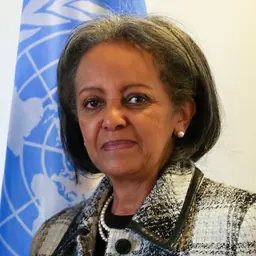




Related people
Same field, nearest in time





Contemporaries
People whose lives overlapped Samia Suluhu Hassan's




Frequently asked questions
Who is Samia Suluhu Hassan?
President of Tanzania since 2021
When was Samia Suluhu Hassan born?
Samia Suluhu Hassan was born on 27 January 1960 in Makunduchi, Zanzibar City.
What is Samia Suluhu Hassan's occupation?
Samia Suluhu Hassan is a politician and economist.
What nationality is Samia Suluhu Hassan?
Samia Suluhu Hassan is Tanzanian.
Sources & further reading
· Wikipedia: Samia Suluhu Hassan
· DBpedia: Samia Suluhu Hassan
Cite this page
APA: Biography.guide. (2026). Samia Suluhu Hassan. https://biography.guide/samia-suluhu-hassan/
MLA: "Samia Suluhu Hassan." Biography.guide, https://biography.guide/samia-suluhu-hassan/.
Chicago: "Samia Suluhu Hassan." Biography.guide. https://biography.guide/samia-suluhu-hassan/.
Data last updated: 2026-09-26 · Spot an error? Report a correction.
Page generated 2026-09-27 05:14 UTC