
About Sami al-Jundi
Lived 1921 – 1996 (aged 74–75). Sami al-Jundi was a Syrian physician and politician.
Sami al-Jundi (; 15 December 1921 – 14 December 1995) was a Syrian Ba'athist politician, and a follower of Michel Aflaq.
Life Sami was born to a Sunni father, but hails from a family that is mixed Ismaili-Sunni. An older cousin of Abd al-Karim al-Jundi, Jundi was born to a scholarly family in Salamiyah. He studied dentistry at Damascus University, graduating in 1944. Initially attracted to Arab nationalism by Zaki al-Arsuzi, he joined the Ba'ath Party of Michel Aflaq and Salah al-Din al-Bitar in 1947. In the 1950s he joined Gamal Abdel Nasser's Arab nationalist movement, and Nasser appointed him director of information and propaganda after Egypt and Syria merged as the United Arab Republic in 1958. After the 1961 Syrian coup installed Nazim al-Qudsi, Jundi lost his job, but after the 1963 Syrian coup he became minister of information in Salah al-Bitar's cabinet. He was also official spokesman for the Revolutionary Command Council (RCC).
The RCC named Jundi prime minister, delegating him to form a cabinet on 11 May 1963, but he failed to do so and resigned three days later. He was minister of information, culture and national guidance in Prime Minister Bitar's second cabinet, and remained in government under President Amin al-Hafez until October 1964. In 1964 he became ambassador to France.
Works Arab wa Yahud [Arabs and Jews], Beirut, 1968 Sadiqi Ilyas [My friend Ilyas], Beirut, 1969 Al Ba`th [The Ba`th], Beirut, 1969 Athadda wa Attahim [I challenge and I accuse], Beirut, 1969
Origins of the Ba'ath As a school student, al-Jundi attended political lectures of Arsuzi and became the secretary of a tiny group that called itself the Arab Resurrection (Ba'ath) Party. Of that period he wrote: We lived through this hope, strangers in our society which gradually increased our isolation: rebels against all the old values, enemies to all the conventions of humanity, rejecting all ceremonies, relationships and religions. We sought the fight everywhere we were an unrelenting pickaxe. ...
We were racialists [’irqiyyin], admiring Nazism, reading its books and the source of its thought, particularly Nietzsche's Thus Spake Zarathustra, Fichte's Addresses to the German Nation, and H. S. Chamberlain's Foundations of the Nineteenth Century, which revolves on race. We were the first to think of translating Mein Kampf.
Whoever has lived during this period in Damascus will appreciate the inclination of the Arab people to Nazism, for Nazism was the power which could serve as its champion, and he who is defeated will by nature love the victor. But our belief was rather different. ...
We were idealists, basing social relationships on love. The Master [Arsuzi] used to speak about Christ, and I think he was influenced by Nietzsche's The Origin of Tragedy. He took the pre-Islamic period for his ideal, calling it the golden age of the Arabs. Arsuzi's group disbanded in 1944, but most of the members belonged as well to Michel Aflaq's group, also called the Ba'ath, that grew in the Syrian Ba'ath Party.
Don’t just read it —
keep it.
Full-length biographies made to live with: read them, listen on the way to work, watch them tonight.
- E-book
- Audio
- Video
Instant download · yours to keep · every purchase keeps this site free
Important facts
People in Sami al-Jundi's life
Named in this biography and alive at the same time
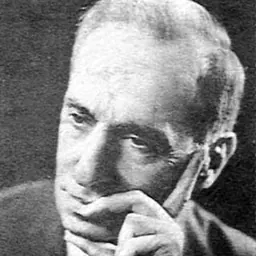

Related people
Same field, nearest in time



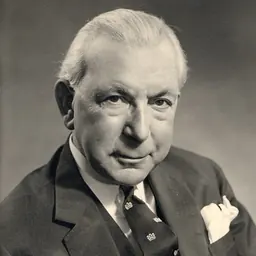
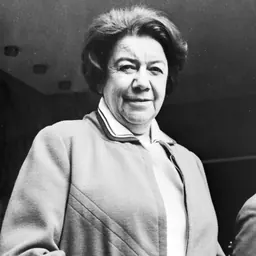
Contemporaries
People whose lives overlapped Sami al-Jundi's




Frequently asked questions
Who was Sami al-Jundi?
Syrian politician (1921–1995)
When was Sami al-Jundi born?
Sami al-Jundi was born on 15 December 1921 in Salamiyah.
When did Sami al-Jundi die?
Sami al-Jundi died in 1996 in Damascus.
What was Sami al-Jundi's occupation?
Sami al-Jundi was a physician and politician.
What nationality was Sami al-Jundi?
Sami al-Jundi was Syrian.
Sources & further reading
Cite this page
APA: Biography.guide. (2026). Sami al-Jundi. https://biography.guide/sami-al-jundi/
MLA: "Sami al-Jundi." Biography.guide, https://biography.guide/sami-al-jundi/.
Chicago: "Sami al-Jundi." Biography.guide. https://biography.guide/sami-al-jundi/.
Data last updated: 2026-09-26 · Spot an error? Report a correction.
Page generated 2026-09-27 05:15 UTC