
Salomon Morel
Holocaust survivor accused of war crimes by Polish government
About Salomon Morel
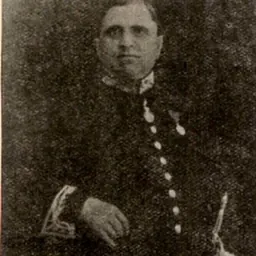
Lived 1919 – 2007 (aged 87). Salomon Morel was a Polish and Israeli civil servant, torturer and ministry of Public Security (Poland), known for Jaworzno concentration camp and Zgoda labour camp.
Salomon Morel (November 15, 1919 – February 14, 2007) was an officer in the Ministry of Public Security in the Polish People's Republic, and a commander of concentration camps run by the NKVD and communist authorities until 1956.
After Nazi Germany occupied Poland, Morel and his family went into hiding to avoid being placed in one of the Jewish ghettos in German-occupied Poland. Both Salomon and his brother survived part of the war and Holocaust under the protection of a local Polish farmer, before joining communist partisans.
In 1944 Morel became warden of the Soviet NKVD prison at Lublin Castle. During most of 1945, he was commander of the Zgoda labour camp in Świętochłowice. of more than 1,500 prisoners in Upper Silesia, most of whom were either native speakers of Silesian German or Polish political prisoners. After his case was publicized by the Polish, German, British, and American media, Morel fled to Israel and was granted citizenship under the Law of Return. Poland twice requested his extradition, once in 1998 and once in 2004, but Israel refused to comply and rejected the more serious charges as being false and again rejected extradition on the grounds that the statute of limitations against Morel had run out and that Morel was in poor health. Polish authorities responded by accusing Israel of applying a double standard, and the controversy over Morel's extradition continued until his death. Solomon Morel and his brother Izaak survived the Holocaust hidden by Józef Tkaczyk, a Polish Catholic. In 1983, Józef Tkaczyk was designated as one of the Righteous Among the Nations by Yad Vashem for saving the Morel brothers.
The Israeli mass media and government presented yet a different version of his life. Gerhard Gruschka, a local Upper Silesian of Polish descent, was imprisoned in Zgoda when he was 14 years old and wrote a book about his experiences, detailing the endemic torture and abuse in the camp. Keith Lowe notes that "when millions of bruised and destitute refugees began flooding into Germany in the autumn of 1945, they brought with them some disturbing stories of places they called 'hell camps', 'death camps' and 'extermination camps'". Zgoda camp was among the most notorious of these camps, and is discussed in detail by Lowe. Lowe notes that survivors' stories of Zgoda and other camps had a profound impact on West German society and that their stories were taken extremely seriously by the German government and the general population as examples of Stalinist brutality.
Commander of Jaworzno concentration camp
From February 1949 to November 1951 Morel was commander of Jaworzno concentration camp, a Stalinist-era concentration camp for political prisoners (designated "enemies of the nation") in Poland. By that time he already had a reputation in Poland as an "exceptional sadist." During Morel's time as the commandant the prisoners were primarily Poles who were arrested for their opposition to Stalinism, and included soldiers of the Polish Home Army and members of other Polish underground resistance organisations such as Freedom and Independence that was active from 1945 to 1952. Prisoners were often tortured and subjected to forced labor. Morel left the camp when it was turned into a camp for adolescent political prisoners.
Later career Morel continued working as commandant of Stalinist-era concentration camps until 1956. When the Polish October weakened the hard-line Stalinist faction in Poland, the Stalinist concentration camps were closed down. After 1956, Morel worked in various prisons in Silesia and was promoted to the rank of colonel in the political police, the MBP. In the 1960s he was head of a prison in Katowice. As Morel was both Jewish and had a background as head of Stalinist-era concentration camps, he became an obvious target for the 1968 campaign. Unlike most other Polish Jews, and although the Polish communist government pressured Jews to emigrate, Morel nevertheless chose to remain in Poland, and lived there as a retiree from the age of 49. Fearing prosecution, Morel emigrated to Israel in 1992. The indictment was later amended to include war crimes, crimes against humanity and communist crimes. The latter charge was added in 2004 and constitutes a specific crime under Polish criminal law.
Don’t just read it —
keep it.
Full-length biographies made to live with: read them, listen on the way to work, watch them tonight.
- E-book
- Audio
- Video
Instant download · yours to keep · every purchase keeps this site free
Important facts
People in Salomon Morel's life
Named in this biography and alive at the same time

Related people
Same field, nearest in time



Contemporaries
People whose lives overlapped Salomon Morel's



Frequently asked questions
Who was Salomon Morel?
Holocaust survivor accused of war crimes by Polish government (1919–2007)
When was Salomon Morel born?
Salomon Morel was born on 15 November 1919 in Garbów.
When did Salomon Morel die?
Salomon Morel died on 14 February 2007 in Tel Aviv.
What was Salomon Morel's occupation?
Salomon Morel was a civil servant, torturer and ministry of Public Security (Poland).
What was Salomon Morel known for?
Salomon Morel was known for Jaworzno concentration camp and Zgoda labour camp.
What nationality was Salomon Morel?
Salomon Morel was Polish and Israeli.
Sources & further reading
Cite this page
APA: Biography.guide. (2026). Salomon Morel. https://biography.guide/salomon-morel/
MLA: "Salomon Morel." Biography.guide, https://biography.guide/salomon-morel/.
Chicago: "Salomon Morel." Biography.guide. https://biography.guide/salomon-morel/.
Data last updated: 2026-09-25 · Spot an error? Report a correction.
Page generated 2026-09-27 05:11 UTC