
About Salman Akhtar
Born 1946. Salman Akhtar is an American psychologist, poet, psychiatrist, psychoanalyst and university teacher.
Salman Akhtar (born 31 July 1946) is an Indian-American psychoanalyst practicing in the United States. He is an author, poet, and Professor of Psychiatry and Human Behavior at Jefferson Medical College in Philadelphia.
Early life Salman Akhtar was born in Khairabad, Uttar Pradesh to Jan Nisar Akhtar, a Bollywood film songwriter and Urdu poet, and Safia Akhtar, a teacher and writer. Akhtar's mother died when he was still young. His grandfather, Muztar Khairabadi, was a poet while his great great grandfather, Fazl-e-Haq Khairabadi, was a scholar of Islamic studies and theology and played an important role in the Indian Rebellion of 1857. He is the brother of veteran poet and film lyricist Javed Akhtar and brother-in-law of actress and social activist Shabana Azmi. His son Kabir Akhtar is an American television director and Emmy-nominated editor. His daughter Nishat Akhtar is an artist and a graphic designer. Through Akhtar's interview with Kamayani Vashisht, in the town where he grew up, and then received his M.B.B.S. degree at Aligarh Muslim University's Medical School (JNMC) in India. After completing Medical School, Salman Akhtar did his internship at Maulana Azad Medical College of the University of Delhi in India. He completed post-graduate medical education in psychiatry at PGIMER Chandigarh under Psychiatrist N. N. Wig. During this time, he wrote an article "A phenomenological analysis of symptoms in obsessive-compulsive neurosis". He moved to the United States in 1973 and repeated his psychiatric training at the University of Virginia Medical Center in 1976. He obtained psychoanalytic training from the Philadelphia Psychoanalytic Institute in 1986.
Currently, he is Professor of Psychiatry & Human Behavior at Jefferson Medical College and psychiatrist at the Jefferson University Hospital as well as a Training and Supervising Analyst at the Psychoanalytic Center of Philadelphia. He has served on the editorial boards of the International Journal of Psychoanalysis, the Journal of the American Psychoanalytic Association, and The Psychoanalytic Quarterly. Recent peer-reviewed articles include: On the "Contributors" page, he is recognized for numerous of his accomplishments. One of the awards and honors that he has received is the 2012 Sigourney Award. In addition to the many titles he holds, his acknowledgements include his 108 published books as of this journal's publication in 2023. Out of these 108 published books, 41 of them were written by Akhtar alone.
He holds a board certification for the American Board of Psychiatry and Neurology, for which he is certified in Psychiatry. among Urdu poets. A popularized version of Urdu Poetry is Ghazal, which Akhtar has shared thoughts on among this community. He states that ghazals can be spoken or sung. Akhtar comments on the idea of a "bad sher" which refers to a poorly-written couplet in Urdu poetry. It is unknown just how many Akhtar has composed, but at least 24 of them can be found on online collections. His first poetry collection, titled Kubaku, was published in 1976.
"Bad sher" In his interview with Kamayani Vashisht,
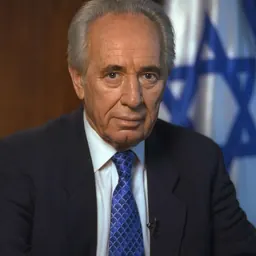
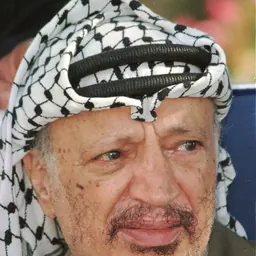
Akhtar also touches on the idea of "immigrant nostalgia" which he identifies as immigrants thinking of their homeland and thus living in the past, disorienting them from the reality of the time they're in. This explanation provided by Akhtar is applied to the movie as justification for the characters behaving with pathological nostalgia. He focuses on an analytical approach and setting, which encompass unmentalised, structural, symbolic, and defensive/enactive silences. Akhtar goes into detail about what is deemed as "full silences" and expands upon both regenerative and contemplative silences. Akhtar is referenced in relation to his study on environmental dislocation and ecological self. Akhtar studied migration as it relates to human mental state and identity, and in turn how human beings can develop a better and more profound ecological self. His research centers around the effect that migration has on a person in terms of age when leaving their original place. Akhtar makes the point of he himself immigrating to the United States, and, in turn, feeling like there was a lack of consideration for different cultures in his field of study. Akhtar's different methods of listening that he believes psychoanalysts use are highlighted by Marsilli-Vargas. These various methods that psychoanalysts might employ include subjective, objective, intersubjective, and empathetic listening. Marsilli-Vargas uses the studies from Akhtar's book "Psychoanalytic Listening" to research genres of listening for his work. The genres he studies include Akhtar's list of employed methods while simultaneously expanding and discussing new genres of listening. Akhtar is said to have focused on the idea of "forgiveness" in terms of psychoanalysis. There was a gap in knowledge about the "forgiveness phenomena" until the 1990's and Akhtar was one of the psychoanalysts attempting to change that. Akhtar believed that Sigmund Freud was responsible for this gap since Freud did not believe "forgiveness" needed or warranted scientific observation and notice. Akhtar believed it belonged in a different area of psychoanalysis, but belonged in psychoanalysis nevertheless. He uses examples like the handshake between Yitzhak Rabin and Yasser Arafat from 1995 as an example of forgiveness. Ophir points out that Akhtar does not recognize the lack of a handshake between the Shimon Peres and Arafat due to Rabin's intervention. This act could negate Akhtar's point and possibly symbolize a lack of forgiveness present. Ophir then makes the point that this lack of a handshake, while uncourteous, might actually be a sign that the forgiving interaction is real and authentic because of how much work still needed to be done to bring peace between Palestine and Israel.
Don’t just read it —
keep it.
Full-length biographies made to live with: read them, listen on the way to work, watch them tonight.
- E-book
- Audio
- Video
Instant download · yours to keep · every purchase keeps this site free
Important facts
Family & relationships
People in Salman Akhtar's life
Named in this biography and alive at the same time




Related people
Same field, nearest in time




Contemporaries
People whose lives overlapped Salman Akhtar's


Frequently asked questions
Who is Salman Akhtar?
Indian psychoanalyst and poet
When was Salman Akhtar born?
Salman Akhtar was born on 31 July 1946 in Khairabad.
What is Salman Akhtar's occupation?
Salman Akhtar is a psychologist, poet, psychiatrist, psychoanalyst and university teacher.
What nationality is Salman Akhtar?
Salman Akhtar is American.
Sources & further reading
Cite this page
APA: Biography.guide. (2026). Salman Akhtar. https://biography.guide/salman-akhtar/
MLA: "Salman Akhtar." Biography.guide, https://biography.guide/salman-akhtar/.
Chicago: "Salman Akhtar." Biography.guide. https://biography.guide/salman-akhtar/.
Data last updated: 2026-09-22 · Spot an error? Report a correction.
Page generated 2026-09-27 05:20 UTC