
About Salmaan Taseer
Lived 1944 – 2011 (aged 66). Salmaan Taseer was a Pakistani and Indian politician, businessperson, entrepreneur, chartered accountant and writer.
Salman Taseer (; 4 January 2011) was a Pakistani businessman and politician, who served as the 34th Governor of Punjab from May 2008 until his assassination in January 2011.
A member of the Pakistan Peoples Party since the 1980s, he was elected to the Punjab Assembly from Lahore in the 1988 election, however lost in the 1990, 1993 and 1997 elections. Taseer served as a minister in the caretaker cabinet of Prime Minister Muhammad Mian Soomro under Pervez Musharraf during the 2008 elections. He was appointed as the governor of Punjab on 15 May 2008, by then-President Musharraf at the request of Prime Minister Yousaf Raza Gillani. During his governorship, he emerged as an outspoken critic of Pakistan's blasphemy laws and consequently called for the pardon for a blasphemy accused Asia Bibi.
Born in Shimla in British India, Taseer studied at the St. Anthony's School and the Government College University, Lahore before moving to London where he studied accountancy at the Institute of Chartered Accountants in England and Wales. In 1994, Taseer established a brokerage house backed by the Smith Barney and in 1996 he founded the Worldcall Group. In 2000s, he ventured into media, launching Business Plus and Daily Times.
On 4 January 2011, Taseer was assassinated at the Kohsar Market in Islamabad by his bodyguard Mumtaz Qadri. Qadri disagreed with Taseer's opposition to Pakistan's blasphemy law, perceiving Taseer's moderate views as an insult to Islam. The Guardian described Taseer's murder as "one of the most traumatic events in recent Pakistani history." A nationwide three-day state of mourning was held in Pakistan, Taseer's funeral prayers were held at the Governors House in Lahore. Taseer's son, Shahbaz, was kidnapped by the Pakistani Taliban in 2011, before being released in 2016, a few months after Taseer's murderer was hanged. Taseer's other son, Shaan, is a leading critic of the country's blasphemy law.
Early life and education Taseer was born on 31 May 1944, in Shimla, British India, to a mixed-race family, being of Kashmiri descent on his father's side and of English descent on his mother's side. His father was Muhammad Din Taseer (M. D. Taseer), who hailed from Ajnala near Amritsar, and was a professor at Mohammedan Anglo-Oriental College, Amritsar, having obtained his PhD in the United Kingdom. Taseer's mother was Christobel George, a British woman who, upon her wedding, converted to Islam and took the name Bilqis. Taseer and his two sisters were brought up by their mother in relative poverty, in an environment with strong Christian influences. He had little immersion in Pakistani culture, because his mother didn't stay in contact with her late husband's family.
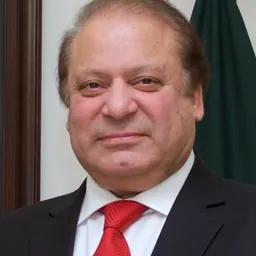
Taseer attended St. Anthony's School where he was a classmate of Nawaz Sharif. Aatish is a freelance journalist in the UK and has written a book – Stranger to History: A Son’s Journey through Islamic Lands – about his estranged relationship with his biological father.
The other relationship that did not end in marriage was also with an Indian, actress Simi Garewal. His year-long affair with Garewal began in Dubai and ended when he married Aamna Taseer.
Political career Taseer started his political career in his student era as a member of Zulfikar Ali Bhutto's Pakistan Peoples Party (PPP) in the late 1960s. He was a part of the movement for Bhutto's freedom and opposed his arrest and death sentence.
In the 1988 general elections, Taseer became a member of the Punjab Assembly from Lahore. Evidence provided by ICAO on the governor's travel abroad led to a case being filed in court for breach of the constitution.
Business career Taseer set up several chartered accountancy and management consultancy firms early in his career. In 1995 he established the First Capital Securities Corporation (FCSC), a full-service brokerage house with equity participation by Smith Barney, Inc., USA, and HG Asia Hong Kong.
In 2001, Taseer founded Media Times which operated an English news channel in Pakistan, Business Plus; a children's channel, Wikkid Plus; a cooking channel, Zaiqa; and published an English-language newspaper Daily Times and an Urdu-language newspaper Aaj Kal.
Assassination In an interview with Meher Bukhari on Samaa TV, Taseer commented on his view about the country's blasphemy law and on filing a mercy petition for Asia Bibi, who was sentenced to death by a court under the law.
On 4 January 2011, one of Taseer's bodyguards, Malik Mumtaz Qadri, shot him 27 times with an AK-47 assault rifle at Kohsar Market, near his home in Sector F6, Islamabad, as he was returning to his car after meeting a friend for lunch. Kohsar Market is a popular shopping and cafe spot for the city's elite and expatriates.
The next day, just hundreds of people turned up for his funeral in Lahore in spite of denunciations by some Sunni clerics and religious scholars against mourning Taseer. Prime Minister Yousuf Raza Gilani and many supporters of the ruling PPP were seen attending the funeral prayer. The funeral prayers were finally led by Allama Afzal Chisti of the Ulema wing of the PPP after the chief cleric of the Badshahi Mosque, who had initially agreed to offer prayers, backed off at the last moment, saying he was going out of town. Taseer was buried at a military cantonment in Lahore.
The assassin Malik Mumtaz Hussain Qadri was from Punjab, and was part of the security detail provided to Taseer by the Elite Police, which also provided protection for other high-profile figures in Lahore including personnel assigned to the American Consulate in Lahore. After the shooting, Qadri threw his weapon down. He reportedly pleaded to be arrested. After the murder, more than 500 clerics voiced support for the murder and urged a general boycott of Taseer's funeral as he supported a blasphemer. Supporters of Mumtaz Qadri blocked police attempting to bring him to the Anti-Terrorism Court in Rawalpindi, and some supporters showered him with rose petals. On 1 October 2011, Qadri was sentenced to death by a Pakistani Anti Terrorist court at Islamabad for murdering Taseer. Qadri was executed on 29 February 2016. Qadri's execution was greeted by "an outpouring of public sympathy" with protests held across the country and an estimated 30,000 attended his funeral, chanting slogans.
Don’t just read it —
keep it.
Full-length biographies made to live with: read them, listen on the way to work, watch them tonight.
- E-book
- Audio
- Video
Instant download · yours to keep · every purchase keeps this site free
Important facts
Family & relationships
People in Salmaan Taseer's life
Named in this biography and alive at the same time






Related people
Same field, nearest in time




Contemporaries
People whose lives overlapped Salmaan Taseer's


Frequently asked questions
Who was Salmaan Taseer?
Pakistani politician (1944-2011)
When was Salmaan Taseer born?
Salmaan Taseer was born on 31 May 1944 in Shimla.
When did Salmaan Taseer die?
Salmaan Taseer died on 4 January 2011 in Kohsar Market.
What was Salmaan Taseer's occupation?
Salmaan Taseer was a politician, businessperson, entrepreneur, chartered accountant and writer.
What nationality was Salmaan Taseer?
Salmaan Taseer was Pakistani and Indian.
Sources & further reading
Cite this page
APA: Biography.guide. (2026). Salmaan Taseer. https://biography.guide/salmaan-taseer/
MLA: "Salmaan Taseer." Biography.guide, https://biography.guide/salmaan-taseer/.
Chicago: "Salmaan Taseer." Biography.guide. https://biography.guide/salmaan-taseer/.
Data last updated: 2026-09-26 · Spot an error? Report a correction.
Page generated 2026-09-27 05:16 UTC