
Sallie Fox
American pioneer
About Sallie Fox
Lived 1845 – 1913 (aged 67–68).
Sarah Estelle Fox Allen (1845 – 7 February 1913) was a California pioneer and a member of the ill-fated Rose–Baley Party, the first emigrant wagon train to attempt the journey from New Mexico to California via Beale's Wagon Road. A twelve-year-old child when she traveled on the wagon train, she was the subject of the 1995 children's book Sallie Fox: The Story of a Pioneer Girl. The apron that she wore over her dress when she was seriously injured by a Mojave Indian arrow during the 1858 attack on the Rose–Baley wagons is displayed in the Vacaville Museum which also holds an annual "Sallie Fox Day".
Early life Sallie Fox was born in 1845, the second daughter of Aaron Moses and Mary (née Baldwin) Fox. Her father, a farmer in Southeastern Ohio, died when she was an infant. Mary subsequently moved with their two young daughters, Sallie and Sophia Frances, to Van Buren County, Iowa where her family were living. There, the "Widow Fox", as she was known, married Alpha Brown, himself recently widowed with two daughters, one of whom was an invalid. Mary and Alpha Brown had two more children of their own, a daughter Julia and a son Orrin. The Brown family were also attracted to a new life in California and decided to join Rose. Mary's brother George and her married sisters were already living there. Alpha Brown was taken on as the foreman of Rose's wagon train, and he, Mary, and the five Fox-Brown children (Sallie and Sophia Fox and Relief, Julia, and Orrin Brown) began their trek west in late April 1858. (Alpha Brown's eldest daughter, Mary Ann, was 21 at the time and did not make the trip.) On reaching Zuni Pueblo The Rose–Baley Party headed onto Beale's Wagon Road.
As the emigrants were preparing to cross the Colorado River into California on 30 August, they were attacked by Mohave Indians. Sallie Fox had seen some of them approaching and screamed: "The Indians are coming and are going to kill us!".
Despite the extreme hardship and deprivation of the journey, most of the remaining Rose–Baley Party made it back to Albuquerque. They were aided by two west-bound wagon trains which they encountered at White Springs, just east of what is now Kingman, Arizona. One of these wagon trains was led by Edward O. Smith who would later bring Mary Brown and her surviving children to California. On hearing their story, the wagon trains shared their provisions with the survivors and turned back to accompany them to Albuquerque. In later life, Mary Brown recalled that "to keep from going crazy" on the trek back, she would unravel a stocking and re-knit it over and over again. She had carried her youngest child, Orrin, on the family's only surviving horse. When the horse died, she walked, carrying him in her arms until Edward Smith provided them with a wagon from his own train. Orrin became ill and died shortly before their arrival in Albuquerque in November 1858. He was buried in an unmarked grave outside the town. Sallie's half-sister Julia wrote in 1881: We stood around it [the grave], watering it with tears, and we knew, having once left it, we never should see it again. We gathered stones and put upon it, to prevent the digging of wolves; and then, having done all, we looked at each other, dreading to go. We had grown stoical with starvation and danger, and we had each a knowledge of death from having stared him in the face so often; but, as my mother turned, in the wagon, to look her last upon the lonely hillside, an agonized cry broke from the lips she had forced shut: "Oh, my boy, my boy! How can I leave him there?"
In Albuquerque, Alpha Brown's fellow Freemasons looked after his destitute family and found them lodging. Sallie Fox's wound eventually healed, but not before she passed through a dangerous period of high fever and delirium.
In 1913, Sarah Fox Allen (as Sallie Fox was known in later life) died at the age of 67 in a Masonic nursing home in Napa, California. Her funeral service was held at the family home in Oakland. Her half-sister Julia Brown Foster died in 1927 at her home in Berkeley. According to Charles Baley in Disaster at the Colorado, Julia is believed to have been the last surviving member of the Rose–Baley Party.
Legacy Sallie Fox was the subject of the 1995 children's book Sallie Fox: The Story of a Pioneer Girl by Dorothy Kupcha Leland. A slightly fictionalized account of her family's trek to California, the book is among the California Department of Education's recommended resources for elementary school children. When Sallie had first arrived at her aunt and uncle's ranch in Vacaville, she planted four walnuts that she had gathered along the Gila River while traveling with Edward Smith's wagon train. One of them grew into a huge tree, which became a local landmark and gave its name to Vacaville's Nut Tree Restaurant, Nut Tree Airport, and Nut Tree Railroad. Although the tree was destroyed by a storm in 1952, other trees grown from the walnuts it produced remain on the site. The dress she wore when she was injured by the Mohave Indian arrow is displayed in the Vacaville Museum, which also holds an annual "Sallie Fox Day".
Much of the published information about Sallie Fox's life is based on the papers of her daughter Edith Allen Milner, who collected and transcribed her mother's reminiscences. Milner's manuscripts and a copy of Sallie Fox's description of her family's journey to California, which she read out at Edward O. Smith's funeral in 1892, are held in the library of the California Historical Society. Another unpublished manuscript by Milner, "Covered Wagon Experiences", is held by the Arizona Historical Society. Joseph Warren Cheney's "The Story of An Emigrant Train", published in The Annals of Iowa in 1915 also contains descriptions of Alpha Brown's family, the Rose–Baley wagon train, and its aftermath, as does John Udell's diary, published in 1859 and republished in 1946.
Don’t just read it —
keep it.
Full-length biographies made to live with: read them, listen on the way to work, watch them tonight.
- E-book
- Audio
- Video
Instant download · yours to keep · every purchase keeps this site free
Important facts
People in Sallie Fox's life
Named in this biography and alive at the same time
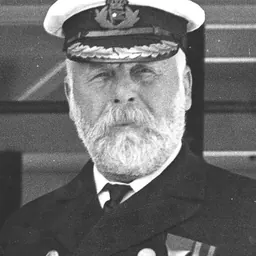
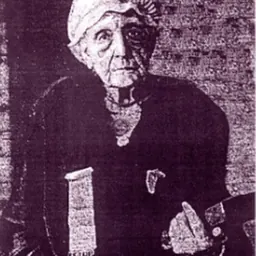

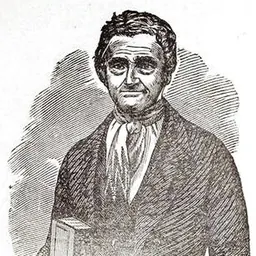


Contemporaries
People whose lives overlapped Sallie Fox's
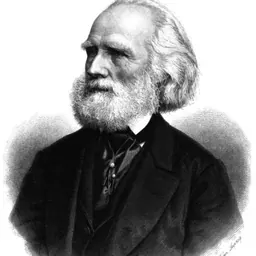



Frequently asked questions
Who was Sallie Fox?
American pioneer (1845–1913)
When was Sallie Fox born?
Sallie Fox was born in 1845 in Southeast Ohio.
When did Sallie Fox die?
Sallie Fox died on 7 February 1913 in Napa.
What was Sallie Fox known for?
Sallie Fox was known for American pioneer.
Sources & further reading
Cite this page
APA: Biography.guide. (2026). Sallie Fox. https://biography.guide/sallie-fox/
MLA: "Sallie Fox." Biography.guide, https://biography.guide/sallie-fox/.
Chicago: "Sallie Fox." Biography.guide. https://biography.guide/sallie-fox/.
Data last updated: 2026-09-20 · Spot an error? Report a correction.
Page generated 2026-09-27 05:30 UTC