
About Salim Hamdan
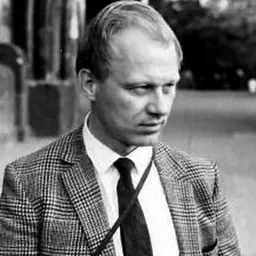
Born 1968. Salim Hamdan is a Yemeni chauffeur, bodyguard and association football player.
Early life Salim Hamdan was born in 1968 in Wadi Hadhramaut, Yemen. He was raised as a Muslim.
He married and had daughters with his wife. Initially held in Afghanistan, he was transferred to then newly opened Guantanamo Bay detention camp in 2002.
Trial timeline On July 14, 2004, the Department of Defense formally charged Salim Ahmed Hamdan with conspiracy, for trial by military commission under the President's Executive Order of November 13, 2001. On October 22, 2004, General John D. Altenburg, the retired officer in overall charge of the commissions, removed three of the six original Military Commission members to avoid the potential of bias.
On November 8, 2004, the United States District Court for the District of Columbia halted Hamdan's military commission because no "competent tribunal" had determined whether Mr Hamdan was a POW (as required by the Geneva Conventions), and because regardless of such determination, the commission violated the procedures of the Uniform Code of Military Justice (UCMJ). The Bush administration appealed the ruling.
In the meantime, the Department of Defense started Combatant Status Review Tribunals of all the Guantanamo detainees to determine whether each was an enemy combatant or not. The tribunals extended from July 2004 through March 2005.
On July 17, 2005, a three-judge panel on the United States Court of Appeals for the District of Columbia Circuit overturned the lower court's ruling against the military commission, and supported the government. The panel said that the Geneva Convention does not apply to members of al-Qaeda. John Roberts, soon to be appointed as Chief Justice of the Supreme Court, was then one of the judges on the Court of Appeals. He voted for the government's position.
The military commissions were set back in motion at Guantanamo.
Responding to an appeal by Hamdan's attorneys, on November 7, 2005, the Supreme Court issued a writ of certiorari, agreeing to review the decision of the DC Circuit Court.
Supreme Court opinion
On June 29, 2006, the Supreme Court ruled in Hamdan v. Rumsfeld. It also considered whether the Supreme Court had the jurisdiction to enforce the articles of the 1949 Geneva convention and whether Congress had the power to prevent the Court from reviewing the case of an accused enemy combatant before it was tried by a military commission, as had happened in this case. It asserted it had that authority.
In a 5-3 plurality, the Court held that the military commissions lacked "the power to proceed because their structures and procedures violate both the Uniform Code of Military Justice and the four Geneva Conventions signed in 1949." (As the US had signed them, it effectively adopted them as law.) Specifically, the Court ruled that Common Article 3 of the Third Geneva Convention was the provision violated.
In response, Congress passed the Military Commissions Act of 2006, at the request of the Bush administration, to provide the authority for the executive branch to create and operate the commissions and to respond to concerns of the Supreme Court. President George W. Bush signed it on October 17, 2006.
Hamdan's trial was scheduled to begin in June 2007.
Charged under the Military Commissions Act After having been detained for five years at the Guantanamo camp, Hamdan was charged under the new act on May 10, 2007, with conspiracy and "providing support for terrorism." According to the Houston Chronicle, Lieutenant Commander Charles Swift, Hamdan's lawyer, argued that conspiracy charges were inappropriate for such junior people as Hamdan. Commander Jeffrey Gordon, a DoD spokesman, disputed the assertion that Hamdan was a "low-level player."
According to the BBC, following the rulings, the US government appeared to have three legal options: The Washington Post speculated that the ruling might force whatever trials take place to be administered in the existing systems of the civilian courts or the military courts under the courts martial system.
Deemed an "illegal enemy combatant" On December 21, 2007, Judge Allred heard arguments, and ruled that Hamdan was an "illegal enemy combatant", who could thus be tried by a military commission. Lieutenant Brian Mizer, one of Hamdan's lawyers, said his team had introduced evidence:
February 8, 2008 hearing A hearing was convened on February 8, 2008.
Mental stability Hamdan's lawyers filed a request with Allred requesting the detainee be moved out of solitary confinement. They argued that prolonged solitary confinement was having such a negative effect on his mental stability that it was impairing his ability to assist in his own defense. The attorney Andrea Prasow wrote:
Missing records Hamdan's Defense expressed a concern that the Prosecution had been withholding some of the detainee's records from them.
Boycott On April 29, after seven years of cooperation, Hamdan announced he was joining the ongoing detainee boycott of Guantanamo Military Commissions, saying:
America tells the whole world that it has freedom and justice. I do not see that ... There are almost 100 detainees here. We do not see any rights. You do not give us the least bit of humanity ... Give me a just court ... Try me with a just law.
July trial Hamdan's trial began on July 21, 2008.
Jury selection Thirteen candidates for the military commission jury went through voir dire. Six jury members, and an alternate, were selected on July 21, 2008. An officer who knew the captain of the , which was bombed by terrorists, was turned down. Reuters reported he was a former police officer.
Court proscribed evidence from testimony produced under coercion According to USA Today Hamdan's Presiding Officer, Keith Allred, ruled that prosecutors could not use confessions Hamdan made when in American custody in Bagram Theater Internment Facility and a detention facility in Panjshir. At the time, he was subjected to what were described by the administration as enhanced interrogation techniques, more generally held to be torture.
On July 24, 2008, Michael St. Ours, a Naval Criminal Investigative Service (NCIS) agent, testified that Abdellah Tabarak had been in charge of Osama bin Laden's security detail. According to Rosenberg of the Miami Herald, St. Ours "looked stunned" when Hamdan's defense counsel said that Tabarak had been released without charge. Andrew Cohen, a legal affairs commentator for CBS News, called the testimony that Tabarak had been released a "colossal embarrassment" to the government.
Hamdan's prosecution did not provide documents from the detainee's interrogations until July 28, 2008. One confirmed Hamdan's account that female interrogators had subjected him to sexual humiliation during earlier interrogation. Harry H. Schneider Jr., said that after reading this document, he found Hamdan's account of sexual humiliation was "right on the money". The prosecutor John Murphy disputed that what the interrogation document described should be described as coercion. He said: "It casts a sort of black cloud over the agents and those who work with detainees, and what's been put forth doesn't show it." The Presiding Officer had already ruled that the testimony of most of Hamdan's first interrogators at Guantanamo was inadmissible, due to their use of coercive techniques. On July 29, 2008, the Presiding Officer ruled that he was going to penalize the Prosecution for failing to release documents to the Defense by disallowing McFadden's testimony from May 2003. The key testimony expected from McFadden was his having heard Hamdan confirm that he had sworn "Bay'ah", a kind of oath of fealty, to Osama bin Laden.
Conviction and acquittal The jury acquitted Salim Ahmed Hamdan of conspiracy and convicted him of material support for terrorism. While he was waiting for the decision, he was allowed his first call to his family in Yemen. It was the 107th call made by a detainee.
Sentencing On August 7, 2008, Hamdan was sentenced by the military jury to five and a half years (66 months) imprisonment. Prosecutors had urged a sentence of 30 years-to-life, while Hamdan's defense had recommended less than 45 months. At the time he was already credited for having served 61 months, so the sentence imposed five months additional imprisonment. A Pentagon spokesman noted that Hamdan's status could revert to "enemy combatant" after his sentence was served, and as such he could be indefinitely detained. He told Hamdan:
I hope the day comes that you return to your wife and daughters and your country, and you're able to be a provider, a father and a husband in the best sense of all those terms.
Reactions Former Chief Prosecutor, Air Force Colonel Morris Davis commented:
The lesson I hope the government learns from this case, among other things, is ... don't bring skimpy or weak charges of conspiracy.
The American Civil Liberties Union's spokesman Ben Wizner, said: He reported that Charles "Cully" Stimson, then the Deputy Assistant Secretary of Defense for Detainee Affairs, had agreed to make a case for a negotiated sentence of ten years. According to White, Stimson said more senior Bush officials "were stubborn" and "rejected the notion of a 'mere 10 years.'" The juror said the verdict was not intended to be a rebuke to the Bush administration, rather, "...it came down to the evidence that we were allowed to see."
Request for new sentencing hearing On September 26, 2008, Army Colonel Lawrence Morris, Guantanamo's Chief Prosecutor, asked for a new sentencing hearing for Hamdan. He asked that Hamdan not be granted credit for time served, and serve an additional six years. The Department of Defense continued to say that it could continue to hold enemy combatant captives as detainees after they served their sentences assigned by the Military Commissions.
Hamdan's military lawyer, Lt. Cmdr. Brian Mizer said: The government, having stacked the deck, is now complaining about the hand it was dealt.
On October 31, 2008, Judge Allred ruled that Hamdan's sentence would not be reconsidered.
Return to Yemen In November 2008, the United States transferred Hamdan to Yemen, where the government had agreed to keep him in custody until he served the remaining month of his sentence. His family were not allowed to meet him at Sanaa International Airport.
Chuck Schmitz, one of Hamdan's translators in Guantanamo, has been asked by a publisher about co-writing a book with Hamdan about his experiences.
Appeal and dismissal of charges Hamdan continued to appeal his conviction after his release. It was upheld in 2011 by the Court of Military Commission Review and appealed to the United States Court of Appeals for the District of Columbia Circuit. On October 17, 2012, that Court vacated Hamdan's conviction, on the grounds that the acts he was charged with under the Military Commissions Act of 2006 were not war crimes by international law at the time he committed them. This meant that his prosecution was ex post facto and unconstitutional. Decided by a three-judge panel, the decision was written by Judge Brett Kavanaugh, with judges David Sentelle and Douglas Ginsburg largely concurring.
Don’t just read it —
keep it.
Full-length biographies made to live with: read them, listen on the way to work, watch them tonight.
- E-book
- Audio
- Video
Instant download · yours to keep · every purchase keeps this site free
Important facts
People in Salim Hamdan's life
Named in this biography and alive at the same time






Related people
Same field, nearest in time





Contemporaries
People whose lives overlapped Salim Hamdan's


Frequently asked questions
Who is Salim Hamdan?
Guantanamo detainee
When was Salim Hamdan born?
Salim Hamdan was born on 25 February 1968 in Yemen.
What is Salim Hamdan's occupation?
Salim Hamdan is a chauffeur, bodyguard and association football player.
What nationality is Salim Hamdan?
Salim Hamdan is Yemeni.
Sources & further reading
Cite this page
APA: Biography.guide. (2026). Salim Hamdan. https://biography.guide/salim-hamdan/
MLA: "Salim Hamdan." Biography.guide, https://biography.guide/salim-hamdan/.
Chicago: "Salim Hamdan." Biography.guide. https://biography.guide/salim-hamdan/.
Data last updated: 2026-09-20 · Spot an error? Report a correction.
Page generated 2026-09-27 05:29 UTC