
About Salim Abdool Karim
Born 1960. Salim Abdool Karim is a South African epidemiologist and university teacher, known for AIDS and Covid-19.
Salim S. Abdool Karim is a South African public health physician, epidemiologist and virologist who has played a leading role in the AIDS and COVID-19 pandemic. His scientific contributions have impacted the landscape of HIV prevention and treatment, saving thousands of lives.
Career Karim is a professor at both the University of KwaZulu-Natal in South Africa, and Columbia University in the United States. He was involved in the study. The committee was intended to guide the South African government's response to the pandemic, and included several other medical experts.
Education A second-generation South African of Indian heritage, he was born in 1960 in Durban and attended primary school in the Durban city centre before his family was forcibly relocated under apartheid’s racial Group Areas Act from Durban to Chatsworth, a racially segregated township in the south of the city. After completing high school in Durban in 1977, he attended the University of Natal’s medical school. Unable to afford university fees, he had to scrap his original plan to study engineering when he could secure scholarship funding only to study medicine. Despite this setback, he obtained a student loan whilst at medical school to concurrently study computer science and statistics via correspondence at the University of South Africa.
In mid-1987, he went to New York on a Rockefeller fellowship to pursue a master's degree in epidemiology at Columbia University. In January 1988, he returned briefly to South Africa to marry Quarraisha Khan, a molecular biologist. During 1988, he also studied health economics at London School of Hygiene & Tropical Medicine and methods of epidemic investigations at the Centers for Disease Control (CDC) in Atlanta, USA. He returned to South Africa at the end of 1988 to contribute through research to addressing the burgeoning HIV epidemic in South Africa. This initiated his life-long collaboration with Quarraisha Abdool Karim, his wife, beginning their first joint study in 1989, which was one of the earliest community-based HIV surveys undertaken in Africa. He led the teams that established LifeLab, a $10 million biotechnology research centre in 2003 and the $70 million KwaZulu-Natal Research Institute for TB and HIV (K-RITH), funded by the Howard Hughes Medical Institute, in 2007. Karim served as the founding director of four of these five research institutes and, in LifeLab, as its founding board chair.
The CAPRISA 004 tenofovir gel trial, which he co-led with Quarraisha Abdool Karim, provided the first evidence for the concept of antiretroviral pre-exposure prophylaxis against HIV infection. This study also discovered that tenofovir gel prevents herpes simplex virus type 2 infection in women, which is the first biological prevention agent against genital herpes.
He also led the team that provided the empiric evidence for the “Cycle of HIV Transmission” where young girls are most often infected by men about 10 years older. These findings provided the evidence for the UNAIDS Report “Get on the Fast-Track – The Life-Cycle approach to HIV”, which has influenced the HIV response in several African countries and is listed as the highest priority in the current South African National AIDS Plan.
His research on HIV-TB treatment was adopted in the WHO treatment guidelines of this co-infection and has been implemented in most countries.
Karim's scientific contributions include over 520 peer-reviewed journal publications. He is co-editor of an Epidemiology textbook (Oxford University Press), a book on HIV/AIDS in South Africa (Cambridge University Press) and a book on HIV Clinical Trials (Springer). He has received grants as Principal Investigator in excess of $200 million, including grants from the NIH, Wellcome Trust, USAID, US CDC and Prevention, European Union, South African Department of Science and Technology and the Howard Hughes Medical Institute.
He is one of the world's most highly cited researchers – being listed from 2018 to 2022 on the Web of Science’s Clarivate Analytics annual list of the world's six thousand most influential researchers by citations in the sciences and social sciences. His most highly cited journal article, jointly first-authored with Quarraisha Abdool Karim (Science 2010; 329: 1168–1174), exceeds 2000 citations.
He has made a significant contribution to scientific capacity building and training as co-principal investigator with Quarraisha Abdool Karim of the Fogarty International Centre funded AIDS-TB training programme for a decade. More than 600 researchers from several countries in southern Africa have been trained in AIDS and TB research through this programme.
Affiliations He is director and Yusuf Hamied Chair in Global Health of the Centre for the AIDS Programme of Research in South Africa (CAPRISA) and CAPRISA Professor of Global Health in Epidemiology at the Mailman School of Public Health at Columbia University.
As Director of CAPRISA, he is also the Director of 4 research centres hosted within CAPRISA. He is the Director of the UNAIDS Collaborating Centre for HIV Research and Policy, the Centre of Excellence in HIV Prevention of the South African National Research Foundation, a Centre of Excellence of the Global Virus Network and a South African Medical Research Council (SAMRC) extramural research unit for HIV-TB Pathogenesis and Treatment. He was the Chair of the UNAIDS Scientific Expert Panel, that provided scientific advice to the executive director of UNAIDS. He is currently a member of the Scientific Advisory Board for Global Health at the Bill and Melinda Gates Foundation and a member of the WHO HIV-TB Task Force.
He has previously served as a Member of the PEPFAR Scientific Advisory Board, the Gates Foundation's Global HIV Prevention Working Group and the WHO Expert Advisory Panel on Sexually Transmitted Infections. He was the Chair of the Scientific and Technical Advisory Group of the WHO's Department of Reproductive Health and Research as well as for its HIV and STI Department. In 1996, he was elected to the Governing Council of the International Epidemiological Association, where he served a 3-year term. He is an elected Member of the National Academy of Medicine. He serves on the International Advisory Boards of Lancet HIV and The Lancet - Global Health. He also previously served as a member of the Board of Reviewing Editors of eLife, Associate Editor for AIDS Clinical Care and Corresponding Editor for the International Journal of Infectious Diseases. He has served as a Reviewer for more than 40 scientific journals.
He has chaired and organized several AIDS conferences, most prominently as Chairperson of the Scientific Program Committee for the 2000 Durban XIIIth International AIDS Conference that redefined the global AIDS response and led to antiretrovirals becoming affordable. His other international awards include Japan's Hideyo Noguchi Africa Prize for medical research, Kuwait's “Al-Sumait Prize” for research contributing to African development, Canada's John Dirks Gairdner Health Award, Vietnam's VinFuture Special Prize, Chile's 500 years of the Straits of Magellan Award and the African Union – Africa CDC's CPHIA Lifetime Achievement in Public Health Award. In 2020, he received, jointly with Dr A Fauci, the John Maddox Prize for Standing up for Science from Sense about Science and Nature. He received the UNISA Chancellor's Calabash Award from the University of South Africa and Honorary Fellowship of the Mangosuthu University of Technology in South Africa.
In 2024, Karim was awarded The Royal Society Michael Faraday Prize and Lecture for his scientific leadership, policy advice, epidemiological analyses, and articulate public education.
In May 2026, Karim was bestowed the National Order of Mapungubwe by the South African Government for his contributions to contribution to medical science and public health.
Anti-apartheid, anti-corruption and human rights activism In 1980, he joined the anti-apartheid movement, initially as a student activist. He played a key role in creating and publishing a community newspaper, called “Ukusa”, that rallied support against the atrocities of racial oppression.
During the difficult years of AIDS denial in South Africa, he openly challenged Minister of Health Tshabalala-Msimang and President Thabo Mbeki and went further to secure antiretroviral drugs and funding to create one of the largest AIDS treatment programmes at a time when antiretroviral treatment was against government policy.
He has campaigned vigorously against corruption and human rights abuses; taking a strong principled stance against corruption in South Africa. In front-page newspaper articles, he called on the country's National Director of Public Prosecutions to step down for his failure to act against corruption. During the COVID-19 lockdown, he took a strong stand against the abuses perpetrated by the South African military and against the corruption involved in the purchase of personal protective equipment during the early stages of the pandemic.
He currently serves on the Advisory Council of Physicians for Human Rights, the New York-based organization on health and human rights. He serves on the advisory board of “Defend our Democracy”, a South African organization fighting corruption and promoting good governance.
Personal life Karim is a father and is married to Quarraisha Abdool Karim whom he has worked with in research.
Don’t just read it —
keep it.
Full-length biographies made to live with: read them, listen on the way to work, watch them tonight.
- E-book
- Audio
- Video
Instant download · yours to keep · every purchase keeps this site free
Important facts
Family & relationships
People in Salim Abdool Karim's life
Named in this biography and alive at the same time

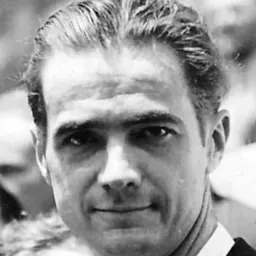



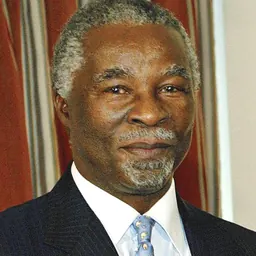


Related people
Same field, nearest in time

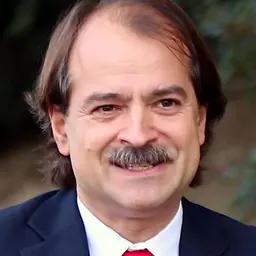

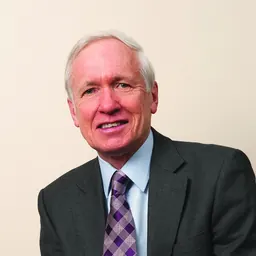
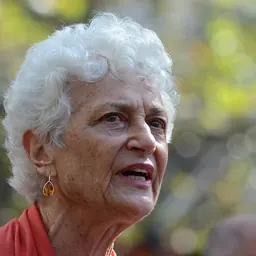
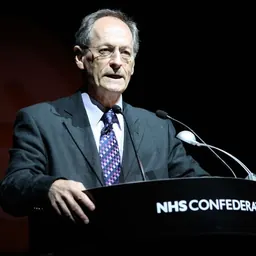
Contemporaries
People whose lives overlapped Salim Abdool Karim's

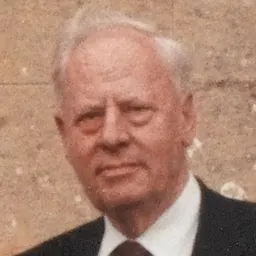
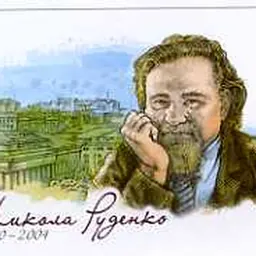

Frequently asked questions
Who is Salim Abdool Karim?
South African researcher
When was Salim Abdool Karim born?
Salim Abdool Karim was born on 29 July 1960 in Durban.
What is Salim Abdool Karim's occupation?
Salim Abdool Karim is an epidemiologist and university teacher.
What is Salim Abdool Karim known for?
Salim Abdool Karim is known for AIDS and Covid-19.
What nationality is Salim Abdool Karim?
Salim Abdool Karim is South African.
Sources & further reading
· Wikipedia: Salim Abdool Karim
Cite this page
APA: Biography.guide. (2026). Salim Abdool Karim. https://biography.guide/salim-abdool-karim/
MLA: "Salim Abdool Karim." Biography.guide, https://biography.guide/salim-abdool-karim/.
Chicago: "Salim Abdool Karim." Biography.guide. https://biography.guide/salim-abdool-karim/.
Data last updated: 2026-09-20 · Spot an error? Report a correction.
Page generated 2026-09-27 05:29 UTC